Finding a leak on a long hillside run
On a lot that climbs from the street, the water line between the meter and the house can be a long way, and all of it is buried in rocky ground. Mesa Rooter Works covers plumbing in Fountain Hills, Rio Verde and Fort McDowell, Arizona, and on a suspected leak a licensed, insured plumber separates the yard from the house before doing anything else.
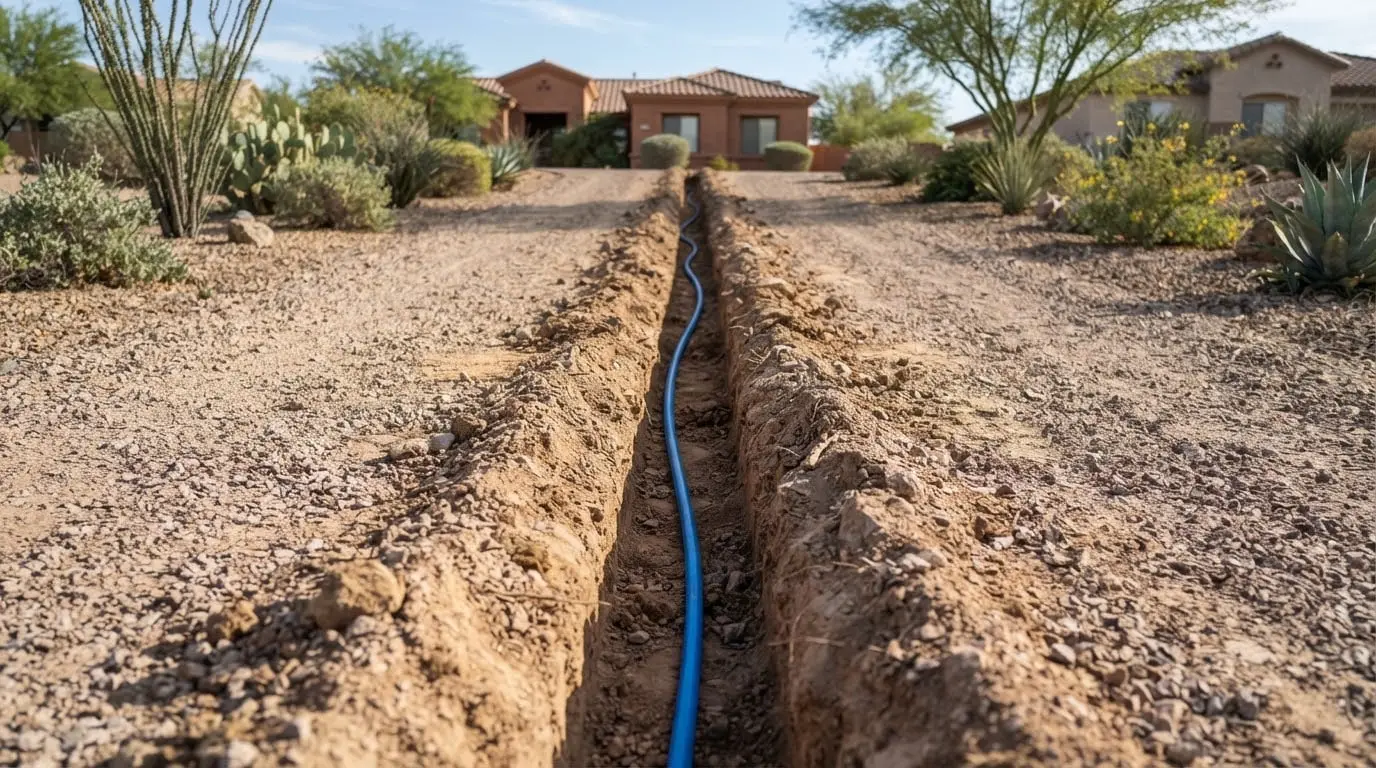
The method is simple. Shut the valve at the house, then read the meter box. A dial still turning means the buried yard pipe is losing water and the slab is in the clear. A soggy patch or a green streak in dry gravel downhill of the line is often the only other sign.
A dial that goes still puts the leak indoors, and our guide to slab leak repair covers what comes next.
Sewer lines on a steep grade
Drains like a steady fall, about a quarter inch per foot on most house lines. Steeper isn’t better. On a sharply sloped lot, water can outrun the solids and leave them behind in the pipe, which shows up as repeat clogs in a line that looks fine from the outside.
Houses below street level have the opposite problem and may rely on a pump or a long, shallow run to reach the main.
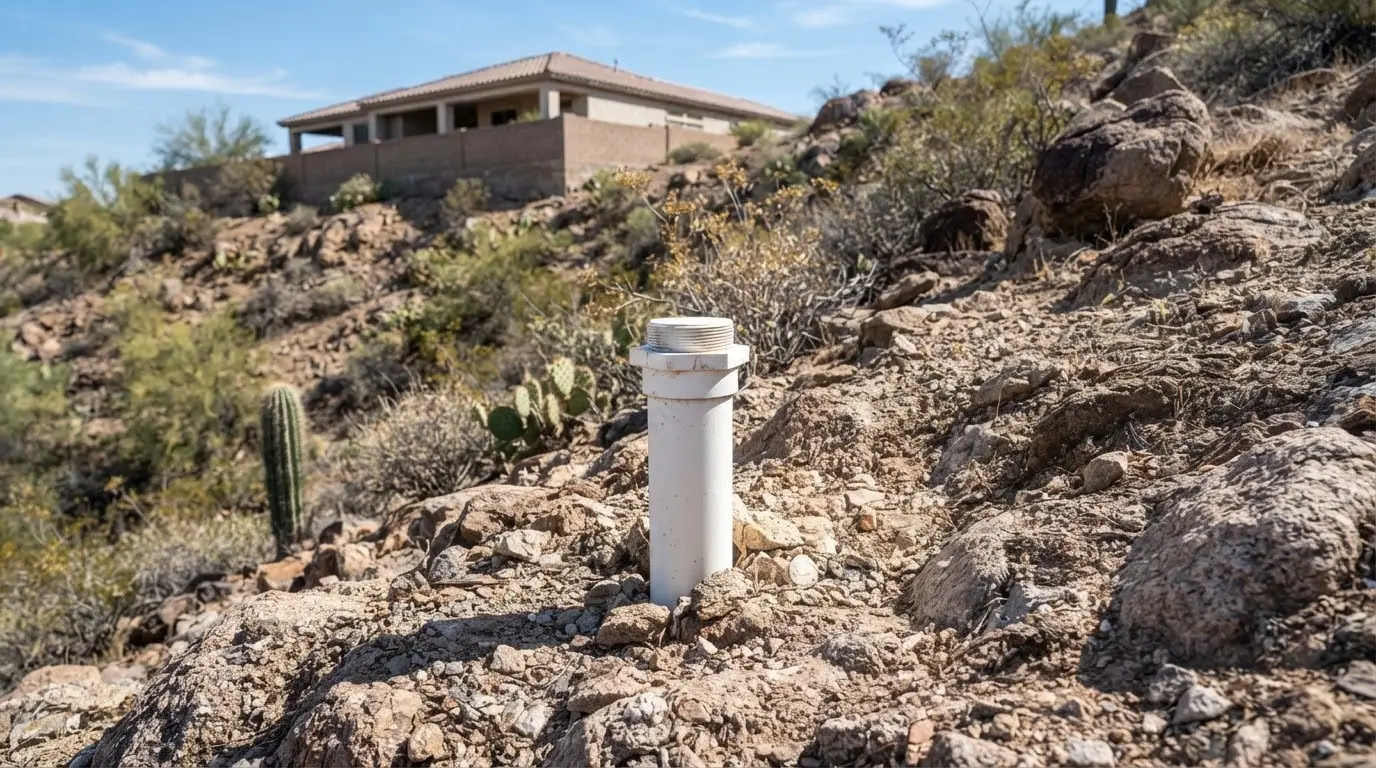
The Fountain Hills Sanitary District takes responsibility once the lateral reaches the main in the street or public easement. Above that point a camera inspection shows where the trouble sits, and rocky ground is one reason the choice between trench and trenchless on a sewer line replacement gets worked out carefully.
Say which way the house sits to the street. It tells the plumber what to look for in the line.
Pressure that changes with the hill
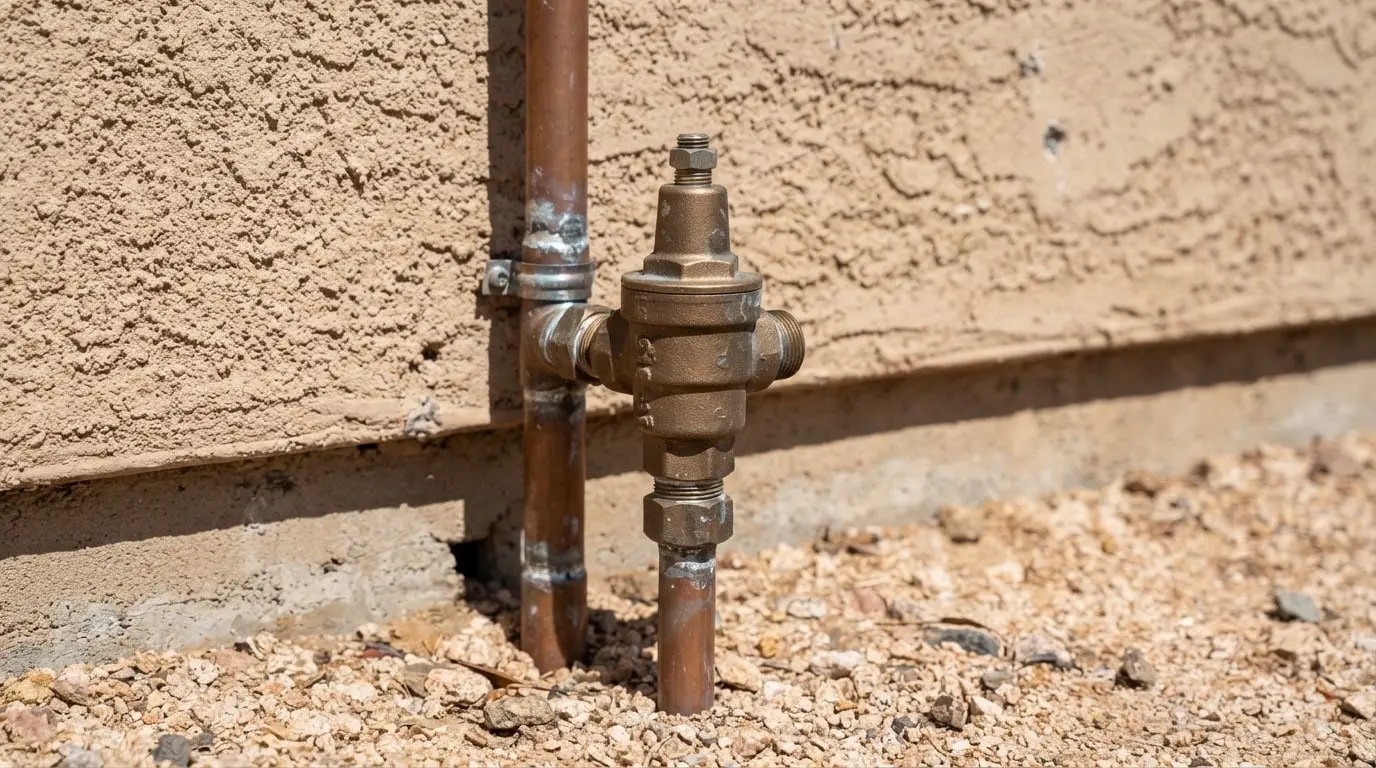
Water pressure falls as it climbs and rises as it drops. Homes high on a slope can run weak at upstairs fixtures, and homes low on the system can see pressure high enough to stress a water heater and wear out valves. A pressure regulator on the incoming line, usually near the main shutoff, keeps that in range. When one starts to fail, pressure swings, faucets hammer or the relief valve on the tank begins to drip.
Threading a pressure gauge onto an outside faucet takes a minute and tells the plumber whether the regulator is doing its job.
EPCOR water in Fountain Hills
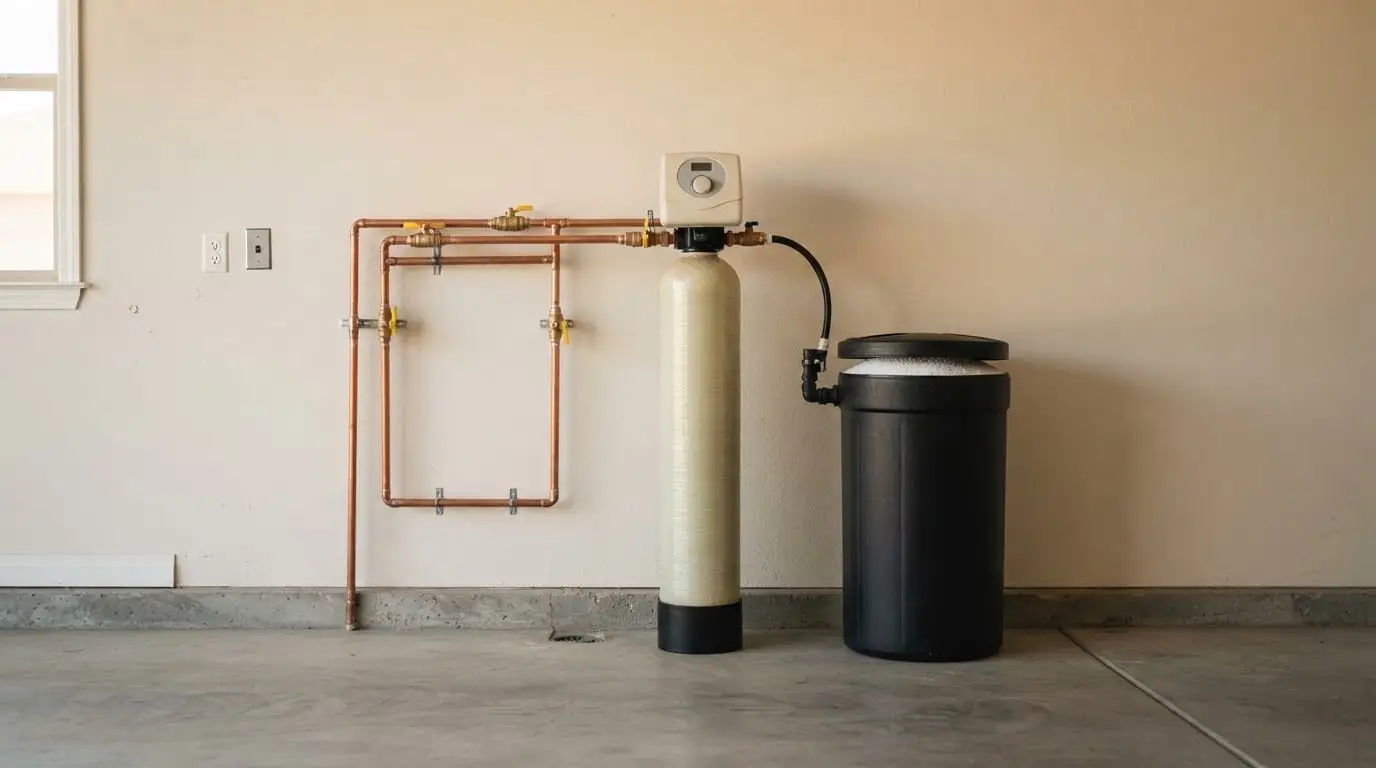
Fountain Hills gets its water from EPCOR’s Chaparral City system, a blend of Colorado River and Lake Pleasant water with some local groundwater. EPCOR’s 2025 report puts hardness around 16 grains per gallon, which is at the hard end for this part of the Valley. Expect scale on fixtures and in water heaters, and a softener set from a reading at your own tap.
Fountain Hills, Rio Verde and Fort McDowell ZIP codes
Fountain Hills: 85268, 85269
Rio Verde: 85263
Fort McDowell: 85264
West of here: plumbing in Scottsdale and Paradise Valley. Don’t see your ZIP? Call anyway and we’ll check your address.