Stopping the water in the first few minutes
Mesa Rooter Works takes emergency plumbing calls from Mesa, Gilbert, Chandler, Tempe and the rest of the East Valley: burst pipes, split supply lines, water through a ceiling, a water heater dumping onto the garage floor. Whatever broke, the first job is the same. Get the water off.
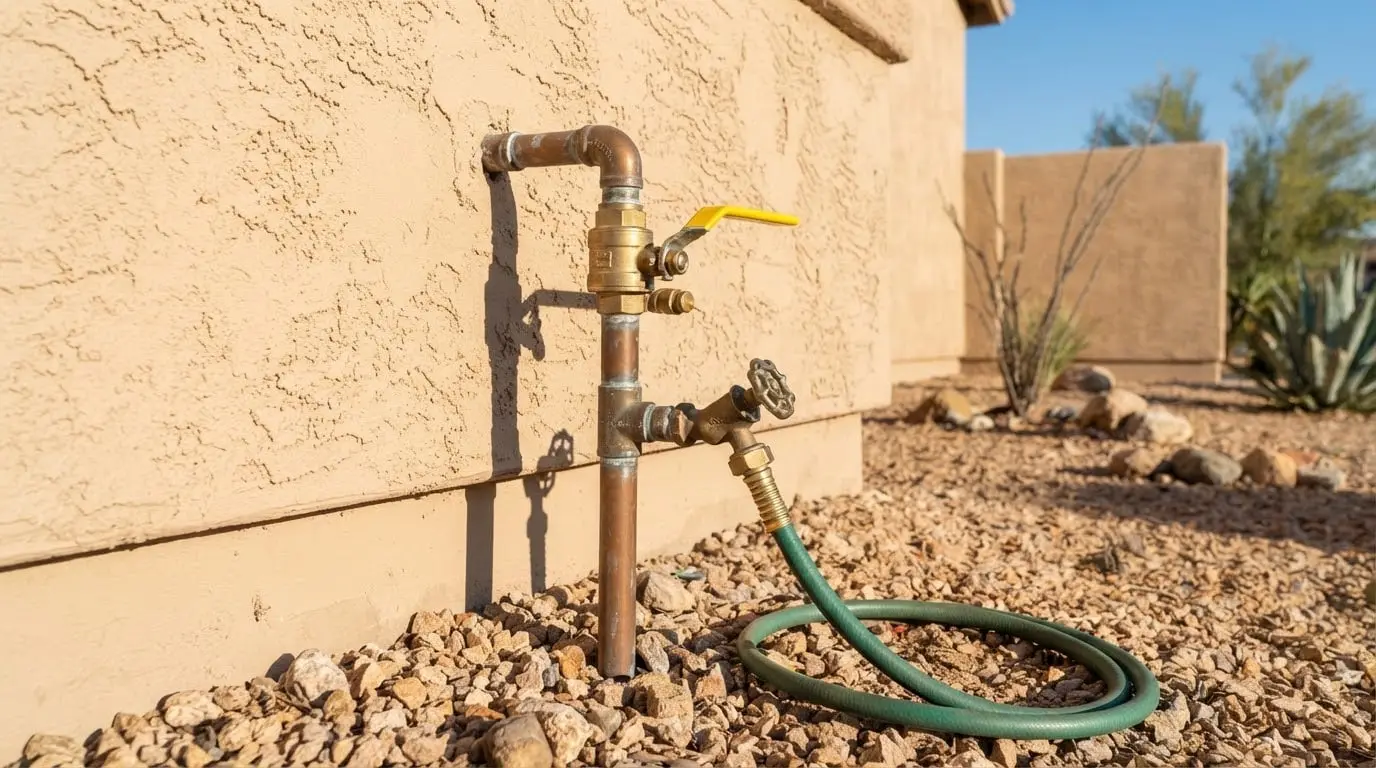
On most East Valley houses the main shutoff sits where the water line comes up out of the ground, usually on a front or side wall near a hose bib, sometimes inside the garage. Newer homes tend to have a ball valve with a lever handle. A quarter turn so the handle sits across the pipe closes it. Older houses may have a round gate valve that turns clockwise several times before it seats.
If the leak is at one fixture, the small oval valves under a sink or behind a toilet will stop it without shutting off the whole house. Turn them clockwise until they stop.
Then do these, in this order:
- Keep clear of electricity. If water is near outlets, a power strip or the electrical panel, switch off the breaker for that area if you can reach the panel without standing in water. If you can’t, stay out of that room.
- Shut down the water heater if the leak is anywhere on the hot side. Close the cold valve on top of the tank and set the gas control to pilot, or switch off the breaker for an electric tank.
- Open a faucet at the lowest point in the house. A tub spout or a hose bib drains the pressure out of the lines, which slows a leak that keeps dripping after the main is closed.
- Move what can be moved. Rugs, boxes in the garage, anything sitting under a ceiling stain.
That's normal for a few minutes while the lines drain. Call now so the plumber can find the break.
Sorting urgent leaks from ones to schedule
Some leaks need the water off and a call right now. Others can go on the calendar for a visit. Here’s how the call usually gets sorted.
| Close the main and call right away | Call to set a visit |
|---|---|
| Water running that the main won’t stop | A slow drip from a faucet or showerhead |
| Water through a ceiling or a light fixture | A toilet that runs on and off |
| A water heater leaking from the tank itself | A hose bib that drips with the valve closed |
| Sewage coming up a tub, shower or floor drain | One slow drain with the rest of the house fine |
| Water rising through tile or carpet | A small stain that hasn’t grown in a week |
| A gas smell anywhere in the house | Low water pressure at one fixture |
If you’re not sure which side you’re on, describe it on the call. A water stain that’s soft to the touch is very different from one that’s dry and old, and the questions sort that out quickly.
Breaks that show up in East Valley houses
These are breaks that come up often in slab-built desert homes.
Braided supply lines
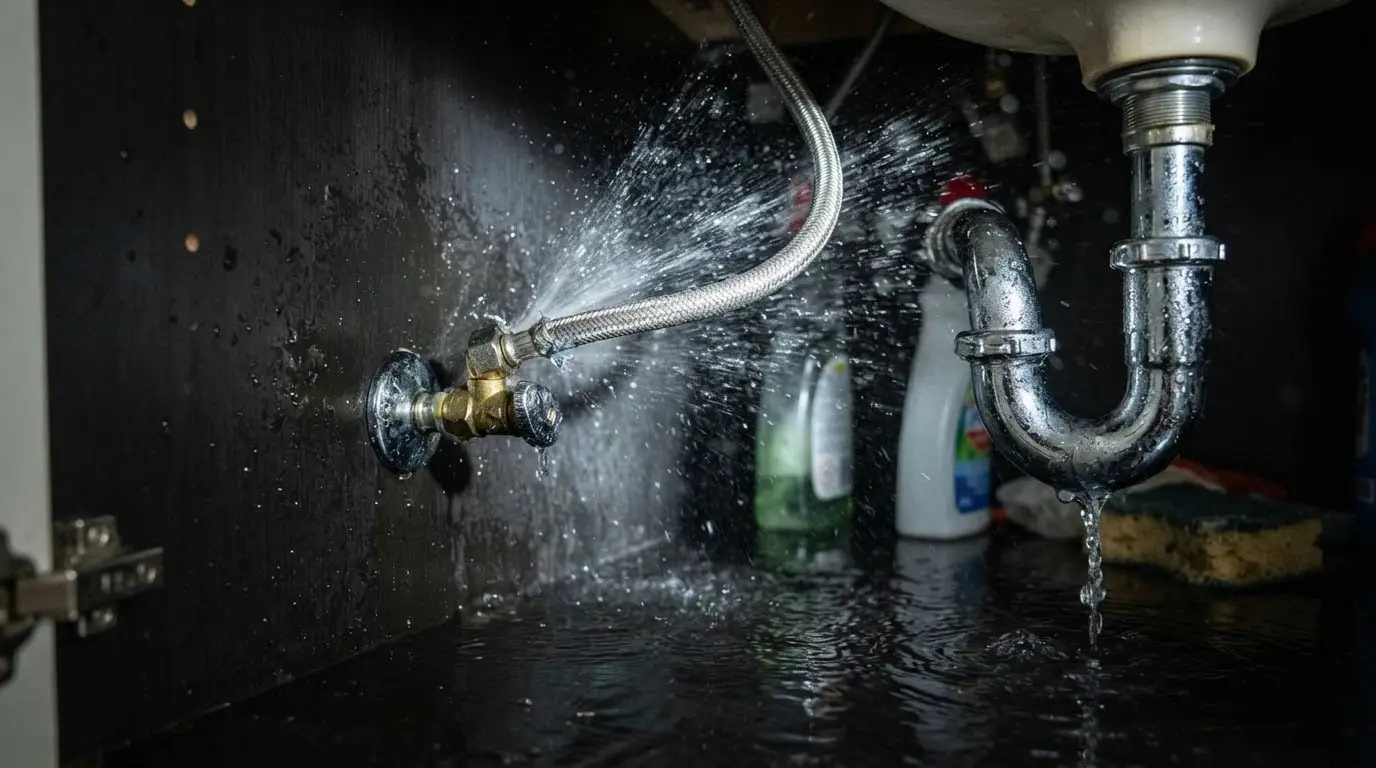
The flexible steel-braided hoses that feed sinks, toilets and ice makers are a common burst inside the house. The rubber tube inside the braid ages, and once it lets go it runs at full house pressure until someone closes a valve. A toilet supply line that bursts behind a closed bathroom door can soak a hallway before anyone notices. If one has failed, the others in the house are usually the same age, and replacing all of them on the same visit heads off the next one.
Hose bibs and outdoor lines
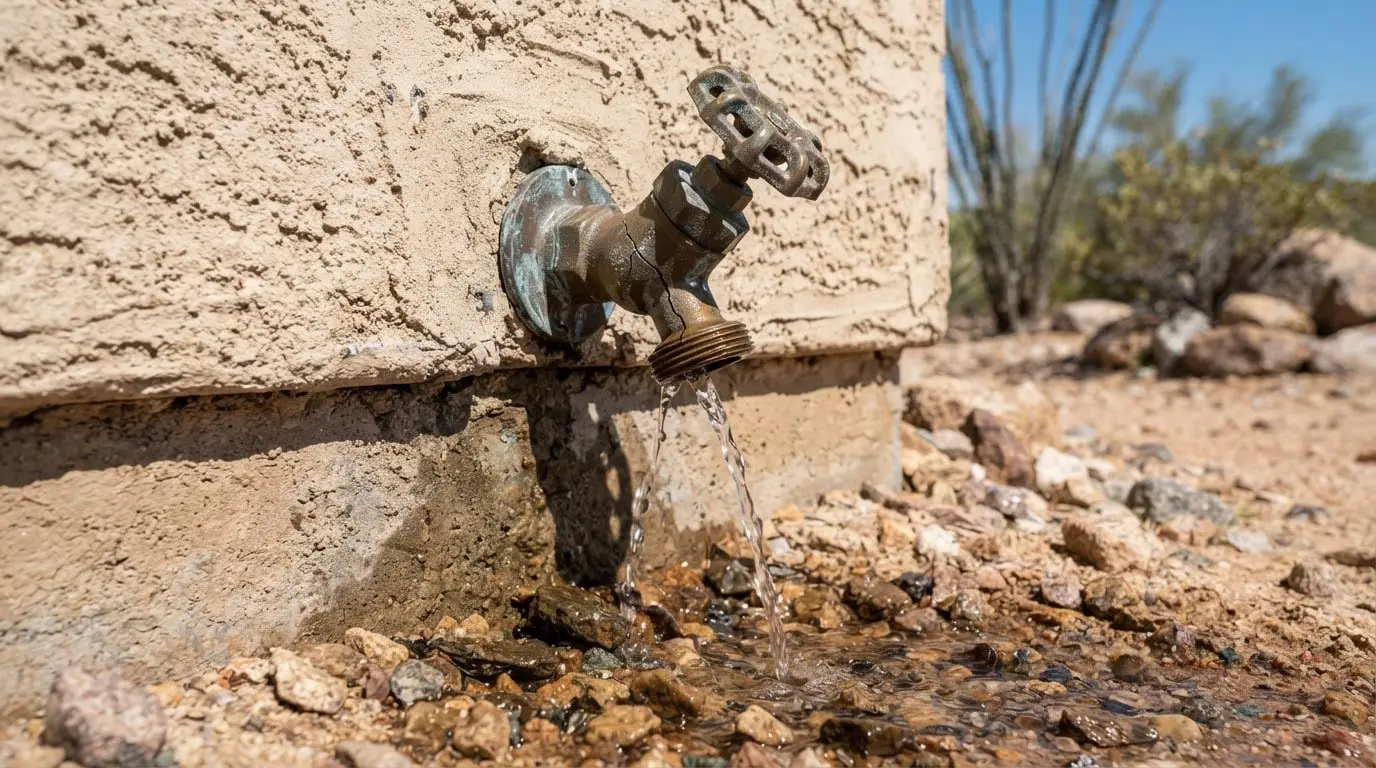
Outdoor faucets bake in the sun all summer and take hits from mowers, wheelbarrows and kids. A cracked hose bib or a broken irrigation line can run for hours before anyone sees it, especially on a side yard. If water is pooling against the foundation, that’s the urgent part, because it can find its way under the slab.
The water heater
A tank that leaks from the bottom has failed and can’t be patched. Water from the temperature and pressure relief valve is a different problem. That valve opens when the tank gets too hot or the pressure climbs too high, and in a garage where the August normal high is above 105 degrees, the tank and the valve both work in tough conditions. Either way the plumber checks the thermostat, the valve and the expansion tank before deciding on a repair or a new water heater.
Lines under the slab
When water rises through tile, grout lines or carpet with no pipe in sight, a supply line under the concrete has usually opened up. Closing the main stops it. The repair is its own job, covered on the slab leak repair page.
Pipes in walls and attics
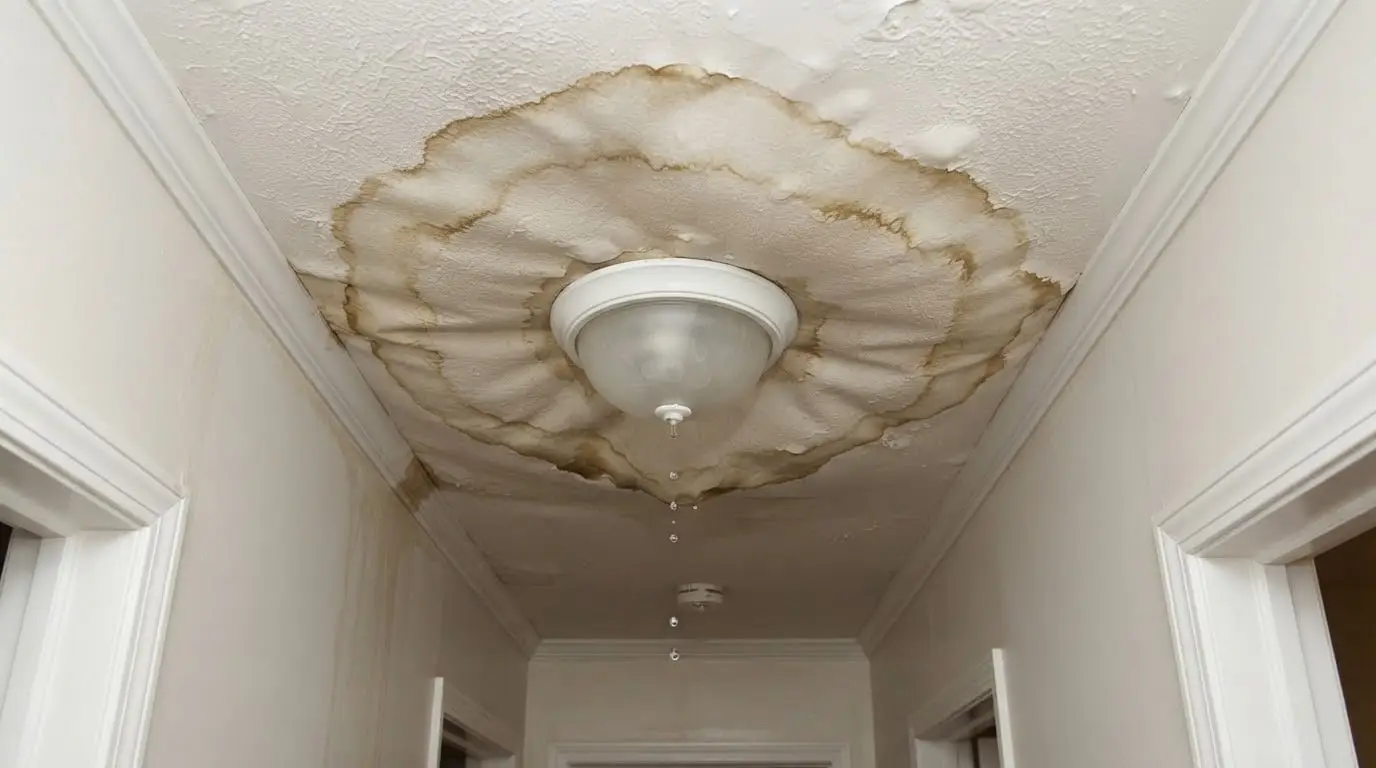
Some East Valley houses have water lines in the attic, especially if they’ve been repiped or had a line rerouted out of the slab. A fitting that fails overhead shows up as a bulging ceiling or water dripping from a light fixture or a ceiling fan. Turn off that circuit at the panel and keep everyone out from under the sag.
Monsoon storms and backups
Monsoon season runs from June 15 through September 30. When a storm dumps a lot of rain quickly, a sewer line with cracks, root gaps or a missing cleanout cap can take on more water than it can carry. The result is sewage coming up the lowest drain in the house, often a tub or a shower, sometimes a floor drain in the laundry.
Stop running water in the house until it’s sorted. Every flush and every load of laundry adds to what’s backing up. The plumber clears the line, then often runs a camera to see whether roots or a broken section let the water in. That part is covered under drain cleaning and hydro jetting and sewer camera inspection.
What happens when the plumber gets there
The first goal is finding where the water is coming from, which isn’t always where it shows up. Water runs along framing, down pipes and across the top of the slab before it appears, so a stain in a hallway ceiling can come from a bathroom two rooms over.
Once the source is found, there are usually two steps. A quick repair stops the leak and gets the water back on for the rest of the house, often by capping the broken line or replacing the failed valve or hose. Then the permanent fix gets priced, whether that’s a new section of pipe, a new tank or a reroute. You’ll have a written price before any of the permanent work starts, and you only pay for work you agreed to.
Before the plumber leaves, the water goes back on slowly and the repair gets checked under pressure. On a supply line that means watching the meter with everything off to make sure the house is tight again.
Telling us how urgent it is
The more you can say on the call, the better the visit goes. A few details make the biggest difference:
- whether the water is still running or the main is closed
- whether it’s clean water or drain water
- how long it ran before you caught it
- whether it’s spreading toward wood floors, cabinets or carpet
- the rough year the house was built
The build year tells the plumber a lot. A house from the 1970s or 1980s, like much of Dobson Ranch, is a different set of pipes than one built in Eastmark after 2013.