If you smell gas right now
Gas has an added smell like rotten eggs so leaks get noticed. If the smell is strong, or you hear hissing near a gas line or appliance, don’t try to find the source.
- Get everyone out of the house, pets too.
- Don’t flip light switches, use the doorbell, start a car in the garage or light anything.
- Once you’re outside and away from the house, call 911.
- Stay out until the fire department or the gas utility says it’s safe.
The City of Mesa’s gas safety page lists other signs of a leak outside: dead patches of plants over a buried line, a hissing sound, or bubbling in standing water.
Once the emergency is over and the utility has shut off or tagged the leak, the repair on your side of the meter is plumbing work, and Mesa Rooter Works sets it up with a licensed, insured plumber who works the East Valley.
Knowing which part of the gas pipe is yours
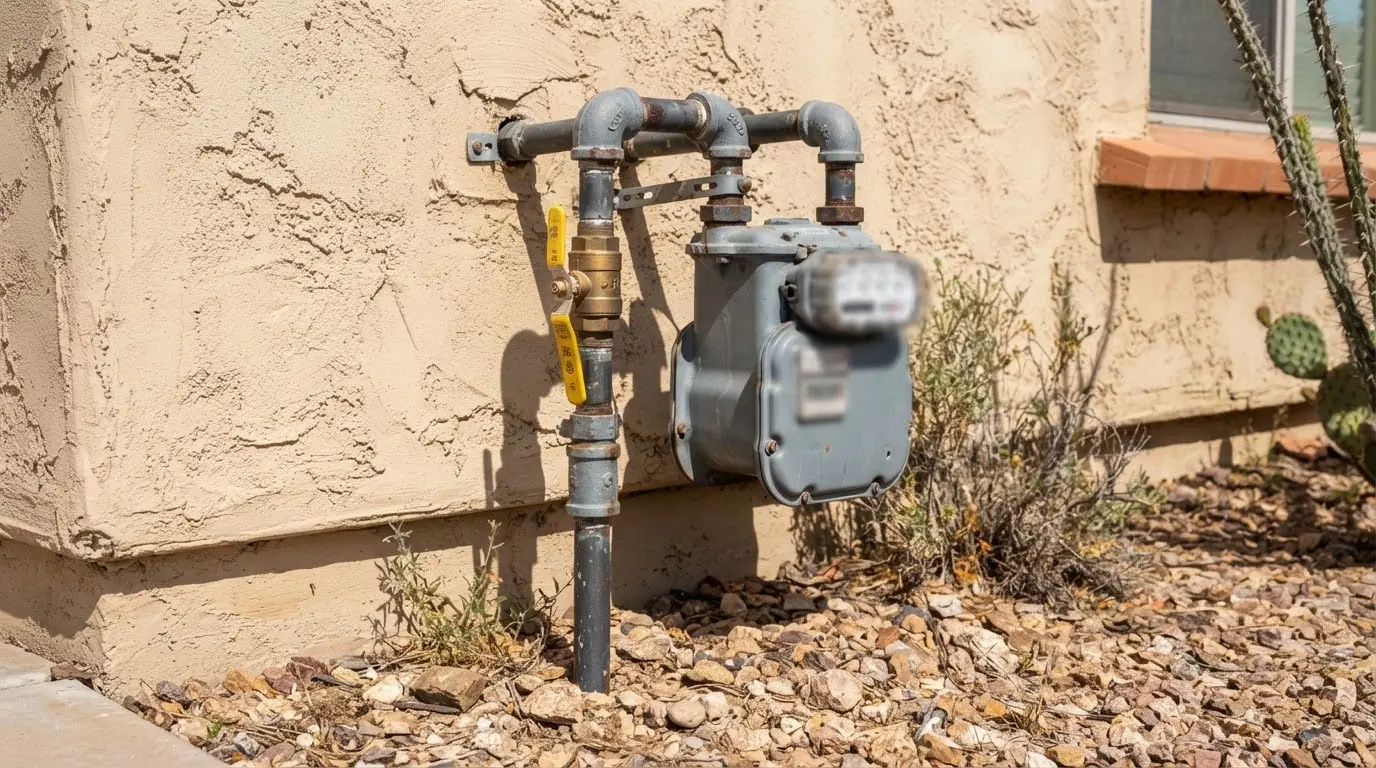
Gas pipe has two owners. The utility owns the pipe in the street and the line up to the meter, and it owns the meter. Everything after the meter belongs to you: the buried line from the meter to the house, the pipe inside the walls and attic, the lines out to a grill or pool heater, and the connectors to each appliance.
In the East Valley, the utility is one of two. The City of Mesa runs its own natural gas utility for part of Mesa, and Southwest Gas serves the rest of Mesa and the surrounding cities. Your monthly statement shows which one you have. When someone digs, the utility marks its own pipe. Mesa’s gas safety page is clear that it marks only up to the meter.
A leak past the meter is plumbing work. A leak at the water heater connector, a cracked fitting in the attic or a corroded buried line between the meter and the house is a plumbing repair.
If the gas was turned off or tagged for a leak on your side of the meter, call so a plumber can find it, fix it and test the line.
Finding and fixing a gas leak
Once the gas is off, the plumber puts a gauge on the system and pressurizes it to see whether it holds. If it drops, the work is finding where. Fittings get checked with a leak detection solution or an electronic detector, starting at the usual spots:
- the flexible connector behind a range, dryer or water heater, especially one that’s been moved
- threaded joints in the attic or garage
- the shutoff valve at each appliance
- buried pipe between the meter and the house, where older steel can corrode
A loose or worn connector is the simple case. A corroded section of buried steel line usually means replacing that run, often with plastic gas pipe made for underground use and a transition back to metal where it comes out of the ground.
When the repair is done, the system gets pressure tested again, appliances get relit and checked, and where the utility tagged the meter, gas service can be put back.
Running a new gas line
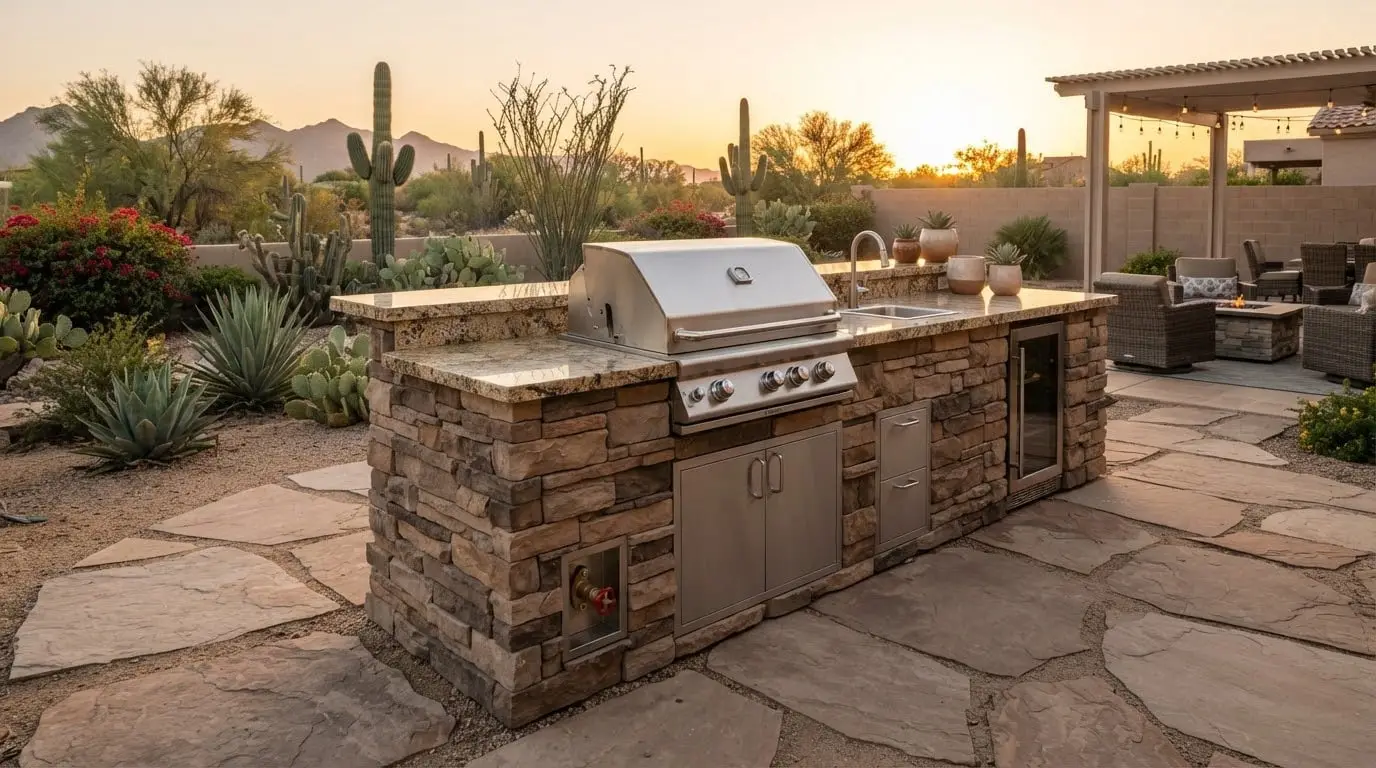
New lines usually go in for one of these:
- a gas range or cooktop where there’s only electric today
- a gas dryer in the laundry room
- a tankless water heater, which needs far more gas at once than a tank
- an outdoor kitchen, built-in grill or fire pit
- a pool or spa heater
Sizing it right
A gas line is sized by how much gas the appliances on it burn at the same time and how far the gas travels. The plumber adds up every appliance in the house, measures the run from the meter, and picks a pipe size that carries the full load. An undersized line shows up as a burner that won’t stay lit when the dryer and the water heater run together, or a tankless unit that throws codes on a busy morning. That’s why a tankless conversion so often comes with a new gas line from the meter.
Picking the route
In a slab house, a new gas line rarely goes under the floor, so new runs usually go through the attic and drop down a wall, or run outside along the house. Outdoor lines to a grill or fire pit go underground. Chandler’s homeowner permit manual calls for buried gas line to sit at least 12 inches deep, and new interior lines or tie-ins to a stub-out need a permit there.
Hooking up the appliance itself
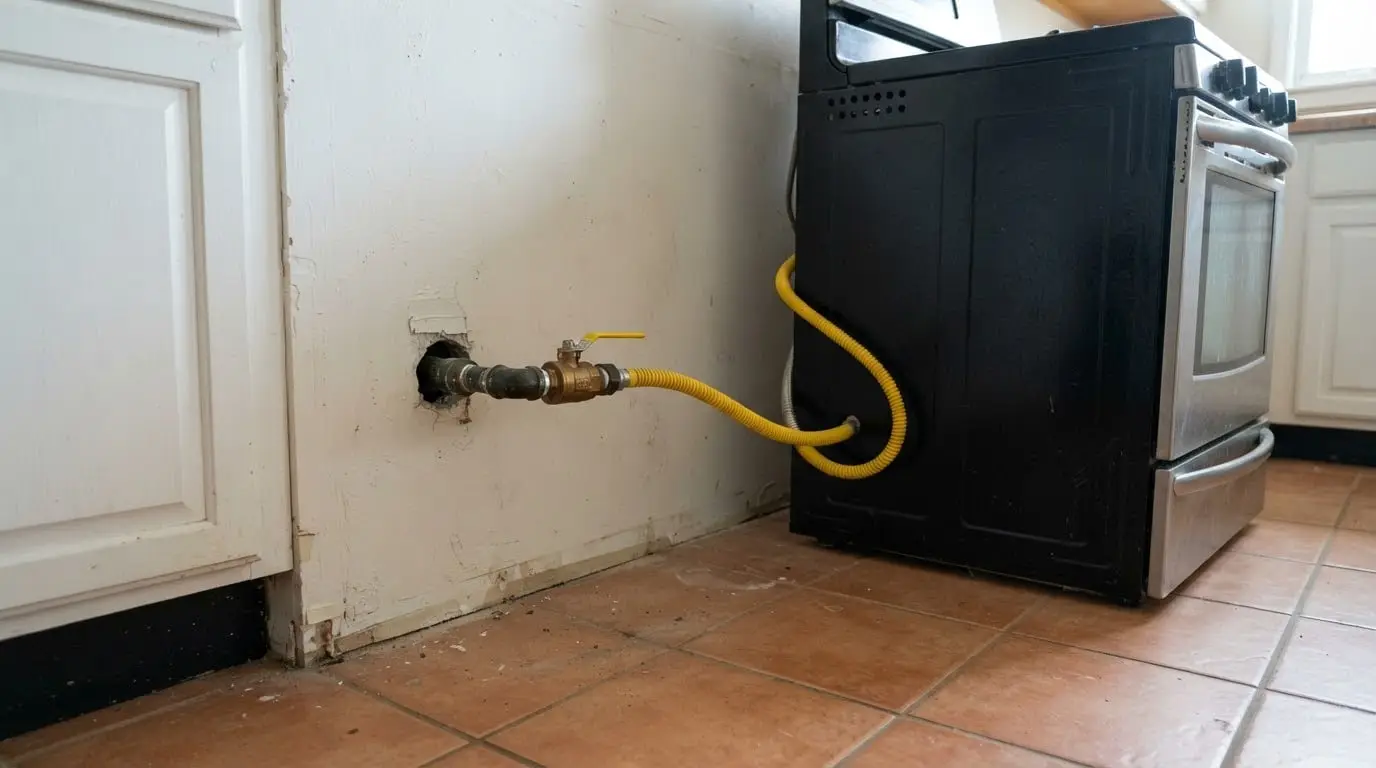
Each gas appliance gets its own shutoff valve within reach, so it can be turned off without shutting down the whole house. A water heater or furnace also gets a sediment trap, a short capped drop below the connection that catches debris before it reaches the gas valve.
The connector from the valve to the appliance is usually a flexible one, sized and rated for that appliance. A new range or dryer is the time for a new connector. An old one that’s been bent behind a stove for years is a common leak point, and reusing it saves very little.
A few things catch people out when switching an appliance from electric to gas:
- A gas range still needs a standard outlet behind it for the igniters, clock and oven controls.
- A gas dryer still needs a standard outlet for the drum motor, and it still vents outside like an electric one.
- The old 240-volt outlet can stay or be capped, but it isn’t used.
- The rating plate on the new appliance lists how much gas it burns, in BTUs. Have that number handy, since it goes straight into sizing the line.
Outdoor appliances add a couple of steps. A built-in grill or fire pit usually gets a shutoff valve where it’s easy to reach outside the cabinet, and a buried run usually gets its depth checked before the trench is backfilled.
Testing before the gas goes back on
Every new line and repair ends the same way. The pipe is capped and pressurized, and a gauge has to hold steady for the test period. Then the appliances are connected, the line is purged of air, burners are lit and checked for a clean flame, and every joint is checked again with the gas flowing. Where the city requires an inspection, it gets booked before the work is covered up.
Gas appliances and the water heater
Many gas calls start at the water heater. A pilot that won’t stay lit, a smell near the burner door or a connector that got kinked when the tank was moved all lead back to the gas side. Those get checked on the same visit as the heater itself, so the whole setup leaves safe.