Deciding between one more repair and a repipe
Repiping replaces every water supply line in the house. In the East Valley that usually means running new lines through the attic and down inside the walls, then capping off the old lines under the slab so they never carry water again. Mesa Rooter Works takes repipe calls from Mesa, Gilbert, Chandler and Tempe, and a licensed, insured plumber prices the job after looking at the house.
Nobody wants to repipe a house that only needed one repair. These are the situations where a whole-house repipe usually makes more sense than another patch:
- A second or third slab leak. After the second, the rest of the line under the slab is the same age as the two spots that already failed.
- Pinholes in exposed copper. Green crust or tiny drips on copper at the water heater, in the garage or under a sink tell you how the copper in the walls and slab is likely doing.
- Polybutylene anywhere in the house. PB was widely used in homes built in the 1980s and 1990s, and a class action against its makers ended in a 1995 settlement.
- Kitec. A PEX-aluminum pipe sold by IPEX with high-zinc brass fittings that corrode from the inside. It went into homes across the western U.S. from the early 1990s, was later discontinued, and its fittings were the subject of a class-action settlement.
- Rusty water or falling pressure from old galvanized steel lines.
Say so on the call, with roughly when each one happened. It changes what gets priced.
Finding out what’s in your walls
You don’t have to open anything to get a good idea. A few spots give the plumbing away.
Polybutylene
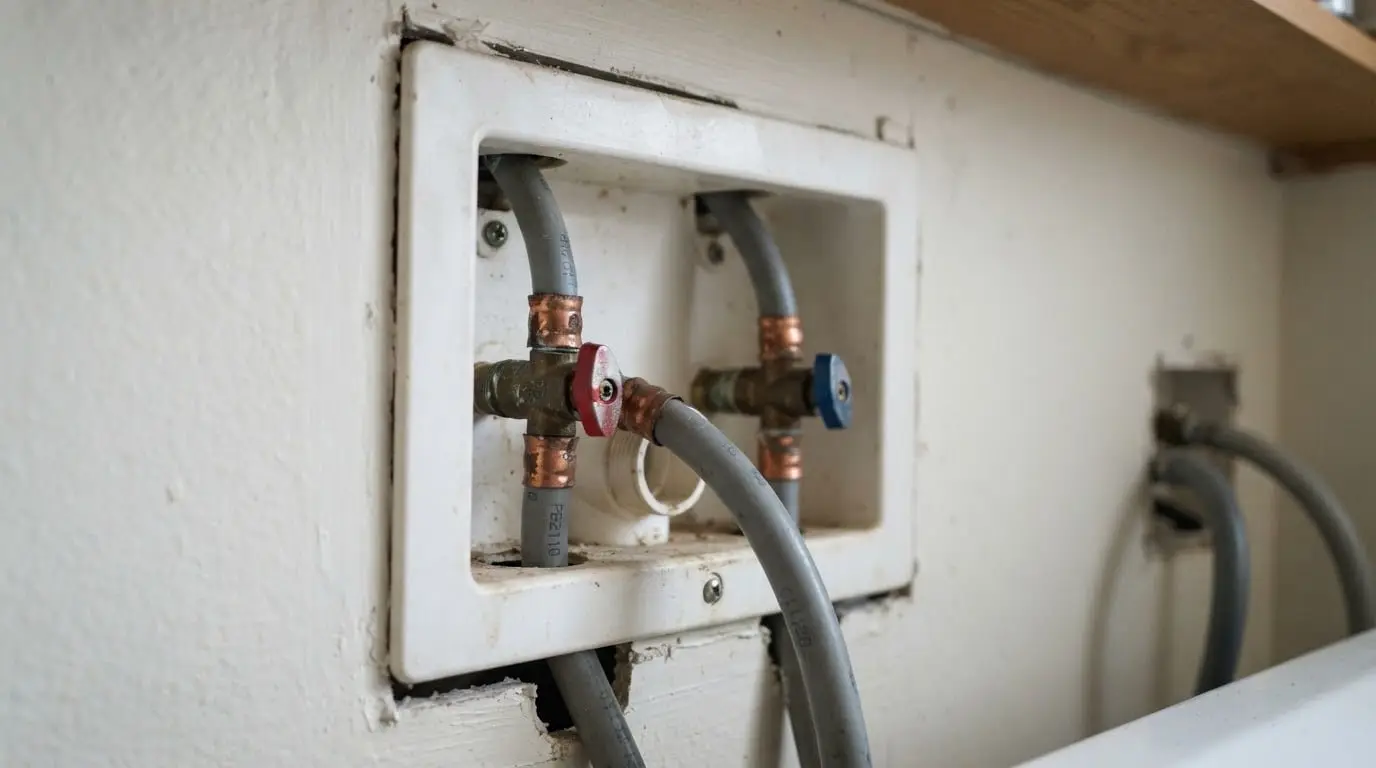
PB is a flexible gray plastic pipe joined with metal crimp rings. The tricky part is that the short pipes coming out of the wall at sinks and toilets are often copper, so a copper stub-out doesn’t rule PB out. The washing machine box in the laundry room is one of the better places to look, because the lines feeding it are often visible behind the trim. A stub-out that wiggles freely in the wall is another hint that flexible plastic sits behind it.
Kitec
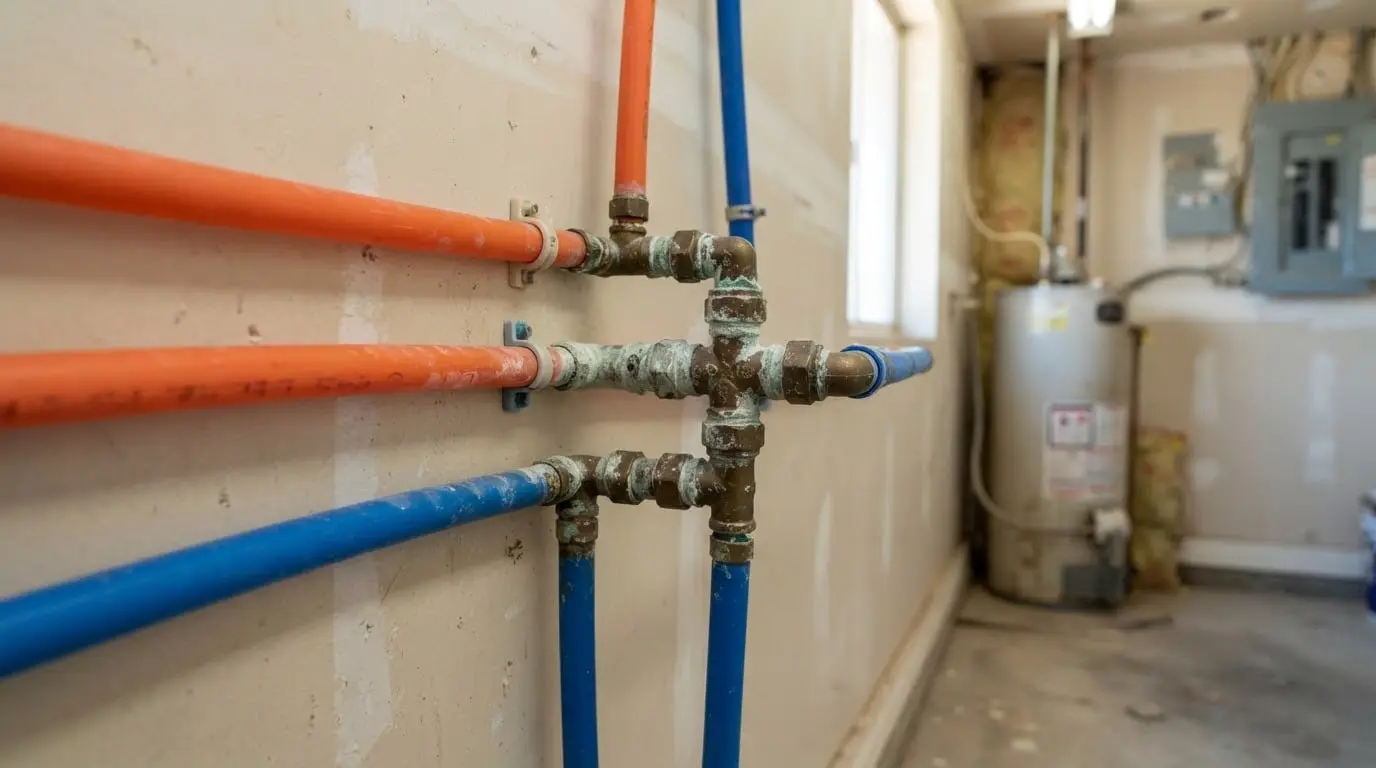
Kitec pipe may be printed with the Kitec name along its length. The fittings are brass. Over time the zinc leaches out of that brass, leaving a crusty white or powdery buildup that narrows the opening and weakens the fitting until it leaks or lets go. Look at the water heater connections and under sinks for brass fittings with that kind of crust.
Copper
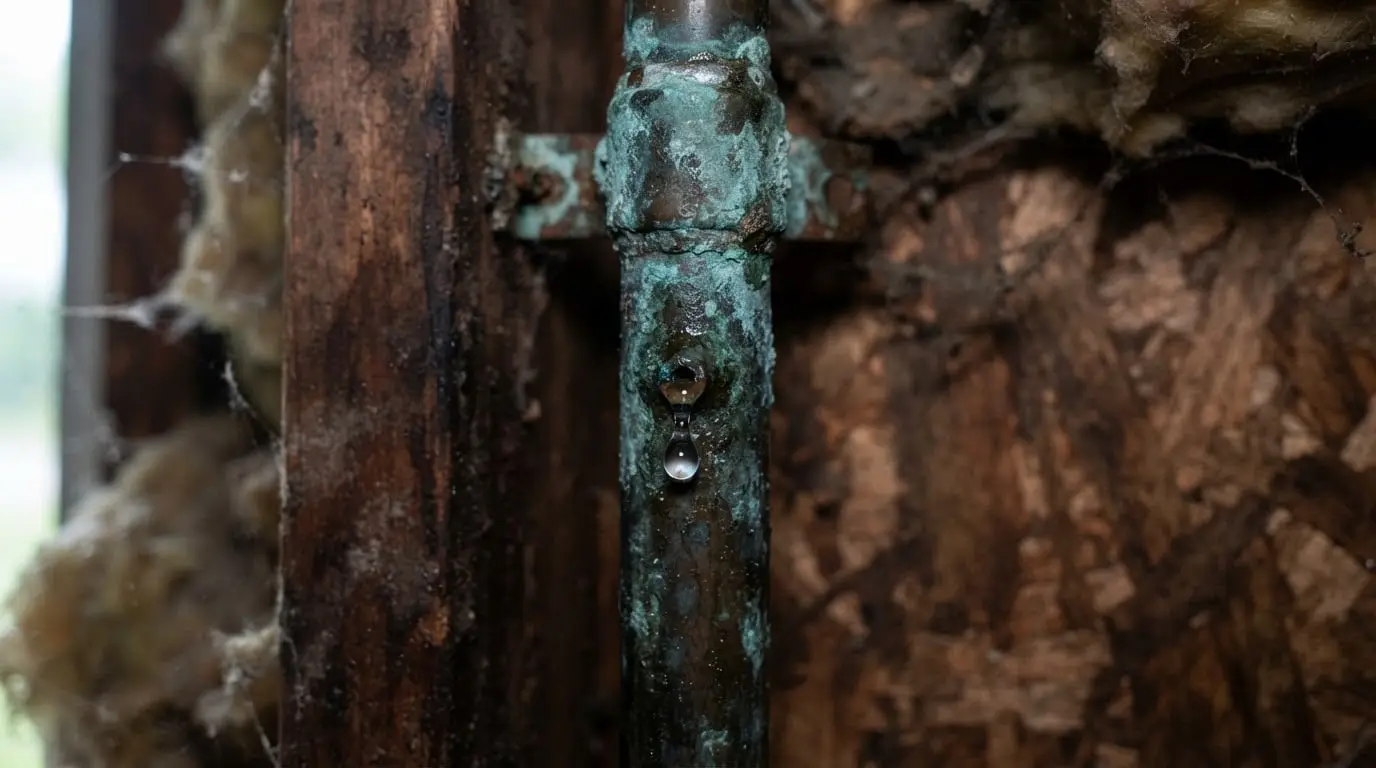
Many older East Valley slab homes that weren’t built with PB have copper supply lines. Copper itself isn’t a problem pipe, but once it starts pinholing, the leaks rarely stop at one.
If you can’t tell, a photo of the pipes at the water heater is a good start. The plumber confirms it on the visit.
Choosing PEX or copper for the new lines
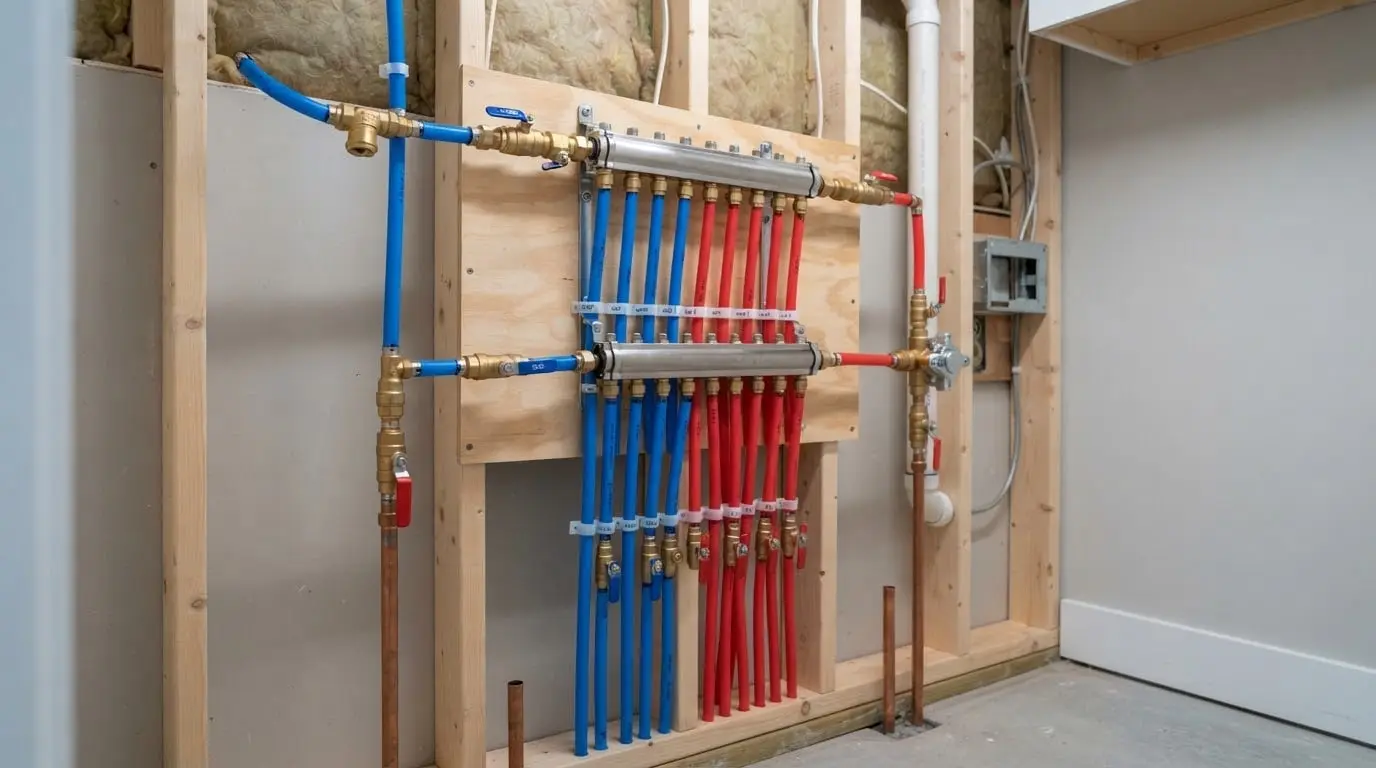
PEX is the usual choice for a repipe today, but copper is still an option. Both are code-approved for drinking water. The choice comes down to how the job will go in your house and what you’re comfortable with.
| PEX | Copper | |
|---|---|---|
| How it’s joined | Crimp, clamp or expansion fittings, no torch | Soldered or press fittings |
| How it routes | Flexible, bends around framing with fewer fittings | Rigid, needs a fitting at every turn |
| Wall openings | Fewer and smaller, since it can be fished through | More, to make joints at turns |
| Sunlight | Has to be kept out of direct sun | Not affected by sunlight |
| Material cost | Lower | Higher |
| Install time | Usually shorter | Usually longer |
PEX can be run from a central manifold, with a separate line to each fixture and its own shutoff, or as a trunk line with branches. A manifold makes it easy to shut off one bathroom without shutting down the house. Ask which layout the written price assumes.
Routing new lines through a hot attic
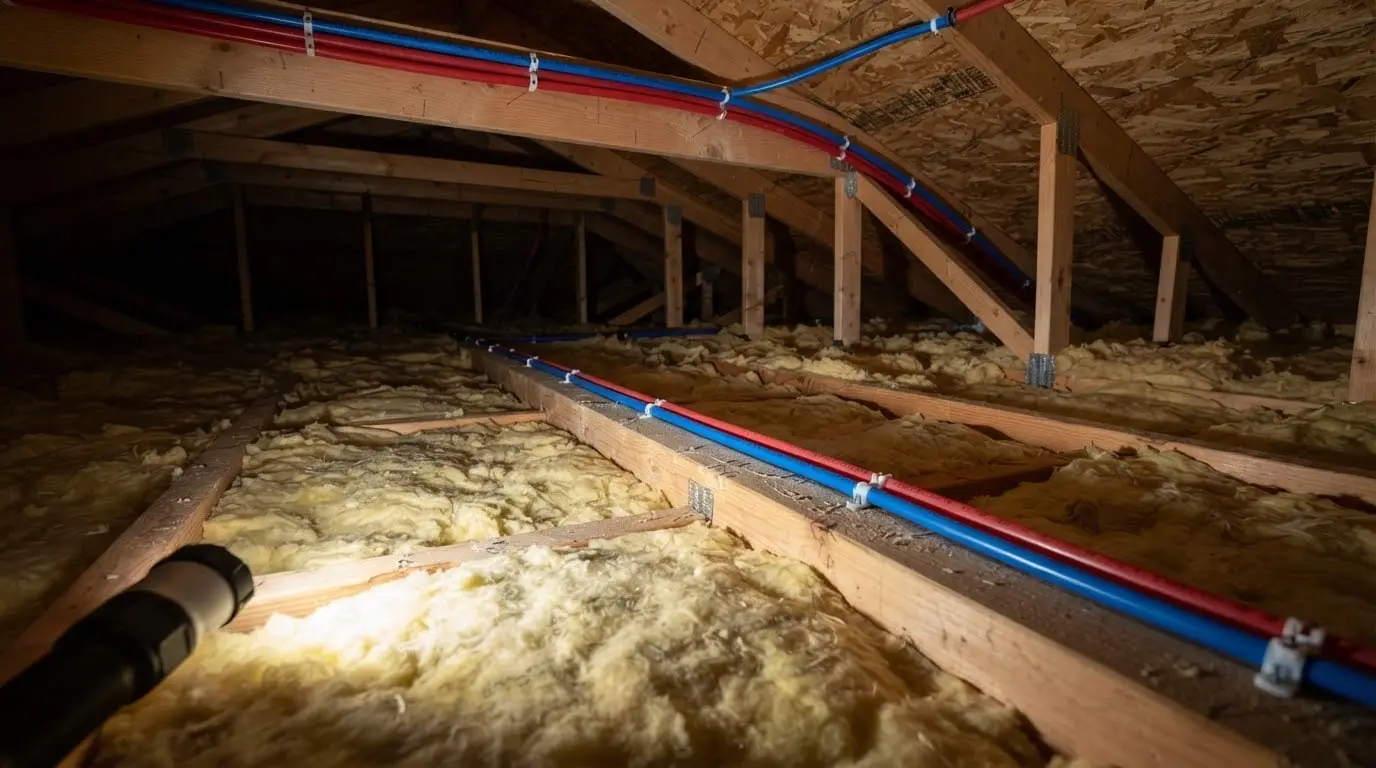
Running the new lines overhead is what keeps the slab closed, and it’s the main reason a repipe here causes less mess than most people expect. It comes with one desert problem: heat.
Phoenix’s normal August high is over 105 degrees outside, and an attic in summer gets much hotter than that. Water sitting in a cold line overhead soaks up that heat, which is why people with attic reroutes say the cold tap runs hotter than the hot on a July afternoon. Nothing makes an attic line as cool as one buried under a slab, but a careful layout cuts the effect down a lot:
- burying the lines under the attic insulation, down against the ceiling drywall where it’s coolest
- keeping runs short and dropping into walls by the most direct route
- following interior walls instead of crossing over the hottest part of the attic near the eaves
- wrapping the long runs in pipe insulation where the attic insulation is thin
Even then, the first few seconds from a cold tap in summer can come out warm until the water from the cooler part of the line arrives. Ask the plumber to show you where the runs will go before the work starts. The route is part of what you’re agreeing to.
Hot lines benefit from the same care for the opposite reason. Insulated hot lines lose less heat on the way to the shower.
What a repipe looks like from start to finish
Every house is different, but the work usually follows this order:
- Floors and furniture near each fixture wall get covered.
- The water is shut off at the main, and the plumber cuts small openings in drywall where the new lines will drop to each fixture.
- New lines get run through the attic and down the walls, with new shutoff valves at sinks and toilets.
- Each fixture, the water heater and any softener loop get tied into the new lines.
- The old lines get capped where they leave the slab.
- The whole system is pressure-tested, then the water goes back on and every fixture is checked.
- The city inspection happens where it’s required, then the drywall openings get patched and textured.
The plumber gives you a schedule with the written price, so you know which days the water will be off and for how long.
Tying in the water heater and softener
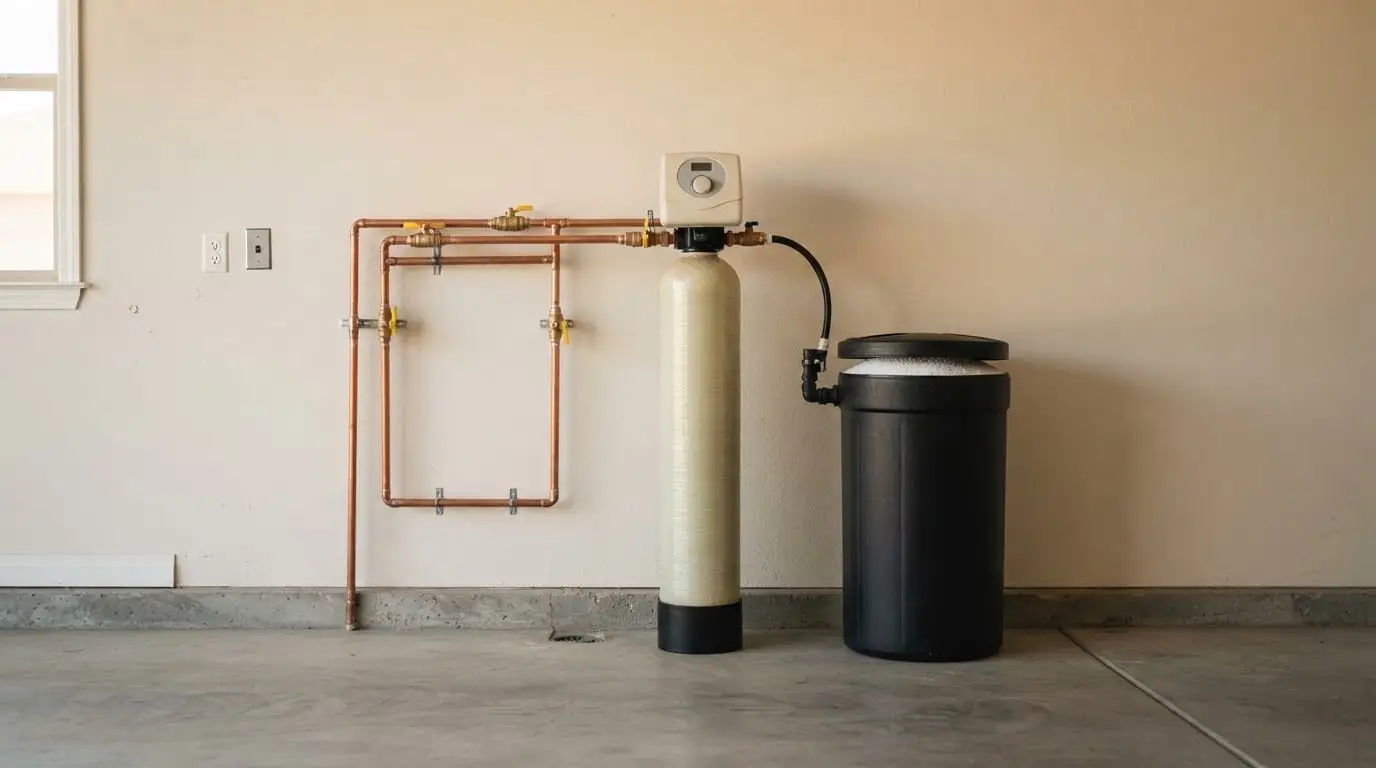
A repipe is a natural time to look at what’s connected to it. If the water heater is near the end of its life, swapping it during the repipe saves a second round of tie-in work. The water heater page covers what to look for. Many East Valley homes have a softener loop near the garage or the front hose bib. The new lines should keep that loop, or add one if the house doesn’t have it, so a water softener can go in later without more wall work.
The repipe price
Fixture count, the number of stories, attic access and drywall work set most of the price, with the pipe material moving it too. The repipe cost guide goes through each line you’ll see on the written price.