Reading the signs of a slab leak
A slab leak is a break in a water line that runs under the concrete floor of the house. Mesa Rooter Works takes slab leak calls from Mesa, Gilbert, Chandler and the rest of the East Valley, where slab-on-grade houses are the norm and plenty of them still have their original supply lines under the concrete. A licensed, insured plumber finds the leak first and then fixes it, either through the floor or by running a new line around it.
Slab leaks hide well. These are the signs people actually notice:
- A warm or hot spot on the floor. Hot tile in the kitchen, a warm patch in the hallway, wood that feels warm through your socks. That points to the hot side.
- The water meter moving with nothing on. Every faucet off, no irrigation running, and the little dial on the meter still creeps.
- A water bill that jumped without a change in how you use water, or one that keeps climbing month to month.
- The sound of water running in a wall or under the floor when the house is quiet.
- A water heater that fires constantly, because it keeps refilling to replace hot water leaking out.
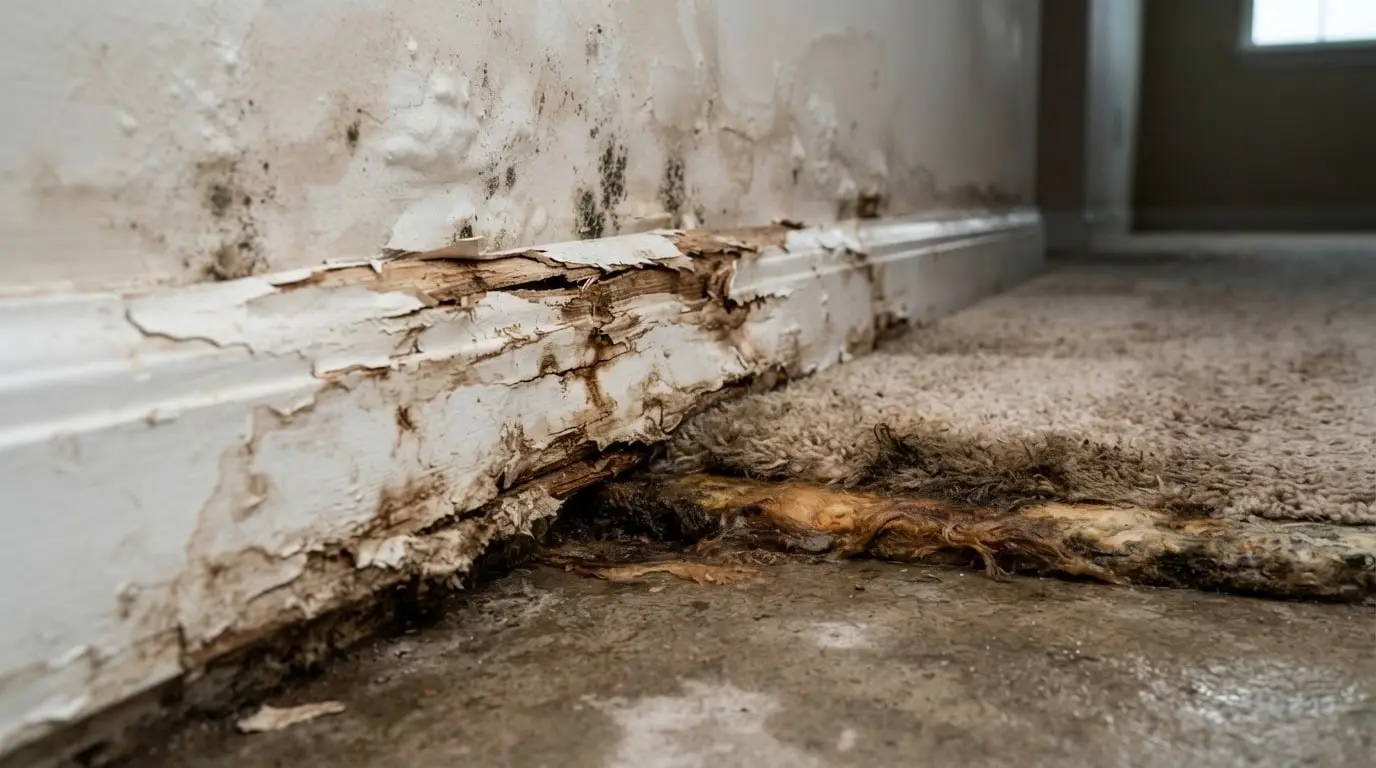
- Damp carpet, swollen baseboard, tiles lifting or a musty smell along one wall with no plumbing fixture nearby.
- Low pressure or slow-to-arrive hot water at fixtures past the leak.
One sign alone can have other causes. A running toilet moves the meter too, and a bill can jump from an irrigation leak in the yard. Two or three signs together, especially a warm spot plus a creeping meter, make a slab leak much more likely.
Finding the leak before anything gets opened
The point of leak detection is to open the floor in one spot, or not at all. Every wrong guess means another hole in the floor. A plumber narrowing down a slab leak usually works through it in this order.
Confirming there’s a leak
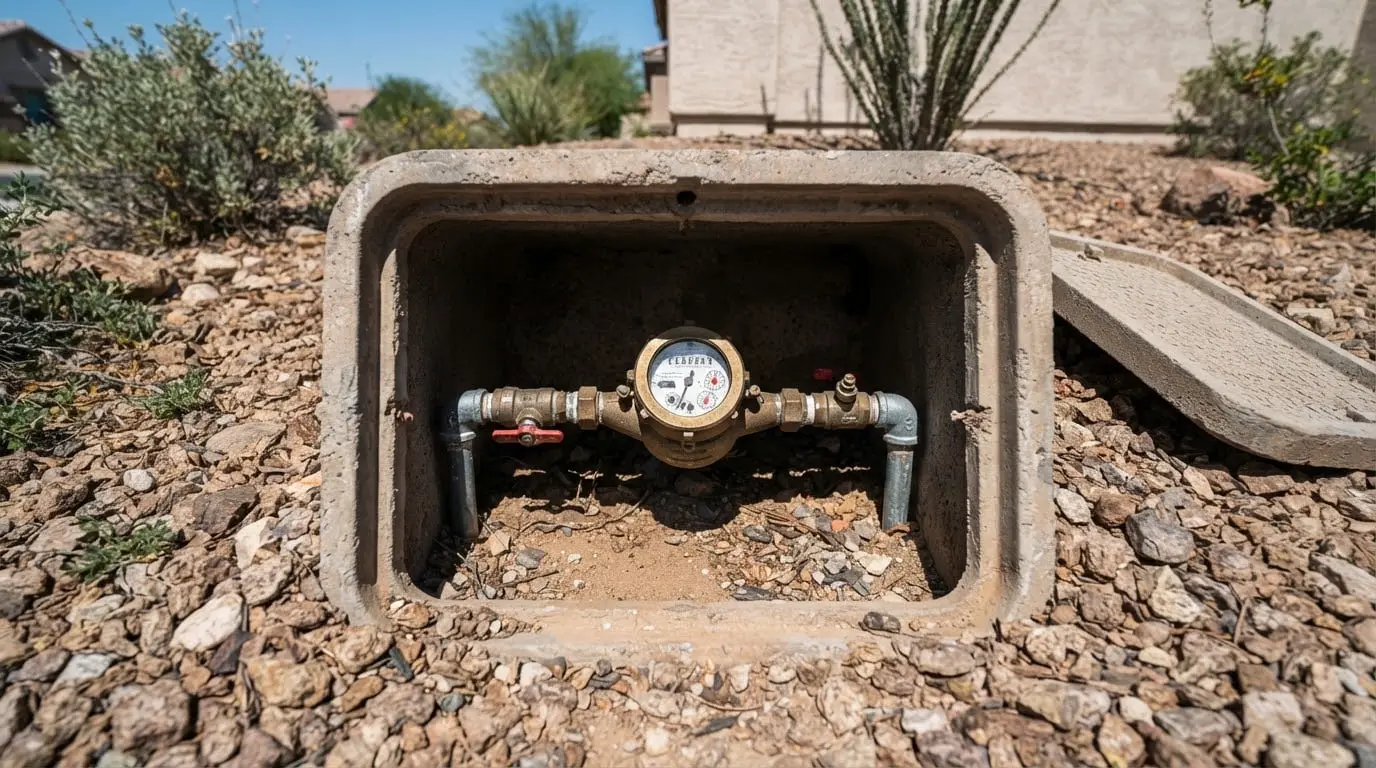
With every fixture off, the water meter tells the story. Most meters have a small low-flow indicator, a triangle or star that spins with even a slow leak. If it’s moving, water is leaving the system somewhere after the meter. Toilets and the irrigation system get ruled out first, since they cause most false alarms.
Then the house main gets closed. If the dial still moves with the house valve shut, the leak is in the yard line between the meter and the house, not under the slab. That shows up as a soggy patch or water surfacing in the yard. Leave the valve inside the meter box alone; the house main is the one to use.
Splitting hot from cold
Closing the cold supply valve on top of the water heater cuts off the whole hot side of the house. If the meter stops when that valve closes, the leak is on a hot line. If it keeps moving, it’s on the cold side, the line from the meter to the house, or both. Each side can then be pressure-tested on its own with a gauge to confirm which one is losing pressure.
Pinpointing the spot

Once the side is known, the plumber uses a mix of tools:
- Acoustic listening. Water forced out of a pinhole under pressure makes a hiss that ground microphones pick up through tile and concrete. The sound is loudest right over the break.
- Thermal imaging. A hot line leaking under the floor warms the concrete above it, and an infrared camera shows that as a bright patch. It works best on hot-side leaks.
- Line tracing. Locating where the pipe actually runs under the slab, so the listening and the thermal readings line up with the real path of the line.
When the readings agree, the spot gets marked on the floor. That mark is what the repair price is built around.
That's the most useful thing to say on the call. The visit starts there and works toward the spot.
Choosing how to fix it
There are three ways to deal with a slab leak. Which one fits depends on where the leak is, how old the rest of the plumbing is, what’s on the floor above it and how the slab was built.
| Repair | What happens | When it usually fits |
|---|---|---|
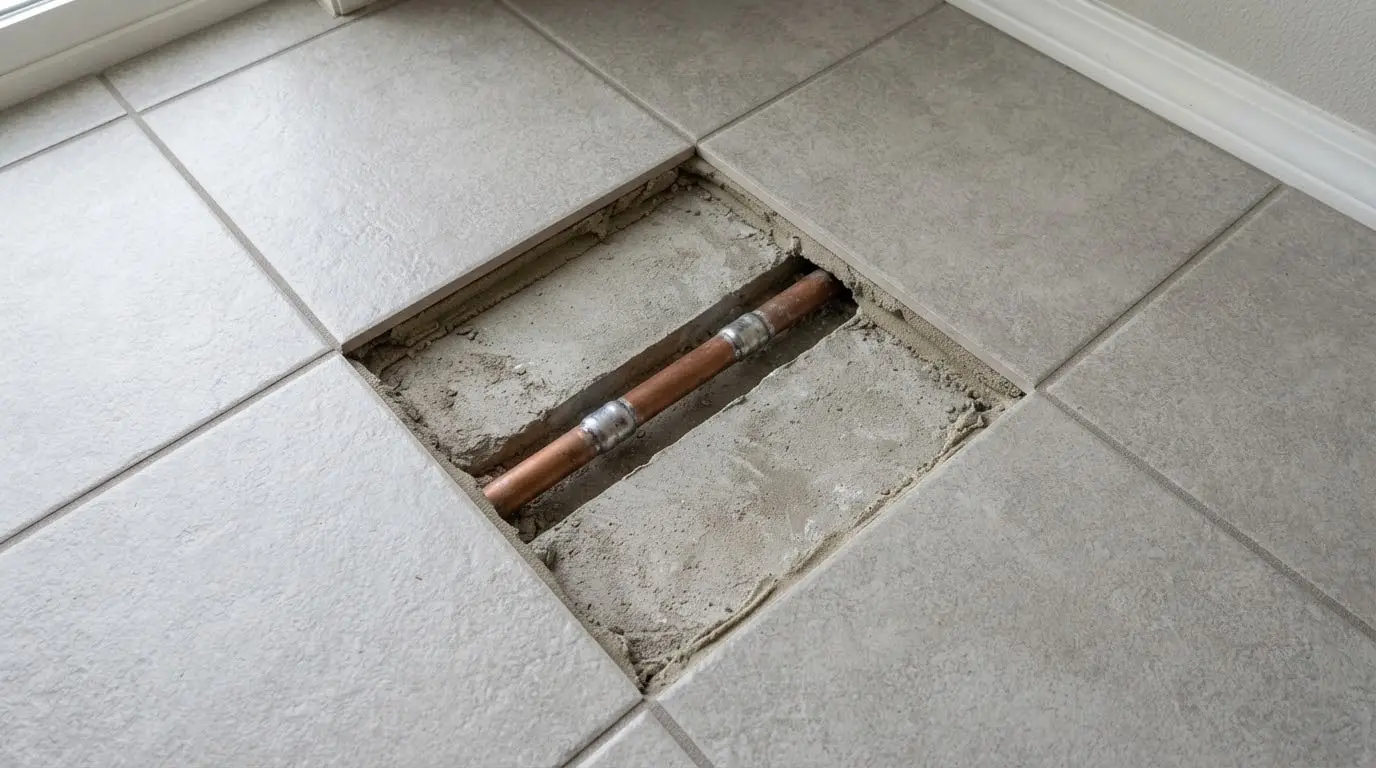
| Direct access (spot repair) | The floor is opened over the leak, the broken section is cut out and replaced, and the concrete and flooring are patched. | A first leak in a newer house, under a floor that’s easy to patch, on a slab that isn’t post-tensioned. |
| Reroute | The leaking line is capped at both ends under the slab and replaced with a new line through the attic and down a wall. | A leak under tile you don’t want broken, under cabinets, or on a post-tension slab. Also a second leak on the same line. |
| Repipe | Every supply line in the house is replaced with new lines run through the attic and walls, and the old lines under the slab are abandoned. | A second or third leak in a few years, pinholes showing up in exposed copper, or polybutylene or Kitec in the house. |
A spot repair fixes one hole. The rest of the pipe under the floor is the same age and has been through the same water, so a first leak is a fair moment to ask how the rest of the line is holding up. A reroute retires the whole run, not just the leaking foot of it. The full repipe is covered on its own page: whole-house repiping.
What a reroute looks like
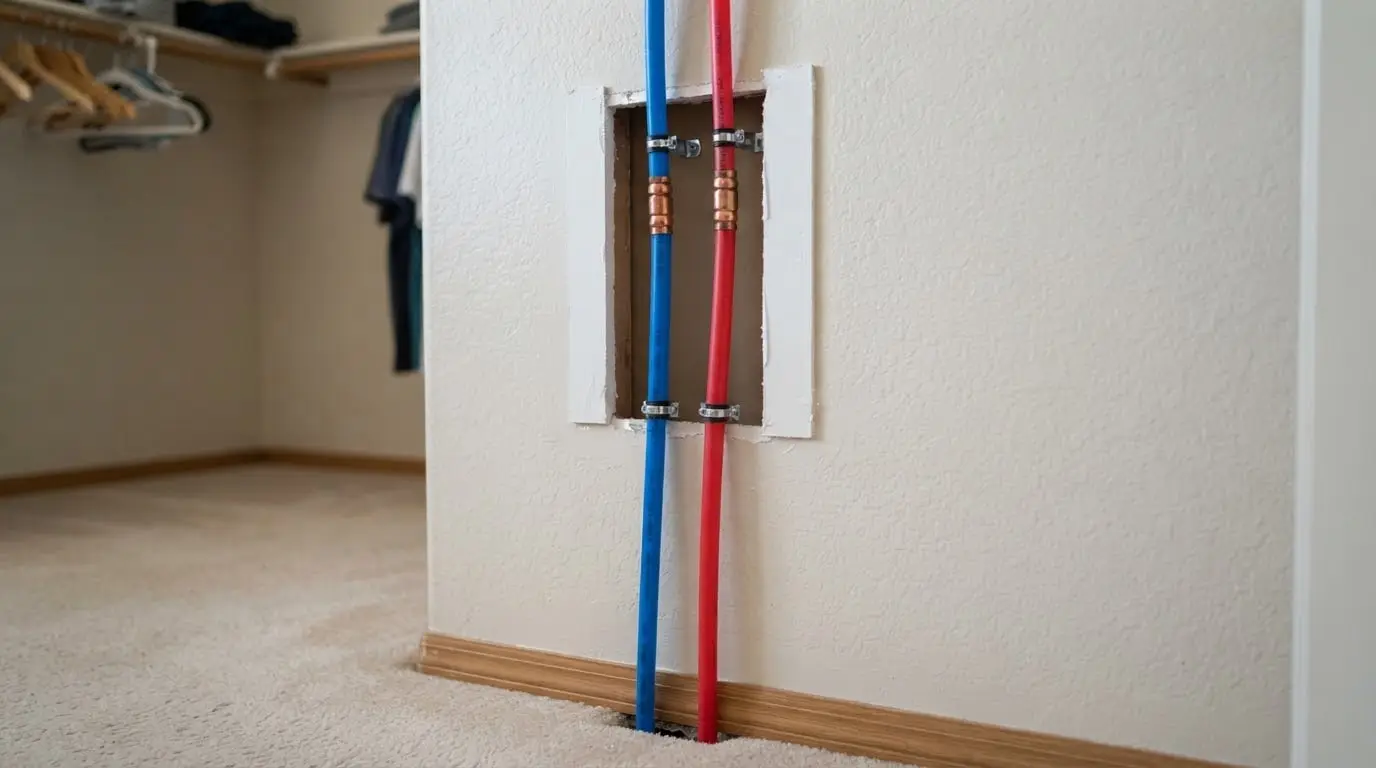
Under tile, under cabinets or on a post-tension slab, a reroute is usually the repair that makes sense, so it’s worth knowing what to expect.
The plumber caps the leaking line where it enters and leaves the slab, so it no longer carries water. A new line, usually PEX, runs from a point near the water heater or the main up into the attic, across the house and down inside a wall to the fixtures the old line fed. Small openings get cut in drywall at the top and bottom of each drop, typically inside a closet or behind a vanity where they’re easy to patch.
In the attic, the new line gets buried under the insulation or wrapped, because an East Valley attic in July runs far hotter than the outdoor air, and a cold line through that heat can deliver warm water to the tap.
Once everything is tied in, the new line gets pressure-tested and the meter checked with all fixtures off. A tight system means the dial stays still.
What happens to the floor and walls afterward
A spot repair leaves a patched area of concrete under the flooring. Carpet goes back down easily. Tile is harder: if spare tiles from the original job are in the garage, the plumber can often reset them, but a matching tile is rarely available years later. Wood and laminate depend on how they were installed.
A reroute leaves drywall openings. They’re patched and textured as part of most jobs, and painting is sometimes included and sometimes not, so ask when you see the written price.
If the leak ran for weeks, the slab and anything sitting on it may be wet. Swollen baseboards, damp carpet pad and a musty smell under cabinets are signs that drying is needed before the floor goes back down.
Slab leaks in Mesa houses
Mesa’s housing runs from early central neighborhoods to Dobson Ranch, built between 1973 and 1999, to new construction out in Eastmark. A house built in the 1970s or 1980s has supply lines that have been under its slab for forty years or more, and age is a big part of why lines start to fail.
On the visit, the plumber can tell you what the supply lines in your house are made of and how they look where they’re exposed at the water heater and under the sinks. That’s the starting point if a repipe ever comes up.
How the price of a slab leak repair gets built
The price comes from three things: finding the leak, reaching the pipe and putting the house back together. Detection is usually its own line. A reroute’s price depends mostly on how far the new line has to run and how easy the attic is to work in. A spot repair depends on the flooring and the slab. The slab leak repair cost guide walks through each part.