How a repipe gets priced
Every repipe price starts with a walk through the house. Mesa Rooter Works sets up repipe visits across Mesa, Gilbert, Chandler and Tempe, where a licensed, insured plumber counts the fixtures, looks at the attic and the walls, and writes up the price from there.
Most of it comes down to labor: how many places the new lines have to reach, how hard the attic and walls are to work in, and how much wall gets opened and patched. Material is a smaller piece, though the choice between PEX and copper moves it.
Counting the fixtures
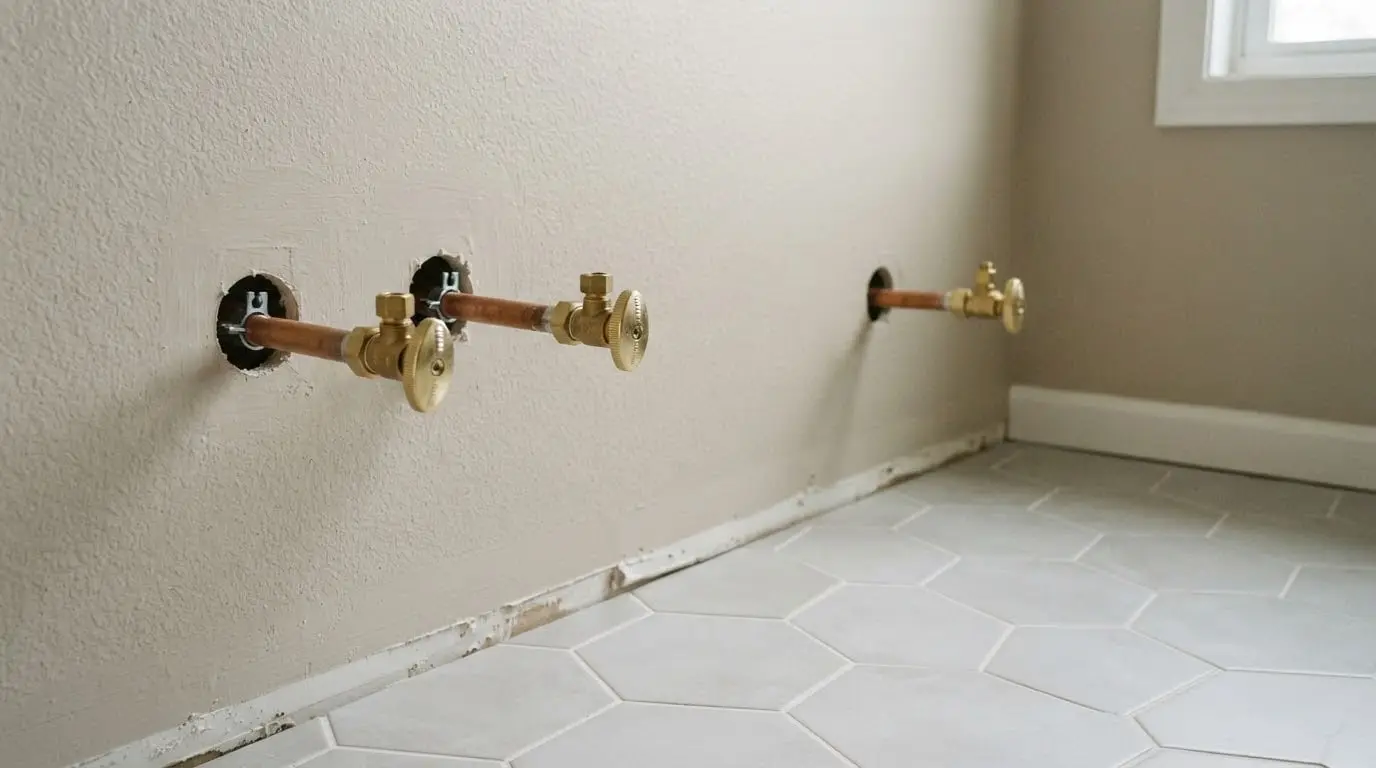
Every place water comes out of the house needs its own line, its own tie-in and usually a new shutoff valve. A typical list looks like this:
- kitchen sink, dishwasher and the ice maker line to the fridge
- each bathroom sink, toilet, tub and shower
- the washer box in the laundry
- the water heater connections
- outdoor hose bibs
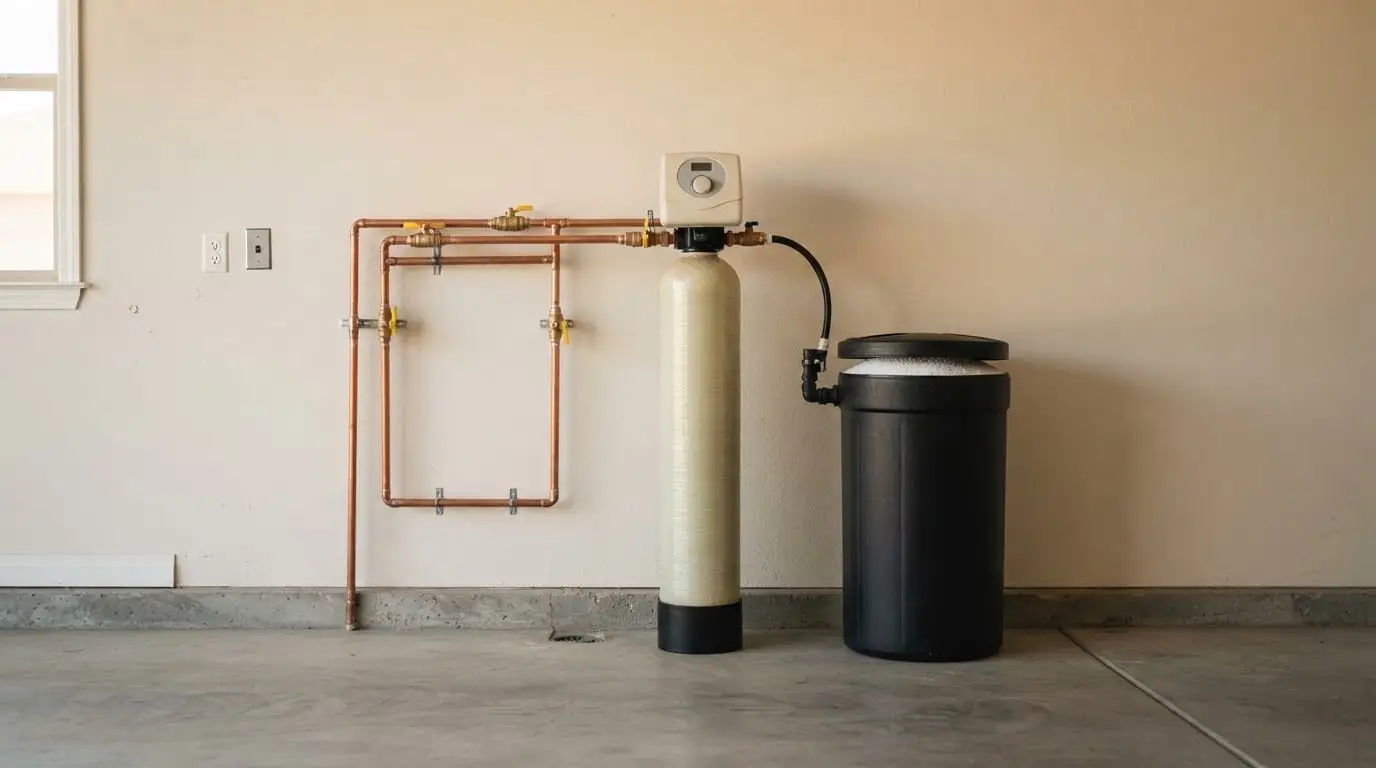
- the softener loop or a reverse osmosis line, if the house has one
A two-bath house might have fifteen or so connection points. A house with four bathrooms, a wet bar and a garage sink has a lot more. Each one is drywall to open, a drop to run and a connection to make, so the fixture count is the single biggest number behind the price.
Have the count ready when you call, plus whether there's a second story. That's enough to set up the visit.
Stories, layout and the attic
One story or two
In a single-story house, almost every line runs through the attic and drops straight down a wall. In a two-story house, lines to the downstairs rooms either drop through the upstairs walls or travel inside the floor framing between levels. That’s slower work, with more openings.
Where the fixtures sit
A house with the kitchen, laundry and bathrooms clustered near the water heater takes less pipe and fewer long runs than a house with bathrooms at opposite ends. Long runs also mean more line in the attic, which is worth thinking about in summer.
Getting around the attic
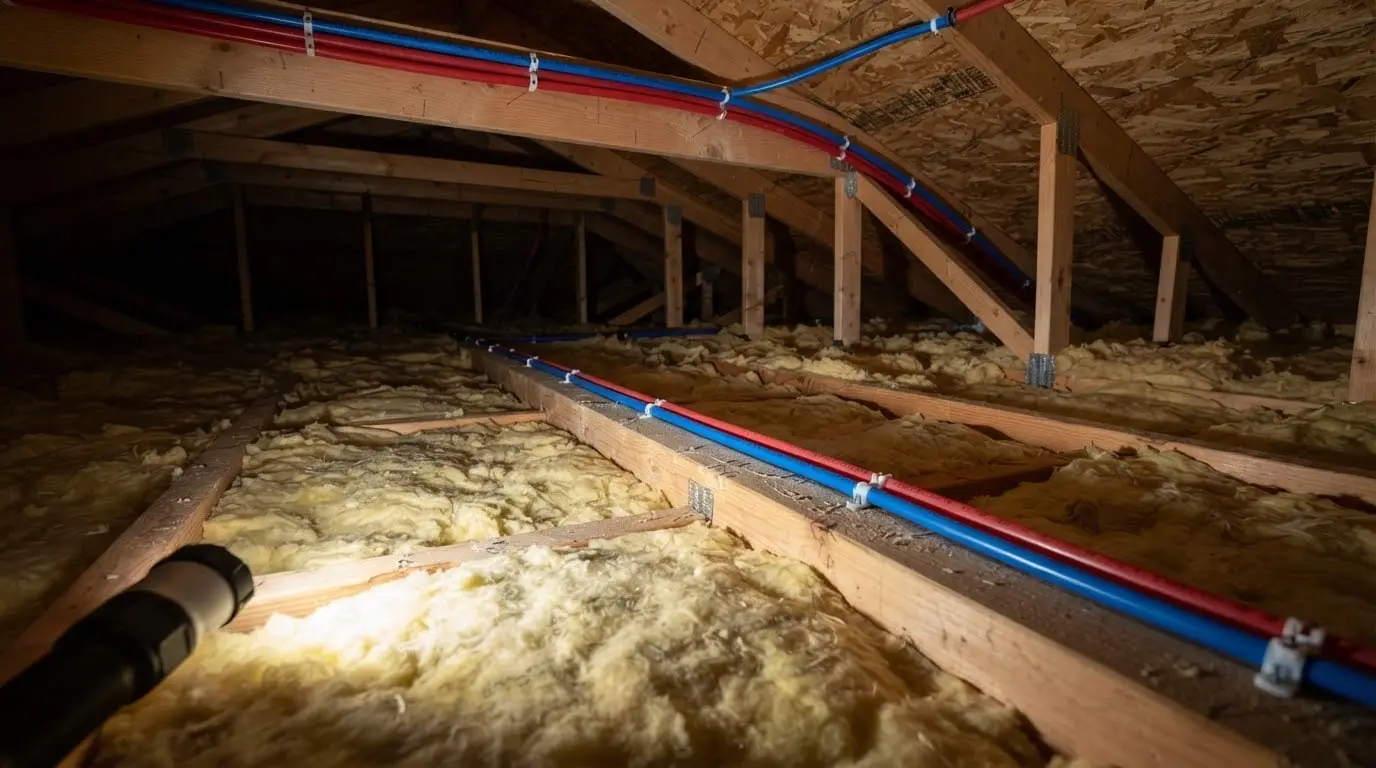
Attic work is the heart of an East Valley repipe, and the attic sets the pace. A tall attic with a good hatch and room to move is quick. A low-pitched roof with tight space near the eaves, heavy insulation or HVAC ducts in the way slows things down. Summer heat matters too, since attic work in July and August is slow going, and a job scheduled for cooler months can move faster.
PEX or copper on the price
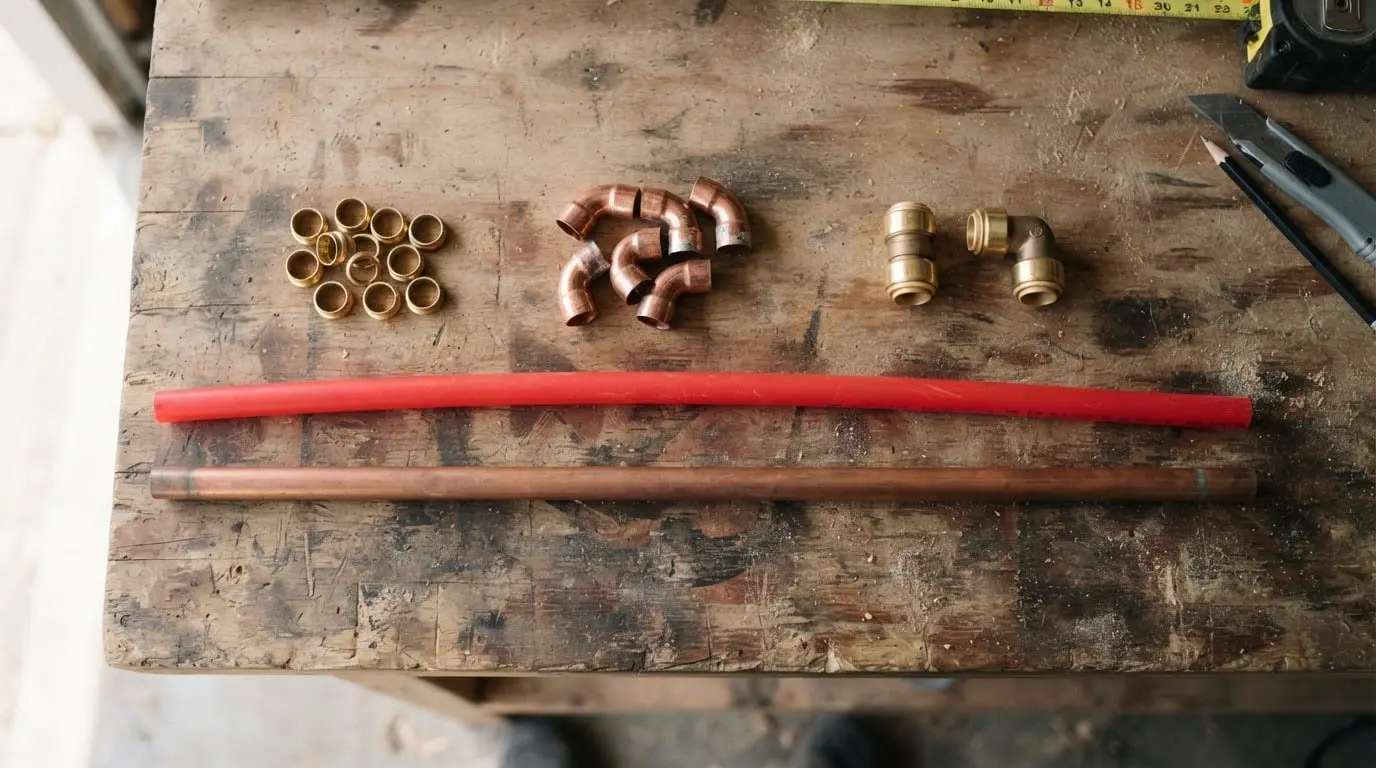
PEX costs less as material and usually goes in faster. It bends around framing, so there are fewer fittings and fewer wall openings. Copper is rigid and needs a soldered or press fitting at every turn, which takes more time.
Some homeowners still prefer copper. If you’re unsure, ask for both on the written price so you can see the difference for your own house. The repiping page covers how the two compare beyond price, including how each one handles a hot attic.
Opening and closing the walls
Drywall is where two repipe prices for the same house tend to differ, so each part of it should have its own line:
- Openings: how many and roughly where. Inside closets and behind vanities is easier to hide than a living room wall.
- Patching: filling the openings with new drywall, taped and mudded.
- Texture: matching the wall texture. Many homes have knockdown or orange-peel texture, and a good match takes skill.
- Paint: sometimes included, often not.
Ask on the visit whether texture and paint are in the written price, so you know exactly how the walls will look when the job is done.
Permits, inspection and the extras
Expect a permit for replacing supply piping. Chandler’s homeowner permit manual, for example, keeps it off the list of exempt repairs. The permit fee and the inspection visit should both appear on the written price.
A repipe also tends to raise a few other items. None of them are required, but they’re cheapest to add while the lines are being replaced:
- a new main shutoff valve, if the old one is stiff or leaking
- a manifold with individual shutoffs for each fixture
- a softener loop, so a water softener can go in later without more wall work
- a new water heater, if the current one is near the end of its life
What goes into the labor rate
The Bureau of Labor Statistics put the mean wage for plumbers in the Phoenix metro area at $30.03 an hour in its May 2023 survey. The rate on a repipe price runs higher than that wage, because it also covers the helper on the job, the truck and tools, insurance, licensing, permits and the time spent on inspections. A repipe is often a multi-day job for a plumber and a helper, so labor makes up most of the total.
Reading the written price
A clear repipe price lists:
- the pipe material and the layout (manifold or trunk and branch)
- every fixture being tied in, including the water heater and hose bibs
- new shutoff valves
- the number and location of drywall openings
- patch, texture and paint, each stated as included or not
- the permit and inspection
- the yard line, if included
- the schedule, with the days the water will be off
You only pay for work you agreed to, so settle any open line before the work starts. Weighing a repipe against another slab repair? The slab leak repair cost guide covers the other side of that decision.