Deciding the line is past repair
Replacing a sewer line is a bigger job than clearing or patching one, so the decision comes from camera footage. A line usually needs replacing when the video shows one or more of these along its length:
- the pipe has collapsed or lost its round shape in more than one place
- roots are coming in at most of the joints, not just one
- several low spots, or bellies, hold water along the run
- the pipe wall is cracked, scaled or broken in multiple sections
- the line has been cleared again and again and keeps backing up
If the camera shows one bad section and sound pipe on either side, a spot repair usually makes more sense. The sewer camera inspection page covers that side of the decision.
Mesa Rooter Works takes sewer line replacement calls for Mesa, Gilbert, Chandler, Tempe and nearby towns, and the job is done by a licensed, insured plumber who replaces sewer laterals in your part of the Valley. In Mesa that lateral, the pipe from the house to the city main in the street, is the homeowner’s to maintain and repair, which is why the decision lands with you.
Choosing between trench and trenchless
There are three common ways to replace or renew a house sewer line. Which one fits depends far more on the property than on a preference.
Open trench
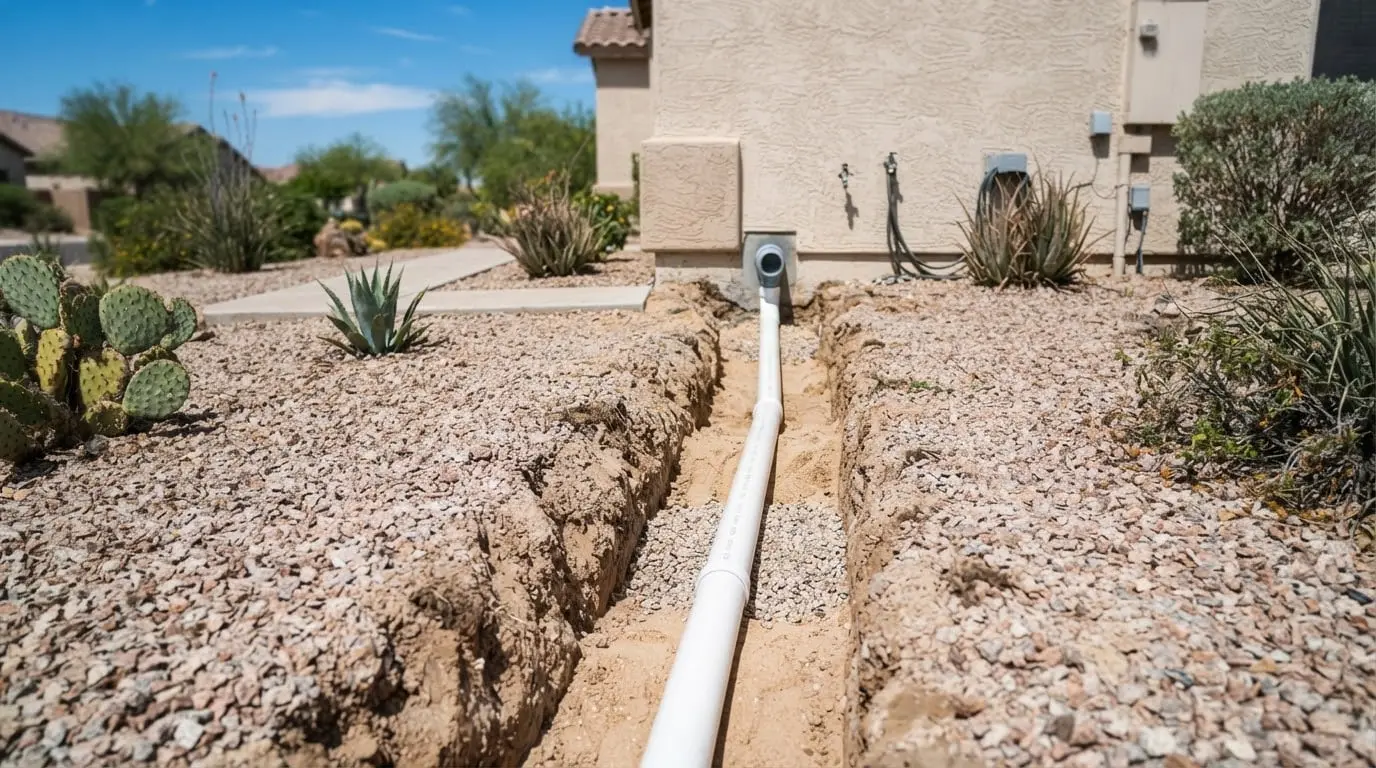
The plumber digs along the length of the old line, removes it, lays new pipe at the correct slope and backfills. It’s the most direct method, and it’s the one that can fix a sag, since the new pipe gets bedded at a fresh grade. It also lets the plumber see every inch of the new installation before it’s covered.
The trade-off is everything on top. A trench through a lawn or a gravel yard is a dig and a backfill. A trench through a concrete driveway, a paver patio or past mature trees means cutting, removing and rebuilding those.
Pipe bursting
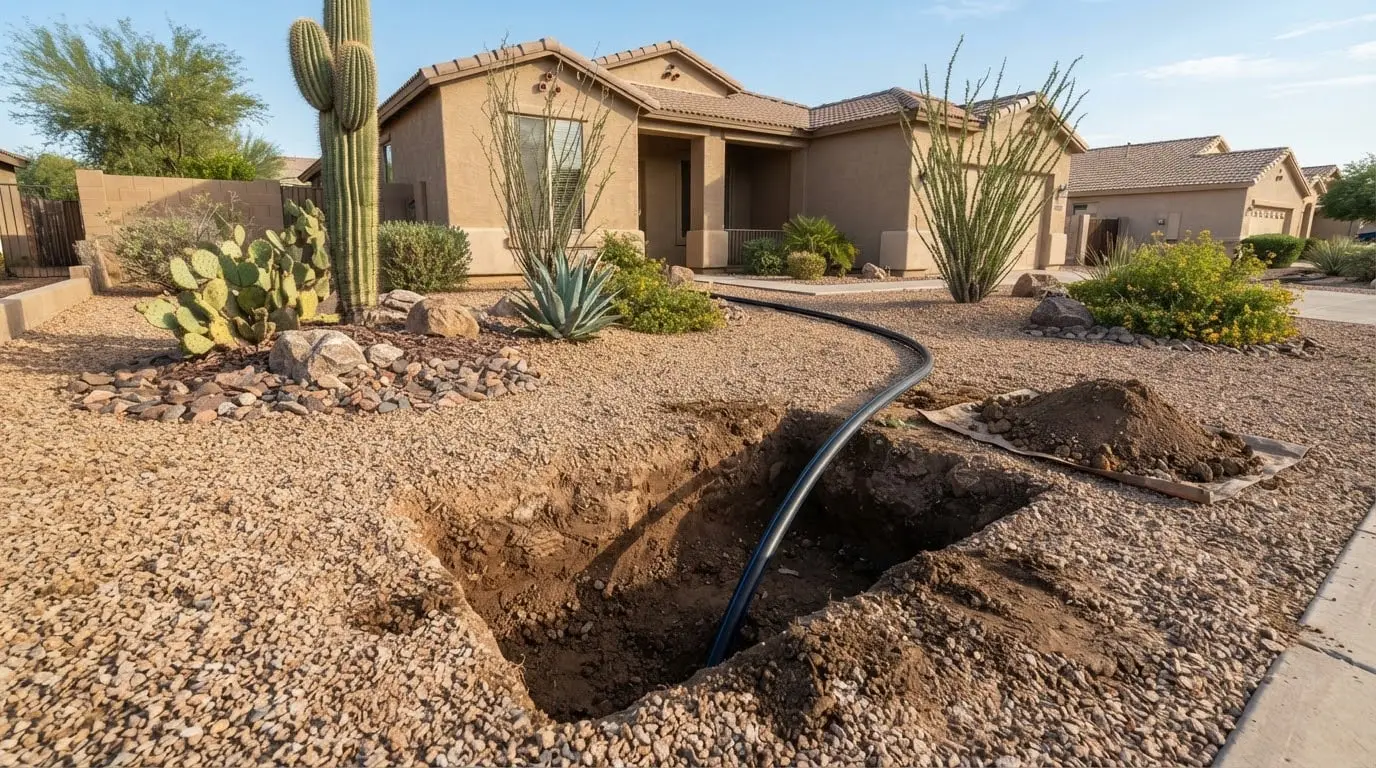
A bursting head is pulled through the old pipe, breaking it outward into the soil while dragging a new continuous length of pipe in behind it. It needs a pit at each end, typically near the house and near the connection to the main, but not a trench between them.
Bursting suits a line that runs under a driveway, patio or landscaping you want to keep. It follows the path of the old pipe, so it doesn’t correct a deep belly, and it needs room in the ground for the old pipe fragments to be pushed aside.
Lining

A liner is a resin-soaked tube that’s pulled or inverted into the old pipe and cured in place, forming a new pipe inside the old one. It works on a line that’s cracked or root-infiltrated but still holds its shape. It can’t fix a collapsed section or a sag, because it takes the shape of whatever pipe it’s inside.
| What you’re dealing with | Usually points to |
|---|---|
| Line under open lawn or rock, sags along the run | Open trench |
| Line under a driveway or patio, pipe broken but no deep sag | Pipe bursting |
| Pipe cracked or rooty but still round, hard access | Lining |
| Collapsed sections in several places | Trench or bursting, not lining |
Have it ready on the call. The footage and the depth readings are what the method and the price get built from.
Digging safely: utilities, depth and soil
Before any trench or pit goes in, buried utilities get marked. Arizona 811 asks for a call at least two business days before digging. Gas, electric, water and communication lines often share the same strip of front yard as the sewer lateral, so this step comes first on every replacement.
Depth matters next. A shallow line near the house can deepen toward the street as it falls toward the main. Deeper digs take more time and, past a certain depth, need the trench walls supported so they don’t cave in on whoever’s working in them.
The soil itself changes the pace. Hard, rocky desert ground takes heavier equipment and longer to dig than soft soil, and the plumber will judge that on the visit rather than in advance.
Permits and inspection
Sewer replacement is permitted work. Chandler’s homeowner permit manual, for instance, says replacing or relocating sewer or drain piping isn’t on the list of exempt ordinary repairs. Mesa, Gilbert and Tempe each run their own permit process. The plumber pulls the permit, and the city inspects the new line, usually before the trench is backfilled, so the pipe and its slope can be seen.
Pricing the new line: depth, footage and what sits on top
No two yards are alike, so a new sewer line is priced from the yard you have. These set the number:
- Length of the run. The distance from the house to the main is the biggest single factor.
- Depth. Deeper pipe means more digging, more shoring and more backfill.
- What’s on top. Cutting and replacing concrete, pavers or established landscaping can cost as much as the pipe work.
- Method. Trench, bursting and lining each have their own equipment and labor.
- Number of pits or access points. Trenchless methods need entry and exit pits; a second cleanout can change that.
- Permit and inspection. Built into the job.
- Cleanout work. Adding or replacing a cleanout at the house or near the property line while the ground is open.
You’ll get a written price on the method that fits the property, and you only pay for work you agreed to.
Adding a cleanout while the ground is open
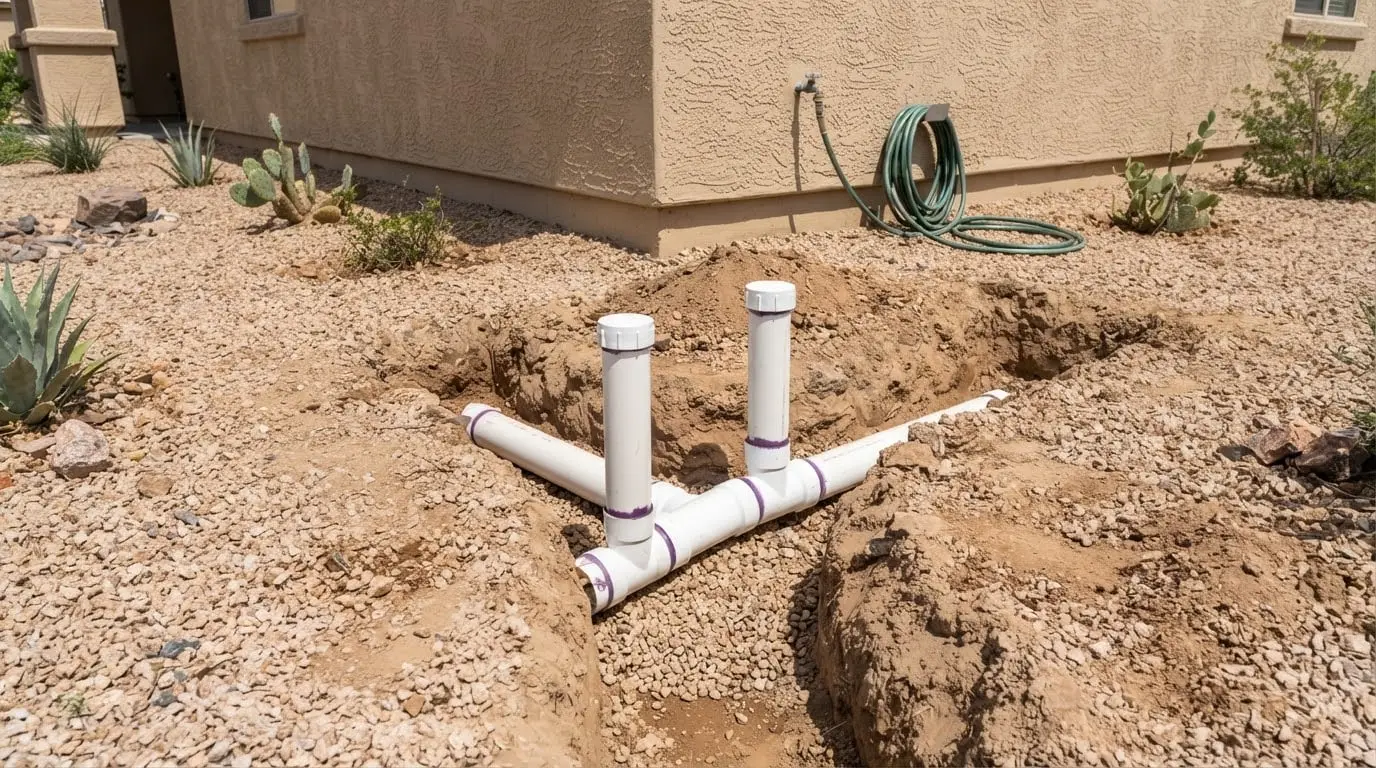
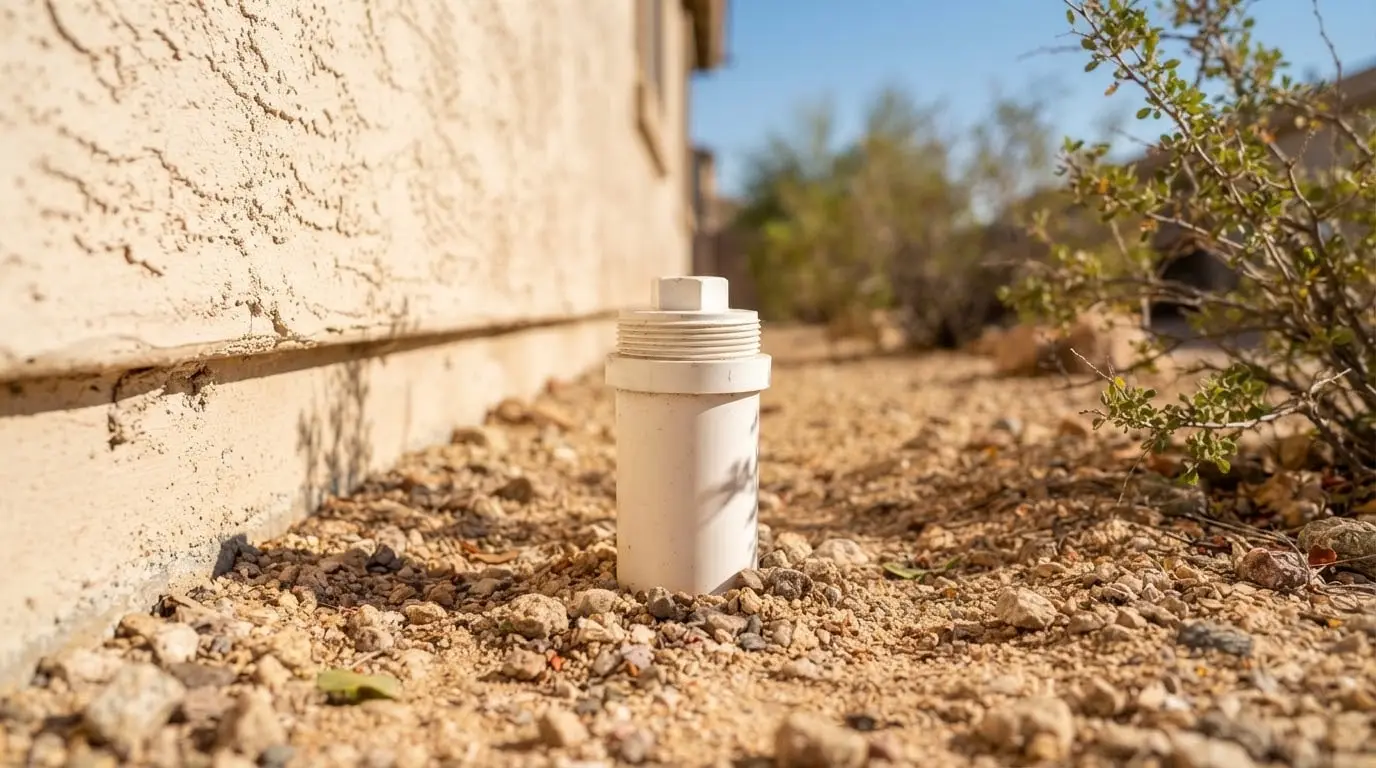
A replacement is the cheapest time to fix bad access. Some older East Valley houses have no outside cleanout at all, or one buried under a slab patio or set at an awkward angle. While the trench or pit is open, adding a cleanout near the house, and sometimes a second one near the property line, costs far less than it would as a separate job later.
That cleanout pays off for the life of the new line. Future clogs get cleared from outside without pulling a toilet, and future camera inspections have an easy way in. In Mesa, keeping the cleanout reachable is already the homeowner’s responsibility, so it’s worth getting it right while the pipe is exposed.
Keeping roots out of the new line
New pipe with tight joints resists roots far better than old clay with a joint every few feet, but roots still go where the water is. Mesa’s wastewater guidance tells homeowners to plant trees more than 10 feet from the sewer line. If a tree caused the old line to fail, talk about it on the visit: sometimes the new line can be routed a little farther from the trunk, and sometimes the tree is too close to keep.
On replacement day
Most house laterals get replaced over one or two days, depending on length and method. Expect a stretch with no water going down the drains while the old line is disconnected, so plan showers and laundry around it. The plumber will mark utilities, open the trench or pits, replace the line, connect it at the house and at the main or the existing tap, test it, and wait for the inspection before backfilling.
When it’s done, a camera run down the new line is worth asking for. It’s the before-and-after record, and it gives you a clean baseline for the years ahead.