Telling a fixture clog from a main line clog
The first question on any drain call is how many drains are involved. A single slow bathroom sink with hair in the stopper is a small job. A tub that fills with gray water when someone flushes is a different job entirely, because it means the problem is downstream of every fixture in the house, in the main line that carries everything out to the sewer.
Mesa Rooter Works takes drain cleaning calls from Mesa, Gilbert, Chandler, Tempe and the rest of the East Valley, and each one goes to a licensed, insured plumber who clears drains in your area. Before anyone arrives, the answer to “one drain or several?” already narrows down the tools that come off the truck.
Here’s how the symptoms usually sort out:
| What you notice | Where the clog usually is |
|---|---|
| One sink or one tub drains slowly | The trap or the branch line right under that fixture |
| Both bathroom sinks and the tub on one side of the house slow down | A branch line that serves that bathroom group |
| The toilet gurgles or the tub backs up when the washer drains | The main line, partly blocked |
| Water comes up in the lowest drain, often a shower or tub | The main line, close to fully blocked |
| A sewage smell in the yard near the cleanout | The main line or the sewer lateral to the street |
A clog in a branch line can wait for a scheduled visit if the rest of the house drains fine. A main line backup can’t, since every flush or load of laundry pushes more water toward that lowest drain.
Clearing the line: cable or water
Two tools do most of the work. The choice depends on what’s in the pipe and how often it comes back.
Snaking with a cable machine
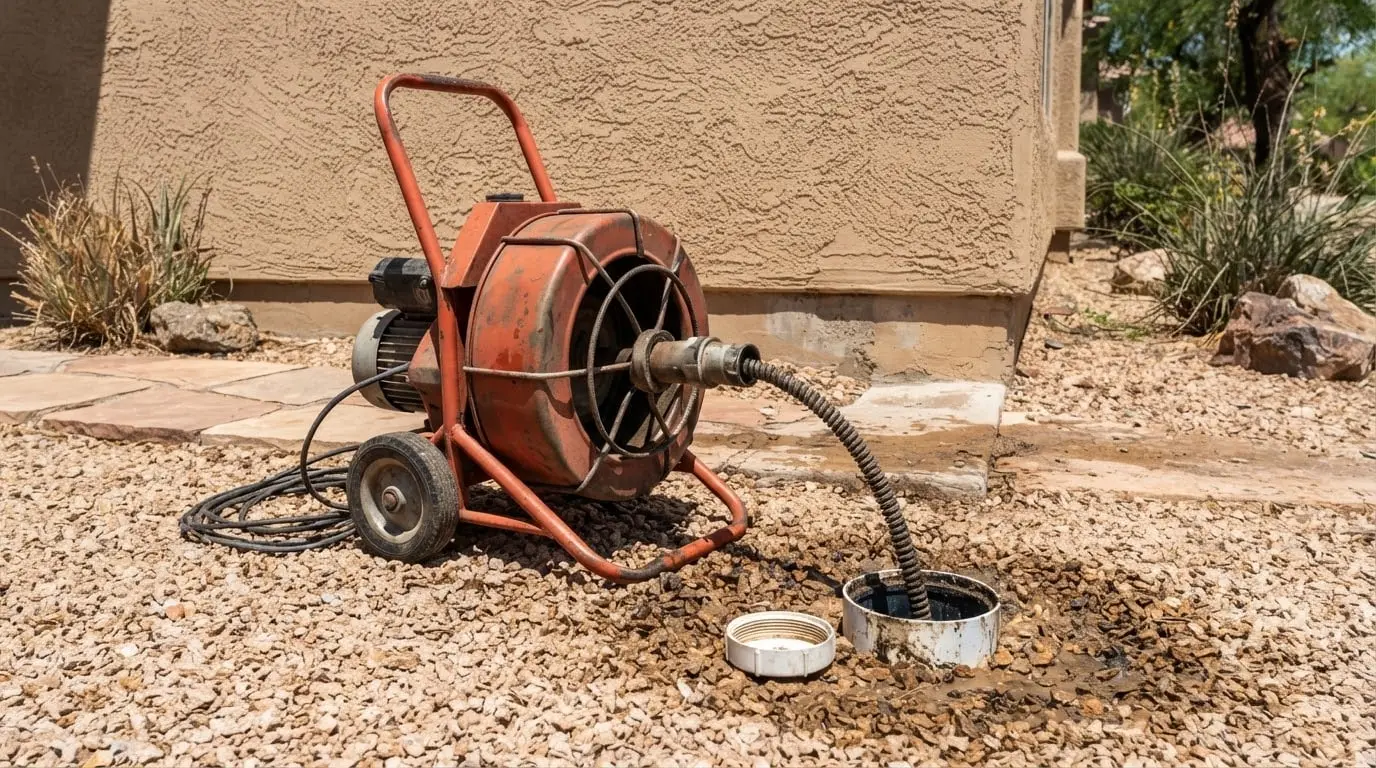
A drain cable, or snake, is a coiled steel cable with a cutting head on the end. It spins its way down the pipe and either bores through the clog or hooks it and pulls it back. For hair in a tub drain, a wad of wipes in a toilet line, or a single clog in a short run, a cable is quick and usually enough.
Its limit is that it opens a hole. If the pipe walls are coated in grease or packed with fine roots, the cable cuts a channel through the middle and leaves the rest. The drain works again, then slows down over a few weeks as the channel closes.
Hydro jetting
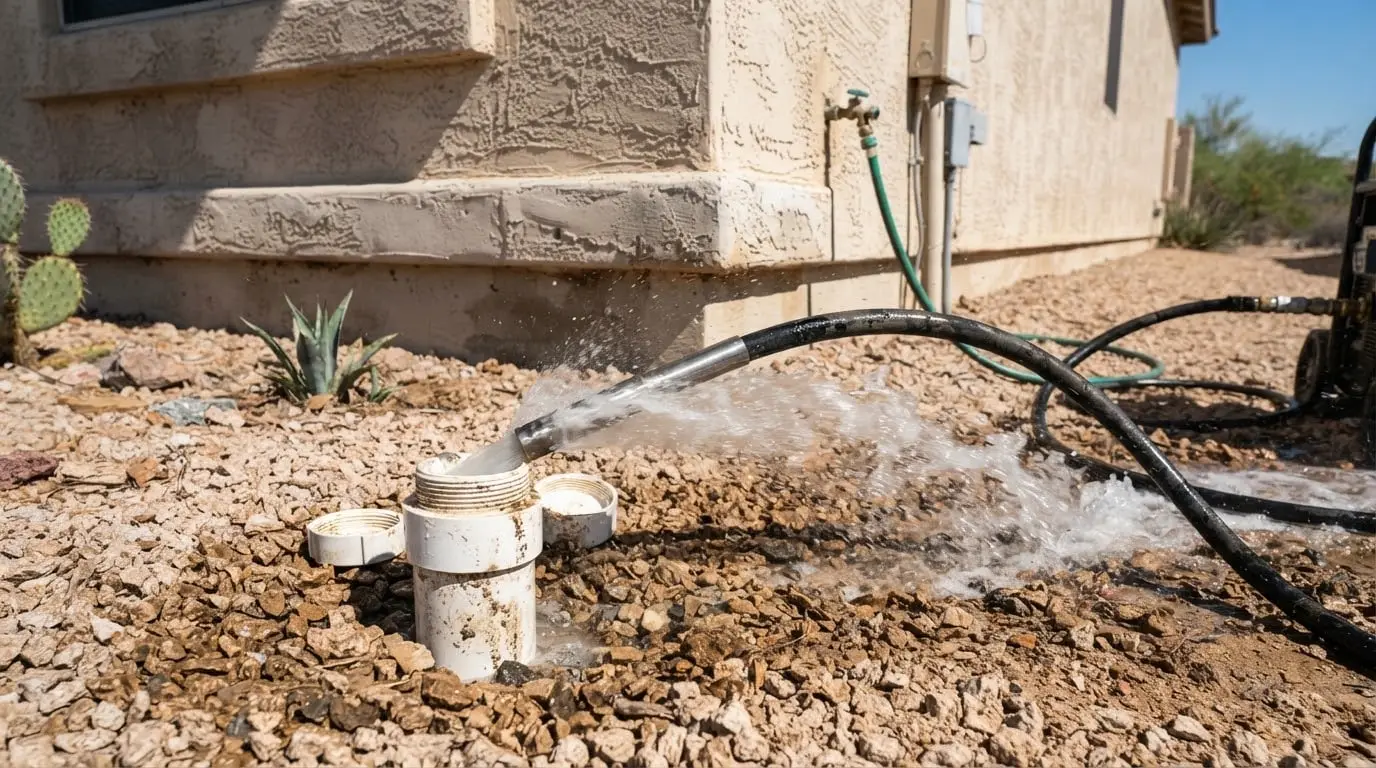
A hydro jetter pushes water through a hose at high pressure. The nozzle on the end has jets that point backward, so the hose pulls itself down the line while the spray scours the pipe wall all the way around. It cuts grease, scale and fine roots and flushes the debris down to the sewer.
Jetting makes the most sense when:
- the same drain has been snaked more than once in a year
- a kitchen line is coated in grease from years of dishwater
- a camera has shown fine roots or buildup along a long stretch
- the line is being cleaned before a camera inspection so the walls can be seen clearly
It’s not the right tool for every pipe. Old clay or cracked cast iron can be damaged by full-pressure jetting, which is one reason a plumber may want a camera inspection first on an older line.
Pricing a drain call: access, length and method
Hydro jetting and snaking jobs vary a lot in price. Where a job lands depends on:
- Which line. A single sink trap is quick. A main line cleared from the outside cleanout takes more setup and more cable or hose.
- Access. A clean, reachable cleanout makes a main line job straightforward. A cleanout buried under gravel or a paver, or no cleanout at all, adds time, and pulling a toilet to get in adds more.
- Cable or jetter. Jetting takes heavier equipment and more time than a single cable pass.
- What’s in the line. Grease and roots take longer to clear than a soft clog, and a long run out to the street takes longer than a short one.
- A camera run. Adding video afterward is a separate step, worth it when the line keeps clogging.
The price comes to you in writing first, and you only pay for work you agreed to.
Stop running water in the house, then call. A main line backup gets worse with every flush.
Finding the cleanout
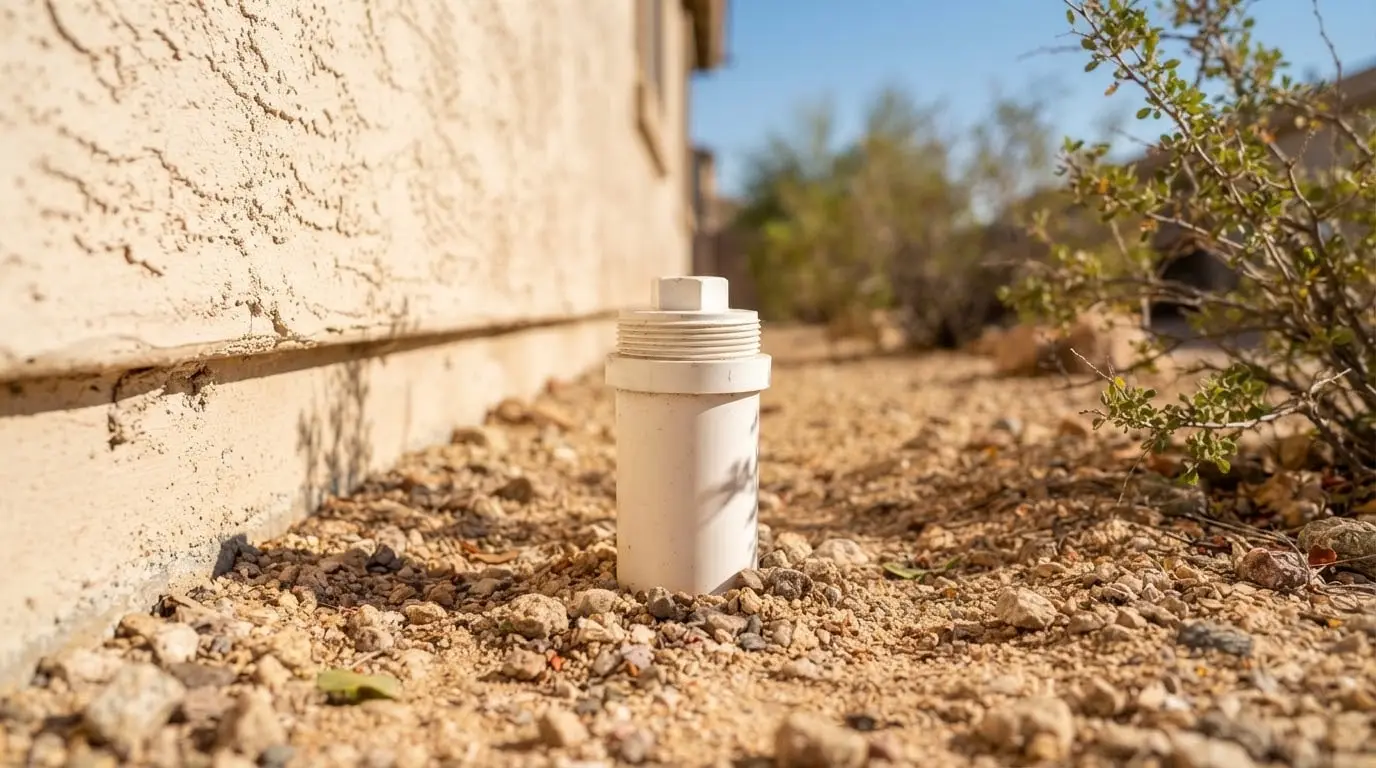
The cleanout is a capped pipe, usually 3 or 4 inches across, that gives straight access to the main line. On most slab homes in the East Valley it sits outside near the front or side wall where the sewer line leaves the house, often in a planter bed or close to where the bathroom plumbing runs. Some houses have a second cleanout closer to the street.
In Mesa, keeping that cleanout reachable is the homeowner’s job. The city makes the property owner responsible for cleaning and repairing the sewer line from the house to the city main, and for providing access to the cleanout. If yours is under a few inches of decorative rock or behind a shrub, the plumber will find it, but knowing roughly where it is saves time.
Chasing a sewer smell with no backup
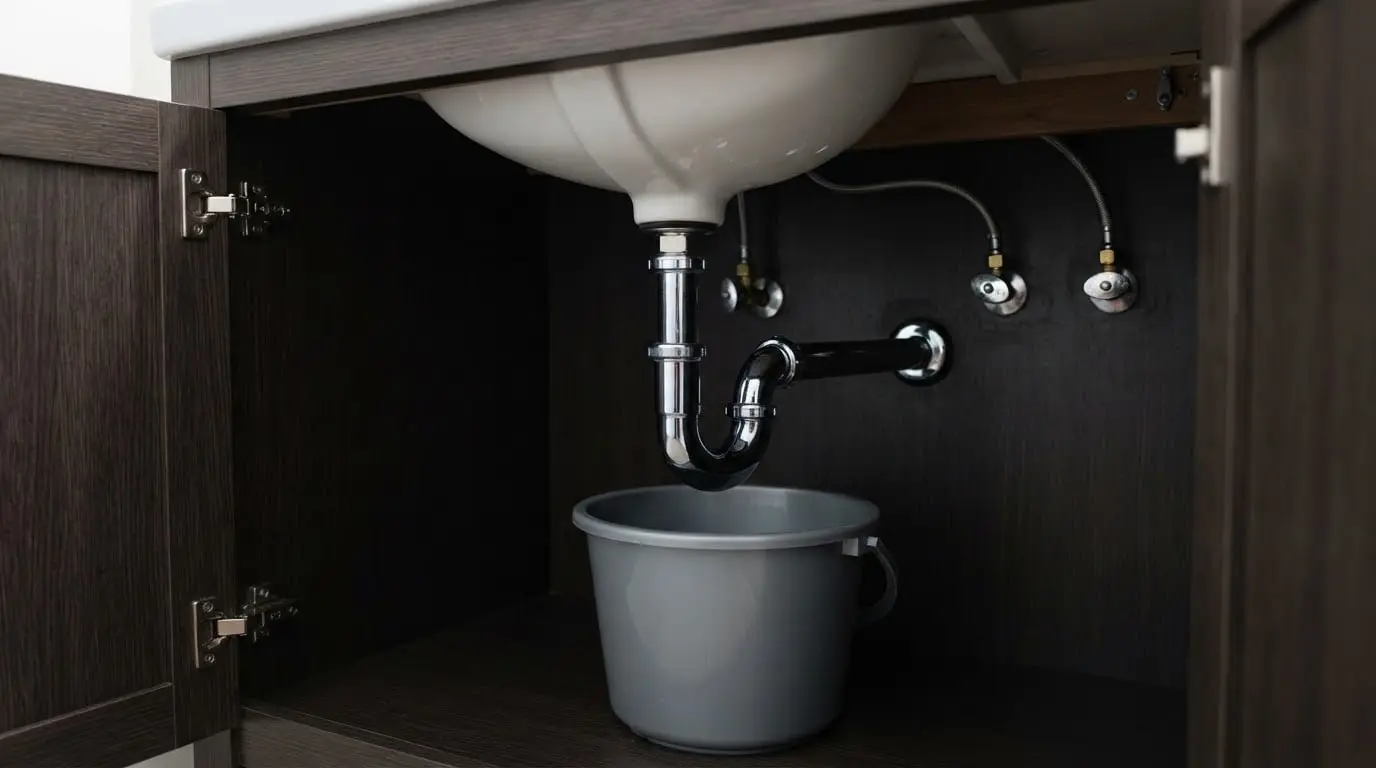
A house that suddenly smells like sewer while every drain still runs usually has a dry trap. Each drain has a U-shaped trap that holds a little water, and that water is what stops sewer gas from coming up into the room. A guest shower, a floor drain in the laundry or a tub nobody uses can dry out in the heat of late spring and summer, and once the water’s gone the smell comes straight through. The same open path is how sewer roaches find their way up a drain.
Run water in every drain you don’t use often, for a minute or so. If the smell fades, that was it. If it hangs around, the cause is somewhere in the system: a cracked pipe, a loose cleanout cap, a toilet that has lost its wax seal, or a vent pipe that isn’t doing its job. Those take a plumber, and sometimes a camera, to find.
Getting through monsoon season without a backup
Phoenix-area rain is scarce, about 7.22 inches a year on the National Weather Service’s 1991-2020 normals. A lot of it arrives in monsoon storms between June 15 and September 30, and it comes down hard and fast.
Storms bring drain trouble in a few ways. Dust, leaves and gravel wash into yard drains and onto cleanout caps that sit at ground level. A cracked or loose cleanout cap lets storm runoff and grit straight into the sewer line. And a line that was already partly blocked by roots or grease has no room for the extra water, so it backs up into the house during or right after a storm.
Before the season, make sure the cleanout cap is on and not cracked, and if the main has backed up before, get it cleared in spring rather than mid-storm.
A backup right after a storm usually still traces to something in the line, not to the rain alone. Roots, grease or a sag in the pipe give the extra water nowhere to go. That’s when a camera inspection earns its place.
Roots, grease and wipes
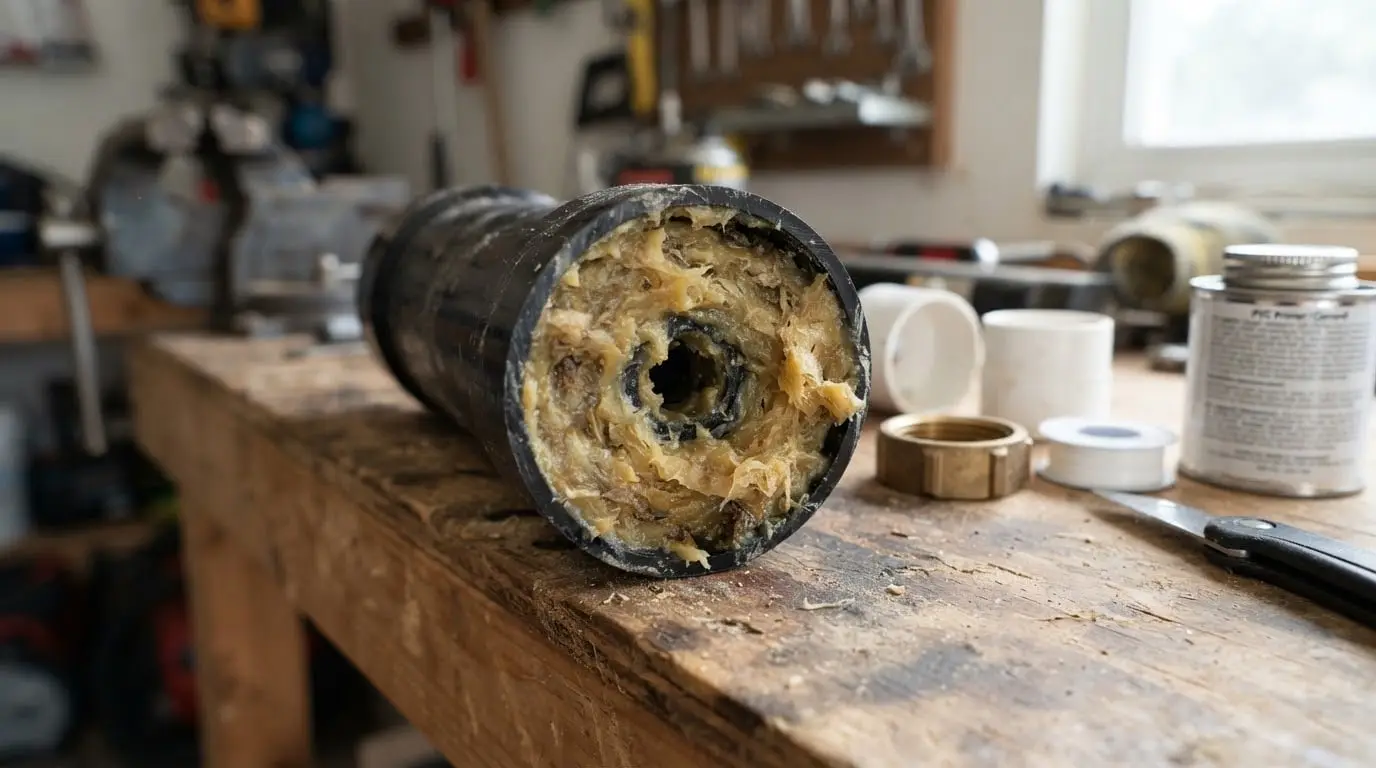
Roots, grease and wipes cause a lot of repeat clogs.
Roots. University of Arizona Cooperative Extension notes that some trees have roots aggressive enough to damage water, sewer and gas lines, with sewer pipes especially vulnerable. Roots find the moisture at a pipe joint or crack and grow inside, where they catch everything that goes past. Mesa’s wastewater guidance tells homeowners to plant trees more than 10 feet from the sewer line for this reason. Jetting clears roots for a while; if they keep coming back, the joint they’re entering needs a repair.
Grease. Cooking fat poured down the kitchen sink cools and sticks to the pipe wall a few feet in. Each layer catches more food scraps. Kitchen lines that clog on a schedule, every few months, are often greased up, and jetting is what clears them properly.
Wipes. “Flushable” wipes don’t break down the way toilet paper does. They snag on rough spots in older pipe, on roots, or on a sag in the line, and pile up into a mat. If the main line keeps catching wipes, there’s usually something in the pipe giving them a place to hang.
When a clog keeps coming back
A drain that needs clearing twice in a year has a problem in the pipe itself. The usual next step is to run a camera down the line after it’s been cleaned, so the plumber can see roots coming in at a joint, a low spot where water sits, a crack, or a section of pipe that has shifted.
From there the options run from routine cleaning on a schedule, to fixing one bad section, to replacing the sewer line if the whole run is failing. The video makes that decision a lot clearer than another round of snaking.
If the backup is happening right now and sewage is coming into the house, that’s an emergency plumbing call. Stop using water, keep people and pets out of the wet area, and call so the line gets opened before anything else.