Seeing inside the line before anyone digs
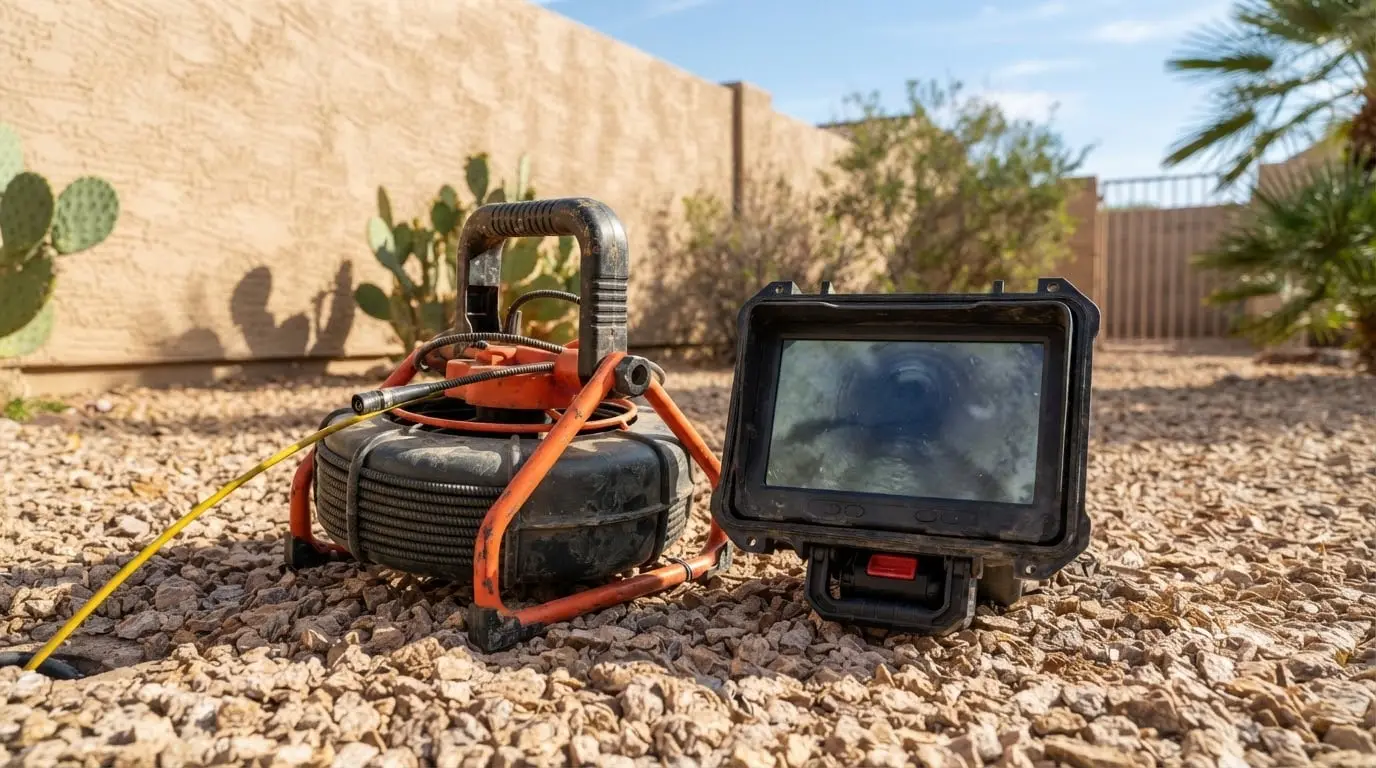
A sewer line that keeps clogging can be cleared again and again without anyone knowing why. A camera answers the why. A waterproof camera head on a long push cable goes in through the cleanout and travels down the pipe while the plumber watches the picture on a monitor. Roots at a joint, a crack, a crushed section, a low belly holding water, a pipe that has pulled apart: each one shows up on screen along with how far from the cleanout it sits.
Mesa Rooter Works takes sewer camera inspection calls for Mesa, Gilbert, Chandler, Tempe, Scottsdale and nearby East Valley towns. The inspection is done by a licensed, insured plumber who works on sewer lines in your area, and the footage is what the repair decision gets built on.
Knowing which part of the line is yours
In Mesa, the sewer lateral belongs to the homeowner. That’s the pipe from the house out to the city’s sewer main, which usually runs under the street. The city’s wastewater rules make the property owner responsible for maintaining and cleaning the lateral, and for providing access to the cleanout. The city looks after the main.
On a camera call, the problem could be in either place. The distance counter on the camera screen shows how far out a root mass or break sits. If the trouble is in your lateral, it’s yours to fix. If the camera reaches the main and the problem is there, that’s a different conversation.
Marking the problem: distance and depth
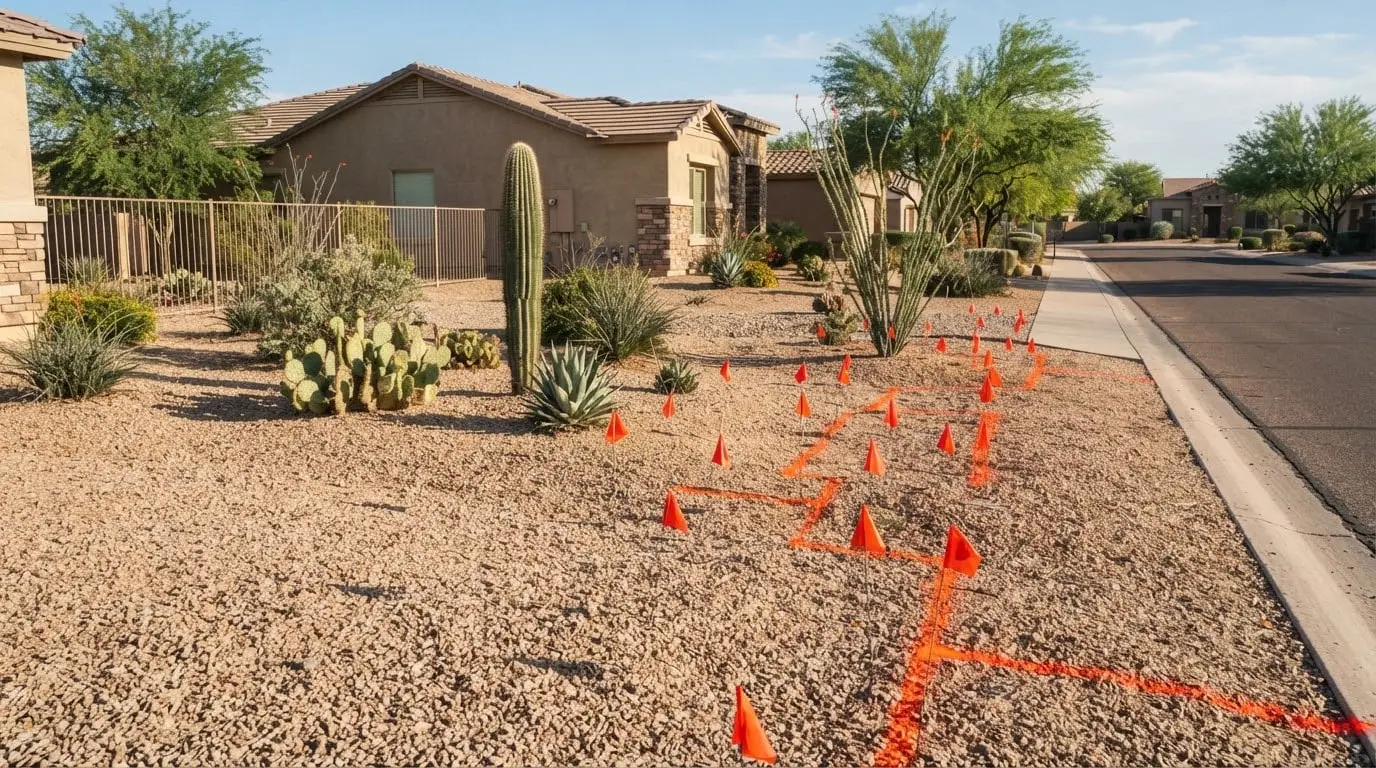
Seeing a crack isn’t enough to fix it. Someone has to find that spot from the surface. Sewer cameras carry a small radio transmitter, called a sonde, in or near the camera head. With the camera parked at the problem, the plumber walks the yard with a locator that picks up the signal and marks the spot on the ground. The locator also reads roughly how deep the pipe is at that point.
Those two numbers, distance and depth, decide most of what comes next:
- A problem a few feet out from the cleanout in a planter bed is a small dig.
- The same problem under the driveway or a slab patio is a much bigger job, and may push the choice toward a repair that doesn’t need a trench.
- A deep line takes more digging and more shoring than a shallow one.
A cleared line with a camera run after it shows whether you're dealing with roots, a sag or a broken section.
Reading what the camera shows
These are the findings that come up most on a sewer camera, and what each one usually leads to.
Roots at the joints
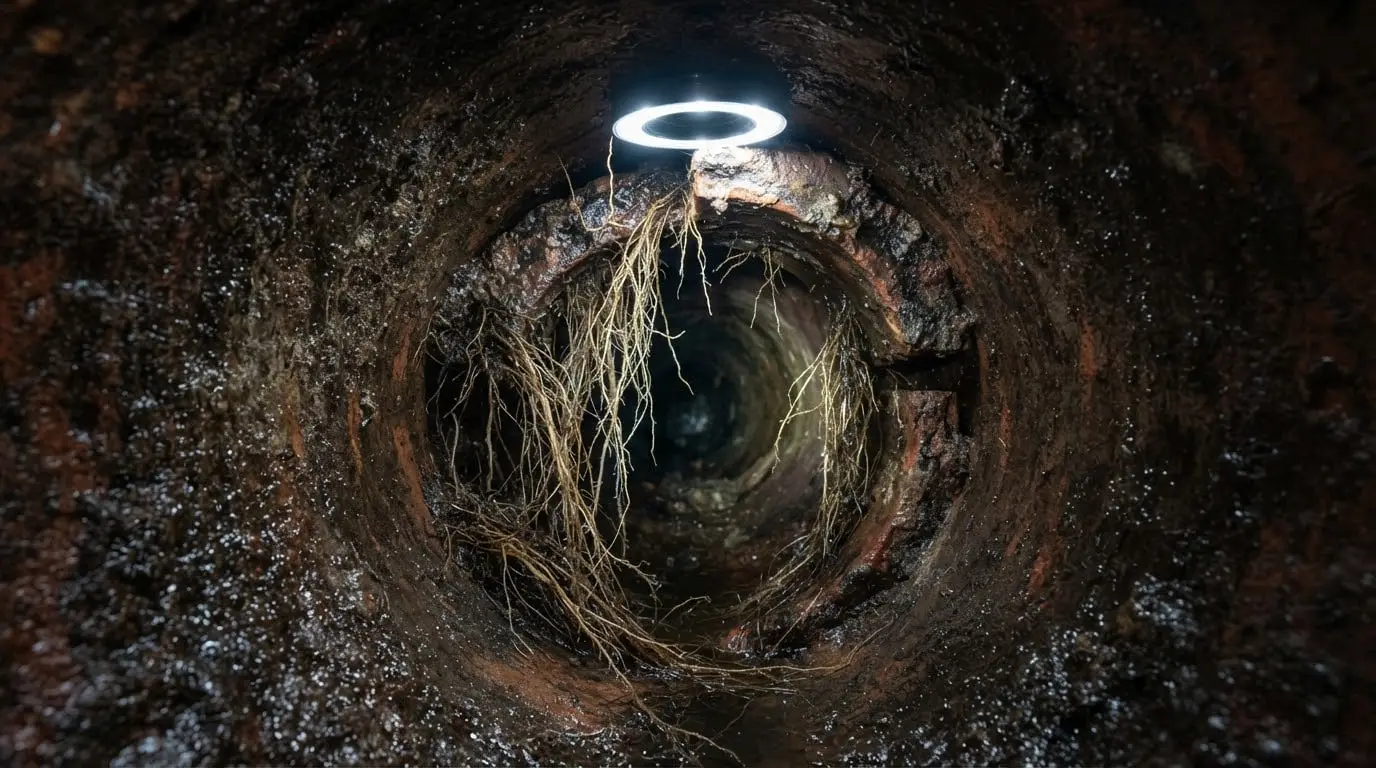
Roots get in where pipe sections meet, especially on older clay pipe with many joints. On camera they look like hair or fibrous masses hanging from the top or sides of the pipe. University of Arizona Cooperative Extension notes that sewer pipes are especially vulnerable to aggressive tree roots. Light roots can be cut and jetted out. Heavy roots that return within months usually mean the joint has opened up and needs a repair.
Mesa’s wastewater page advises planting trees more than 10 feet from the sewer line. If you’re planting in the front yard, knowing where the lateral runs keeps the next tree out of it.
A belly, or sag
A section of pipe that has settled lower than the pipe on either side holds standing water. On camera you see the lens go under water for a stretch, then come back out. Paper and grease collect in that low spot. A minor belly may be something to watch; a deep one that keeps catching debris needs that section dug up and relaid at the right slope.
Cracks, offsets and breaks
A crack shows as a line in the pipe wall, sometimes with dirt or roots coming through. An offset joint is where one section has shifted so its edge sticks into the flow. A break or collapse is where the pipe has lost its shape. These usually call for a repair at that spot, or a liner or replacement if several sections are failing.
Scale and grease buildup
Grease coats pipe walls in kitchen lines. On cast iron, rust scale builds up in ridges. Either narrows the pipe and catches debris. Jetting usually clears both, and a second camera pass afterward shows how much pipe wall is left.
The pipe material itself
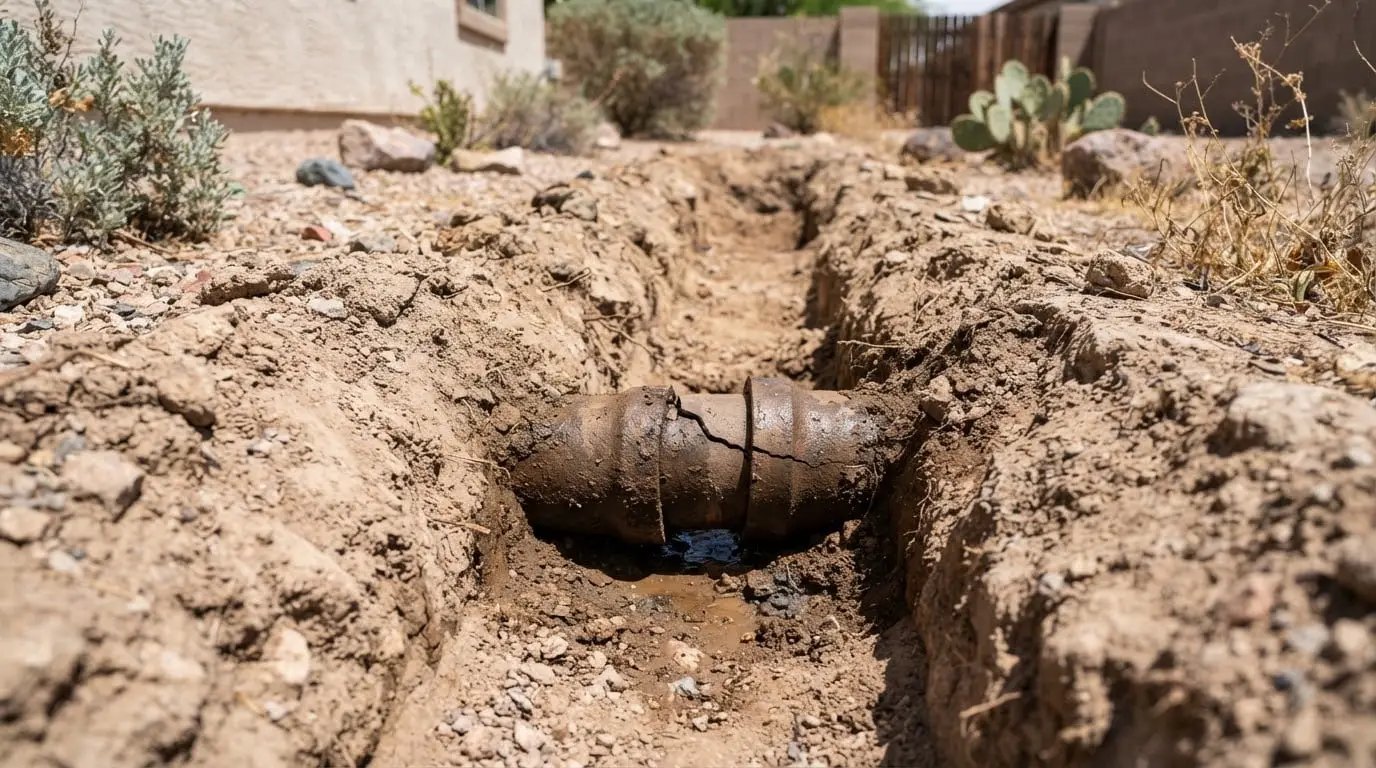
The camera also shows what the line is made of, which says a lot about what comes next. Older East Valley homes may have clay pipe with a joint every few feet, cast iron that scales and rusts from the inside, or Orangeburg, a tar-paper pipe that softens and loses its shape over time. Newer homes are more likely to have plastic pipe. Clay with roots at every joint and Orangeburg that has started to flatten usually lead to replacement rather than repair.
Fixing one section instead of the whole line
When the camera shows one bad spot and the rest of the line looks sound, a spot repair is usually the sensible fix. The plumber digs at the marked location, cuts out the damaged section, and joins new pipe in with couplings, then backfills. On a short dig in a yard, that’s often a day’s work.
A spot repair stops making sense when the camera finds problems in several places along the line, or when the pipe material itself is failing everywhere. At that point the plumber will talk about sewer line replacement, either by trench or by a trenchless method.
Scoping a house before you buy it
A standard home inspection usually doesn’t include a camera in the sewer line, and a lateral problem can be one of the more expensive surprises after closing. A sewer scope fits inside the inspection period, before the deal closes.
For a purchase scope, tell us:
- the closing date and when the inspection period ends
- whether the house is vacant, and how the plumber can get in
- whether the seller has a cleanout cap that’s reachable
The video and a written summary of what was found by distance give you something specific to bring to the seller if the line needs work. Ask for them on the call.
Buyers often ask how many years a line has left. No one can honestly put a number on that. What the camera can tell you is the condition today: the pipe material, whether roots are getting in, whether water is sitting in low spots, and whether anything is cracked or out of line.
Getting a line ready for the camera
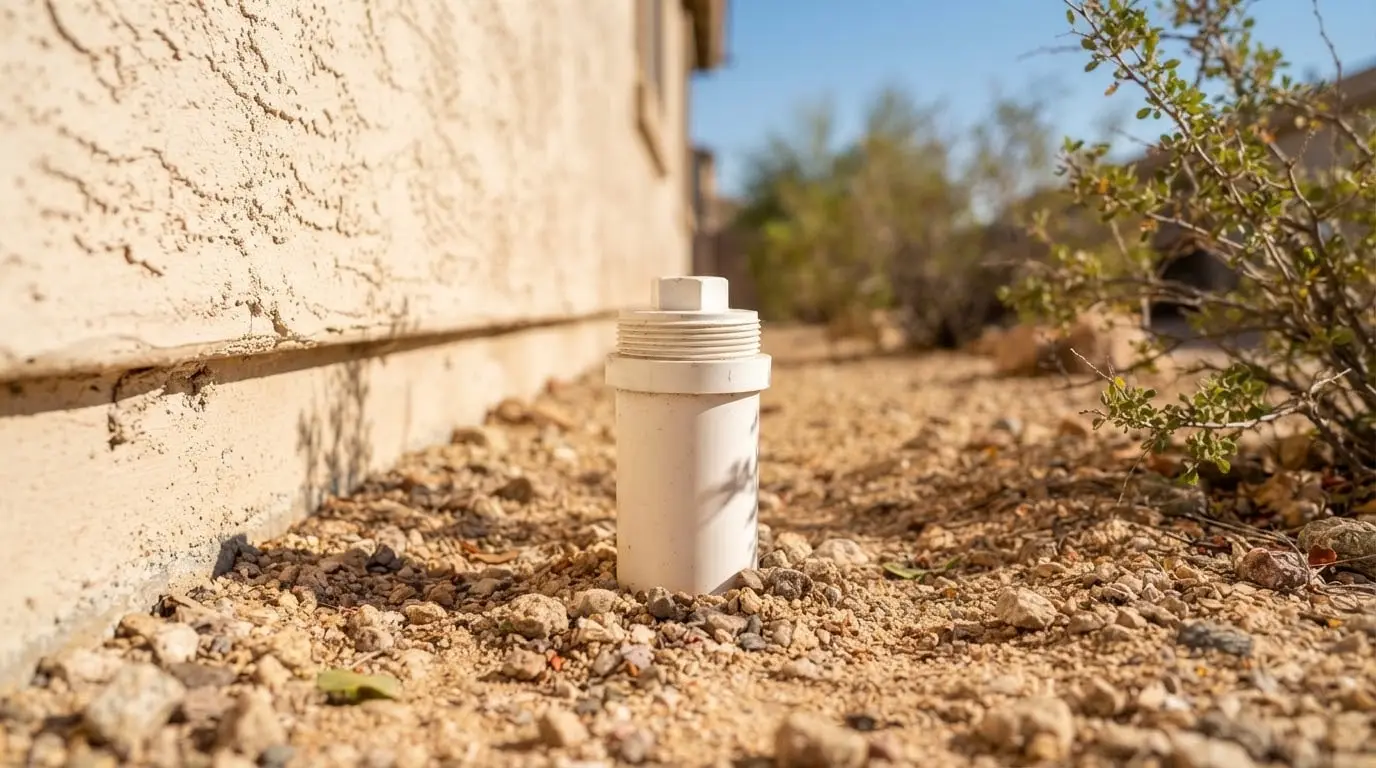
A camera inspection goes faster and shows more when the line is ready for it. The camera needs a way in, and on most houses that’s the outside cleanout, so the cap has to be reachable and not buried under rock or concrete. If there’s no outside cleanout, the camera can sometimes go in through a toilet flange or a roof vent, which adds time.
The line also needs to be flowing. A backed-up line is full of murky water and the camera sees nothing, so a blocked line gets opened first. On lines with heavy grease or scale, a pass with a hydro jetter before the camera washes the walls clean enough to spot hairline cracks and joint gaps that a dirty pipe would hide.
On the day, keep water use in the house to a minimum while the camera is in the line. A toilet flush or a running washer sends a wave down the pipe that blurs the picture for a minute or two.
When the camera says it’s more than a repair
Some lines can’t be patched. A run that has collapsed, sagged in several places or filled with roots at every joint is usually past spot repairs. The sewer line replacement page covers trench and trenchless options and what decides between them.
If the line isn’t flowing at all right now, start with drain cleaning to open it up. The camera works best on a line that’s moving.