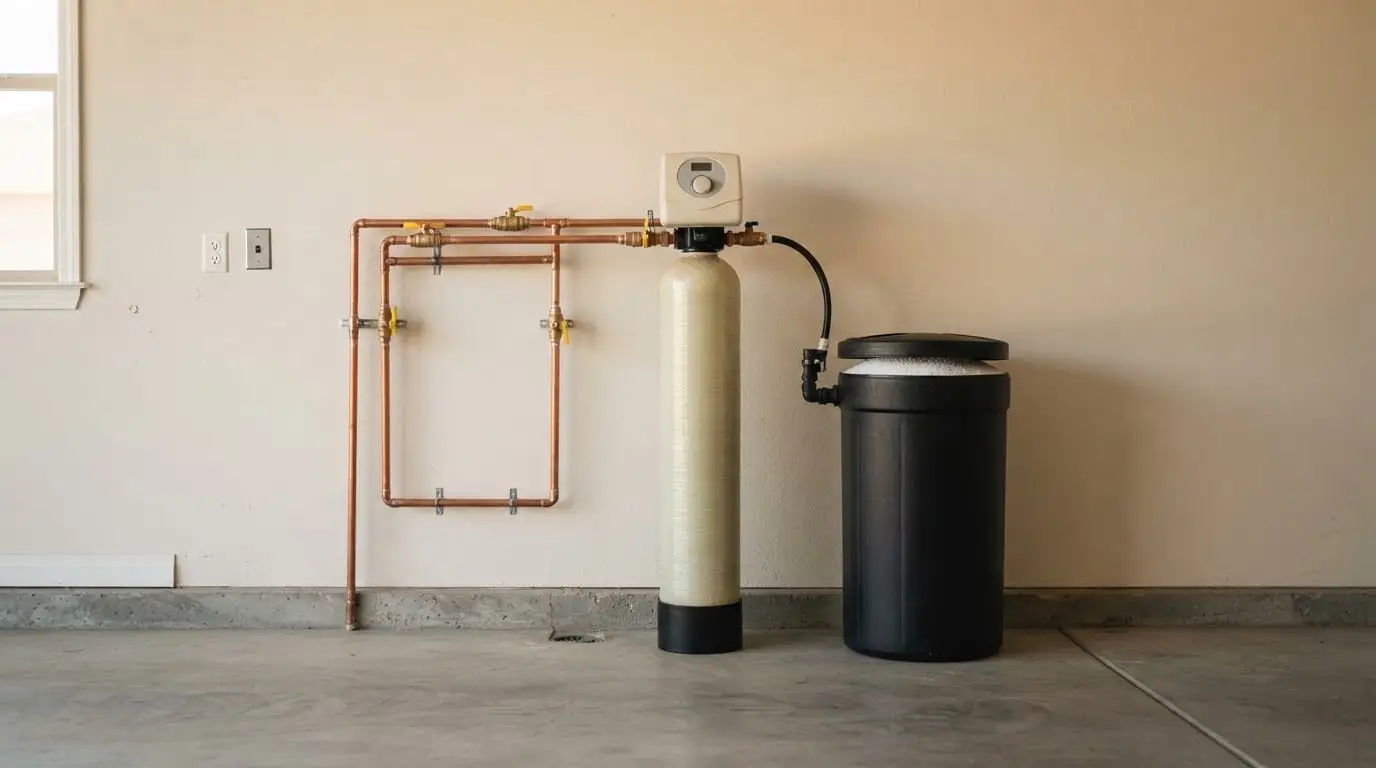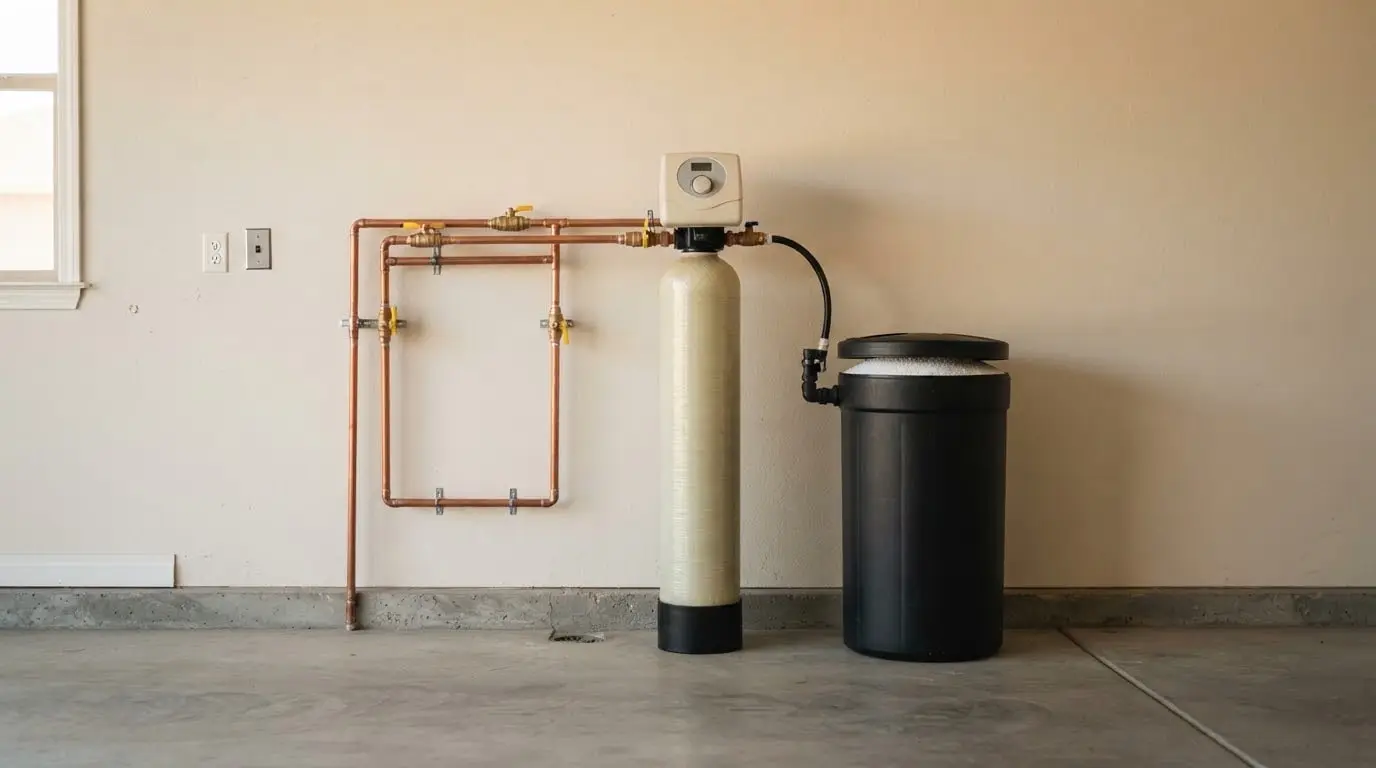
Finding your hardness number
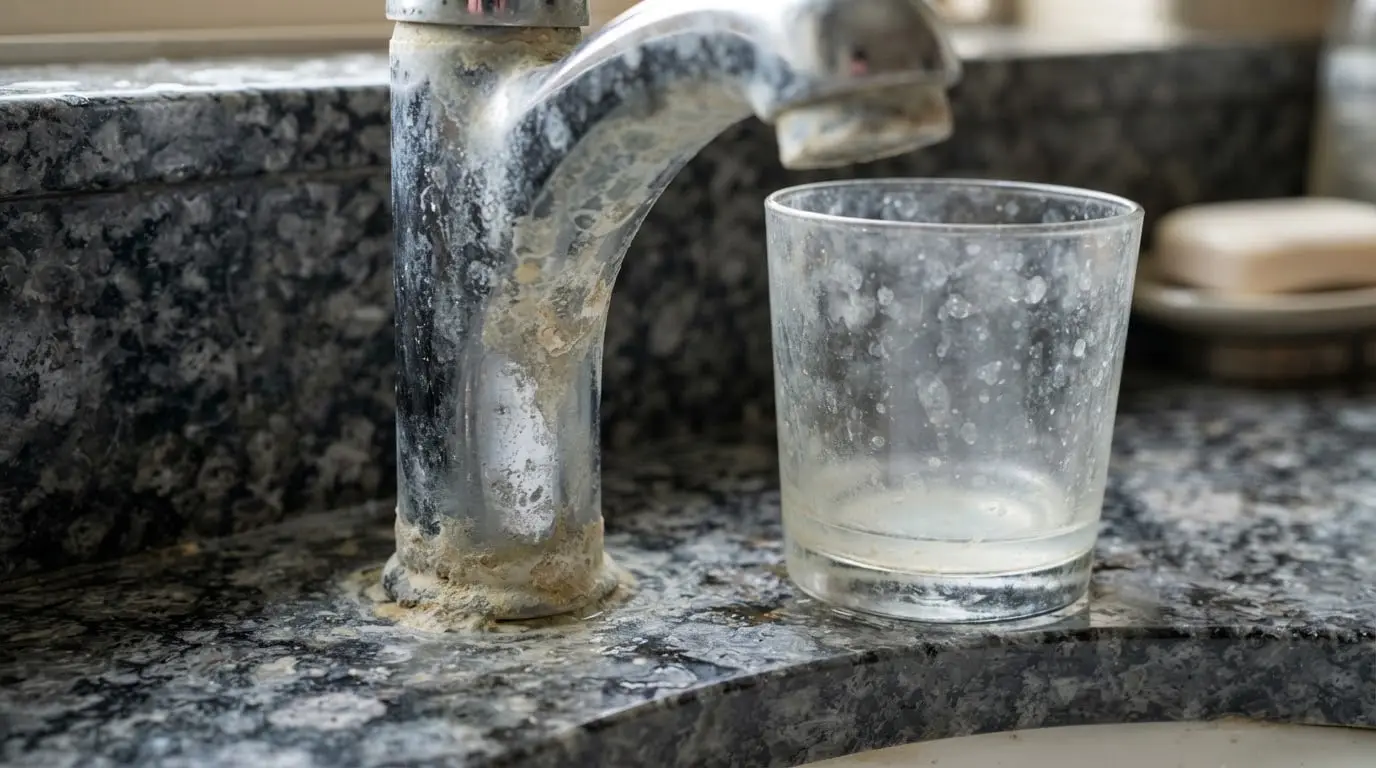
The number a softener gets programmed with is your water’s hardness in grains per gallon, and in the East Valley it depends on which water you get. Mesa Rooter Works sets up water softener installation across Mesa, Chandler, Gilbert, Tempe and Scottsdale, and a licensed, insured plumber starts every install with that number. Here’s what the latest city reports say.
| Where the house is | Hardness | What the report says |
|---|---|---|
| Mesa, City Zone | about 12 grains per gallon | Mostly SRP water from the Salt and Verde rivers |
| Mesa, Eastern and Southern zones | about 16 grains per gallon | Mostly Colorado River water through the CAP canal |
| Chandler | about 10 to 17 grains per gallon | Citywide average of 16.5 on the city’s FAQ |
| Scottsdale | 13 to 17 grains per gallon | Varies by area north and south of Indian School Road |
| Fountain Hills | about 16 grains per gallon | EPCOR’s Chaparral City system |
| Paradise Valley | depends on the address | Four different water providers serve the town |
Mesa’s report suggests setting softeners at 16 grains and adjusting from there, since the blend can shift. For Gilbert, Tempe or anywhere you aren’t sure, a quick test at the tap on the visit settles it.
Hardness isn’t the only number in the report. Mesa lists total dissolved solids anywhere from 190 to 970 parts per million depending on the source. A softener doesn’t lower that. It trades calcium and magnesium for sodium. If the taste of the water bothers you, that’s a job for reverse osmosis at the kitchen sink, covered further down.
Sizing the softener to your house
Softeners are rated by how many grains of hardness they can pull out before they regenerate. Size one too small and it regenerates constantly, burning salt and water. Size it too big and the resin sits unused and can channel. The math is plain:
Hardness × gallons used per day = grains removed per day
Say the house is in Mesa’s Eastern Zone at 16 grains and uses 300 gallons of indoor water a day. That’s 4,800 grains a day. Over a week between regenerations, the softener needs to handle about 34,000 grains, so the plumber looks at units rated comfortably above that. Your water use comes from the household size and habits, or straight off a recent water statement.
Modern units are demand-initiated. A meter in the control head counts gallons and regenerates only when the resin is close to used up, instead of on a fixed timer whether you used water or not. That saves salt and water, and it’s the kind of unit to put in now.
Finding the spot to install it
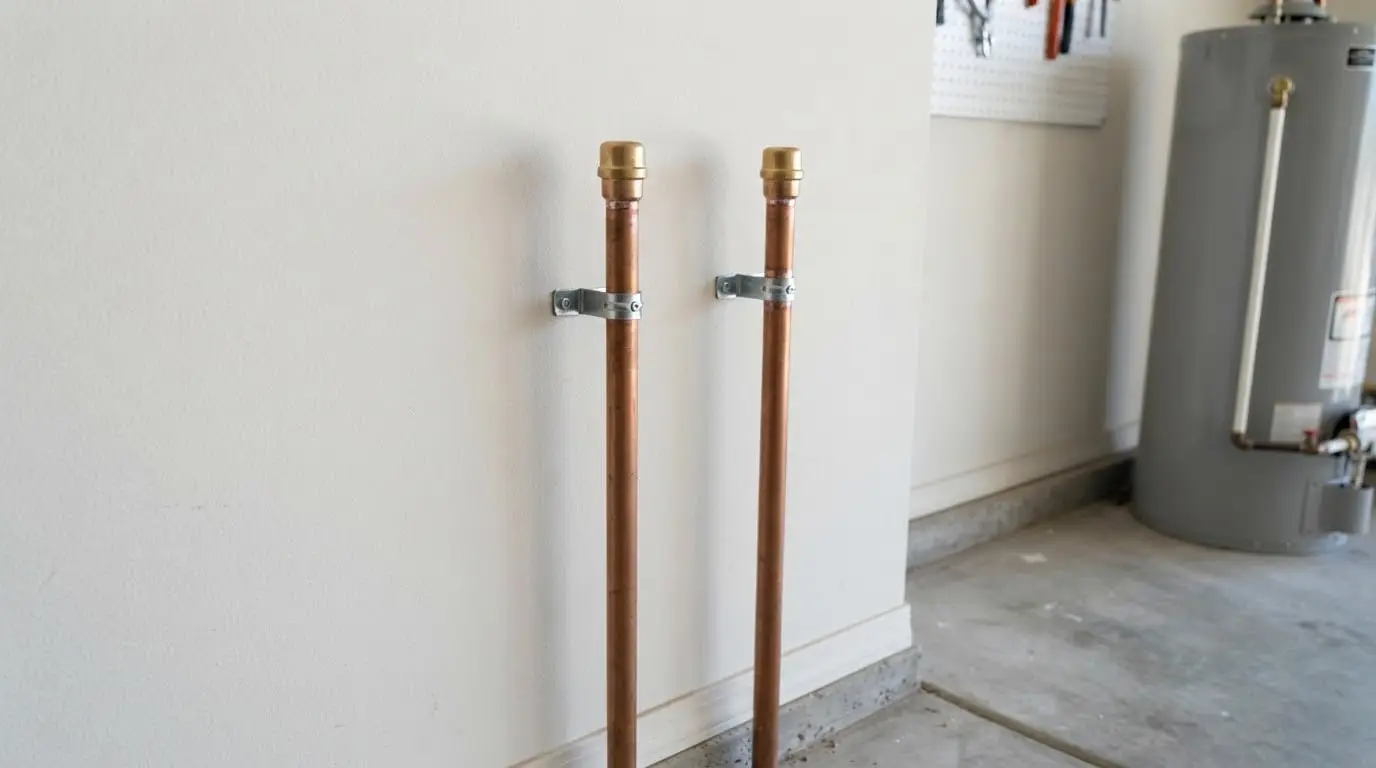
Look in the garage near the water heater, or on an outside wall where the main line comes in. A pair of capped or valved pipes sticking out of the wall is a softener loop: the main line already split so a softener can drop in between. With a loop, the install is mostly setting the unit, connecting it, and running the drain.
Without a loop, the plumber cuts into the main line where it enters the house, adds a bypass valve, and keeps the hose bibs and irrigation upstream on hard water. It’s more work but entirely normal.
Every softener also needs:
- A drain. The brine from each regeneration goes to a standpipe or laundry drain through an air gap, so wastewater can never siphon back into the unit.
- Power. A standard outlet for the control head.
- Room for the brine tank and access to top it off with salt.
- A bypass valve, so the house keeps water if the softener ever needs service.
In Chandler, replacing a softener with a like unit is exempt from a permit under the city’s homeowner permit manual.
A quick look at the garage wall on the visit answers it, along with the drain and power the unit needs.
Softener, no-salt conditioner or reverse osmosis?
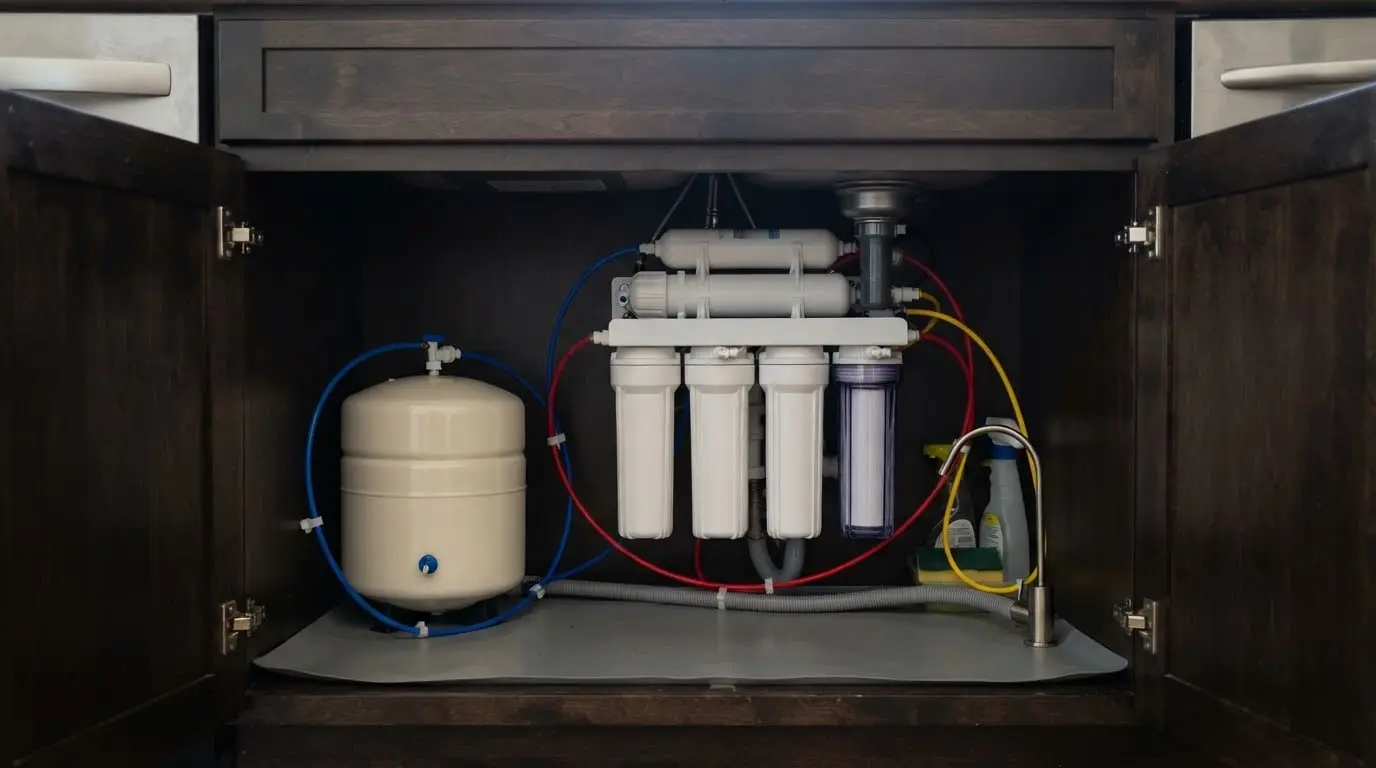
These three get sold side by side, and they don’t do the same job.
A salt-based softener removes calcium and magnesium through ion exchange. It’s the only one of the three that makes water soft across the whole house. It needs salt or potassium chloride, a drain and a little upkeep.
A no-salt conditioner doesn’t take hardness out. It changes how the minerals behave so less of them stick as scale inside pipes and heaters. You’ll still see spots on glass and fixtures. It needs no salt and no drain, which suits some homes and HOAs, but expect less change at the faucet.
Reverse osmosis is drinking water at one tap. A small system under the kitchen sink pushes water through a membrane that removes most dissolved solids, including the sodium a softener adds. It’s not whole-house treatment. Many homes run both: a softener for the house and an RO faucet for drinking and coffee.
What softened water does to the water heater
Soft water stops the crust that cuts a tank’s life short. It also changes the upkeep. A.O. Smith notes that softened water makes the anode rod inside the tank wear faster, so the anode needs checking more often. Chandler suggests flushing a tank once a year with a softener, against every six months without one. The water heater page covers the anode and flush schedule in full, and a tankless heater benefits from a softener ahead of it even more.
Reading a softener price
Softeners range from a basic single-tank unit to systems bundled with filters and extras, so it helps to know which lines matter. A written price for an install should spell out:
- the grain capacity, and the hardness and water use it was sized from
- the control valve make and model, since that’s the part that wears
- whether the loop was already there or the main line gets cut in
- the bypass valve, drain connection and air gap
- the warranty on the tanks, the resin and the valve, each listed separately
- anything extra, like a carbon prefilter or an RO faucet, as its own line
A softener sized to the hardness test and the household covers what most homes need. You only pay for work you agreed to.
Keeping it running
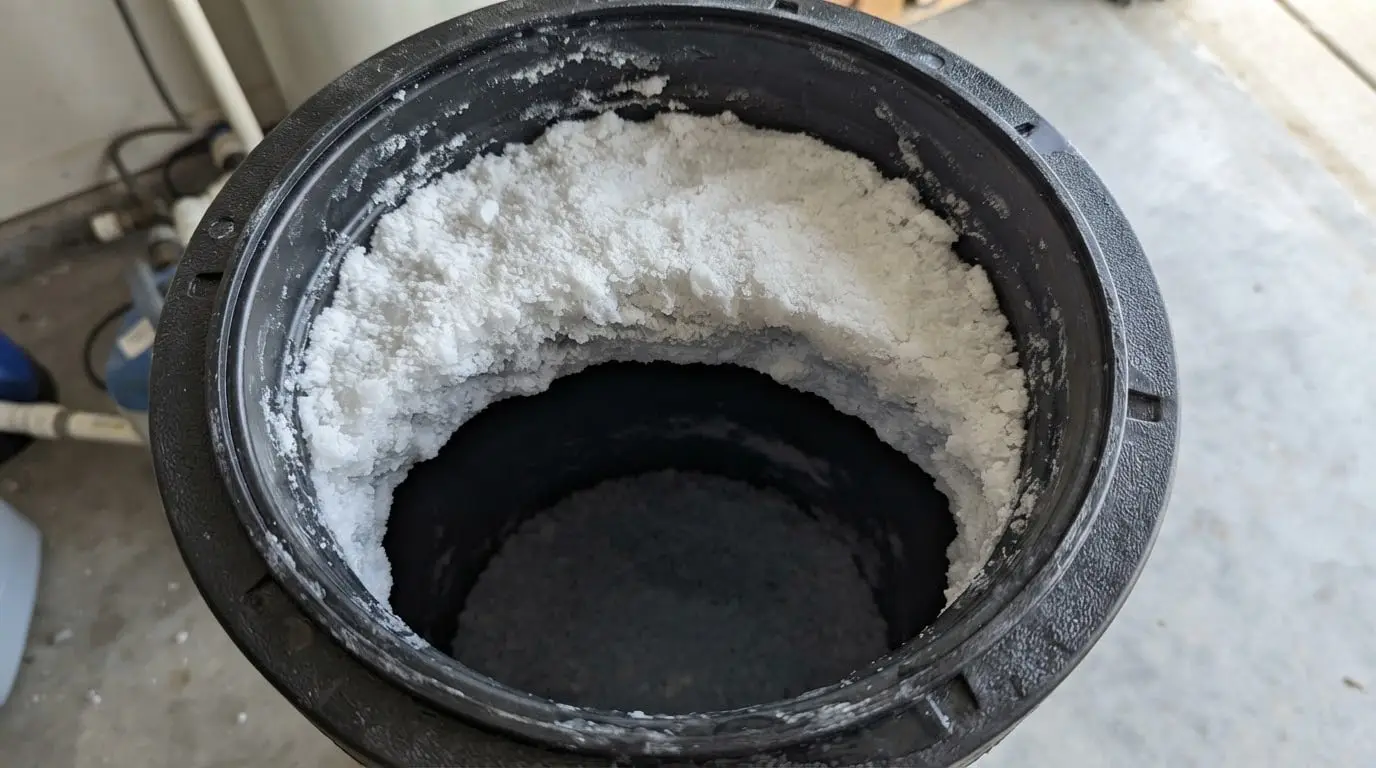
A softener that’s set right needs very little. Salt goes in when the level drops. Signs that it needs a look:
- The white crust and spotting come back on faucets and glass.
- The salt level hasn’t dropped in weeks.
- There’s standing water high up in the brine tank.
- The control head shows an error or the time keeps resetting.
A hard crust of salt across the brine tank, called a bridge, is the most common cause and the easiest fix. Beyond that, the plumber checks the brine line, the injector, the valve and the resin. Resin wears out over the years, and on an older unit a new softener can make more sense than a rebuilt valve.