Finding the right job for what you see
Most people don’t call about “repiping” or “lateral repair.” They call about a warm floor or a tub full of gray water. Each service below lists the symptoms that belong to it, so you can jump to the page that matches.
Leaks you can see, hear or feel
Emergency and burst pipe repair. For water that’s actively running: a split braided supply line under a sink, a hose bib that cracked, a pipe that let go in the attic or a wall. The page walks through closing the main shutoff, what to move out of the way, and what the plumber does first.
Slab leak detection and repair. For leaks you can’t see. A meter that keeps turning with everything off, a warm or damp patch of floor, the sound of water running inside a wall, a bill that jumped. Covers how a leak gets located without guesswork, and when it makes sense to open the floor versus run a new line overhead.
Whole-house repiping. For houses where the leaks keep coming: a second or third slab leak, pinholes in copper, or polybutylene or Kitec still in the walls. Covers PEX versus copper, how many days it takes, what happens to the drywall, and why most East Valley repipes go through the attic.
Tanks, tankless and softeners
Water heater repair and replacement. For a tank that’s leaking, rumbling, short on hot water or making rusty water. Explains what scale does to a tank on 12 to 17 grain water, when a flush still helps, and when it’s time for a new one.
Tankless water heater conversion. For homeowners thinking of going tankless. Covers the bigger gas line, venting, the permit, and the descaling a tankless unit needs on hard water.
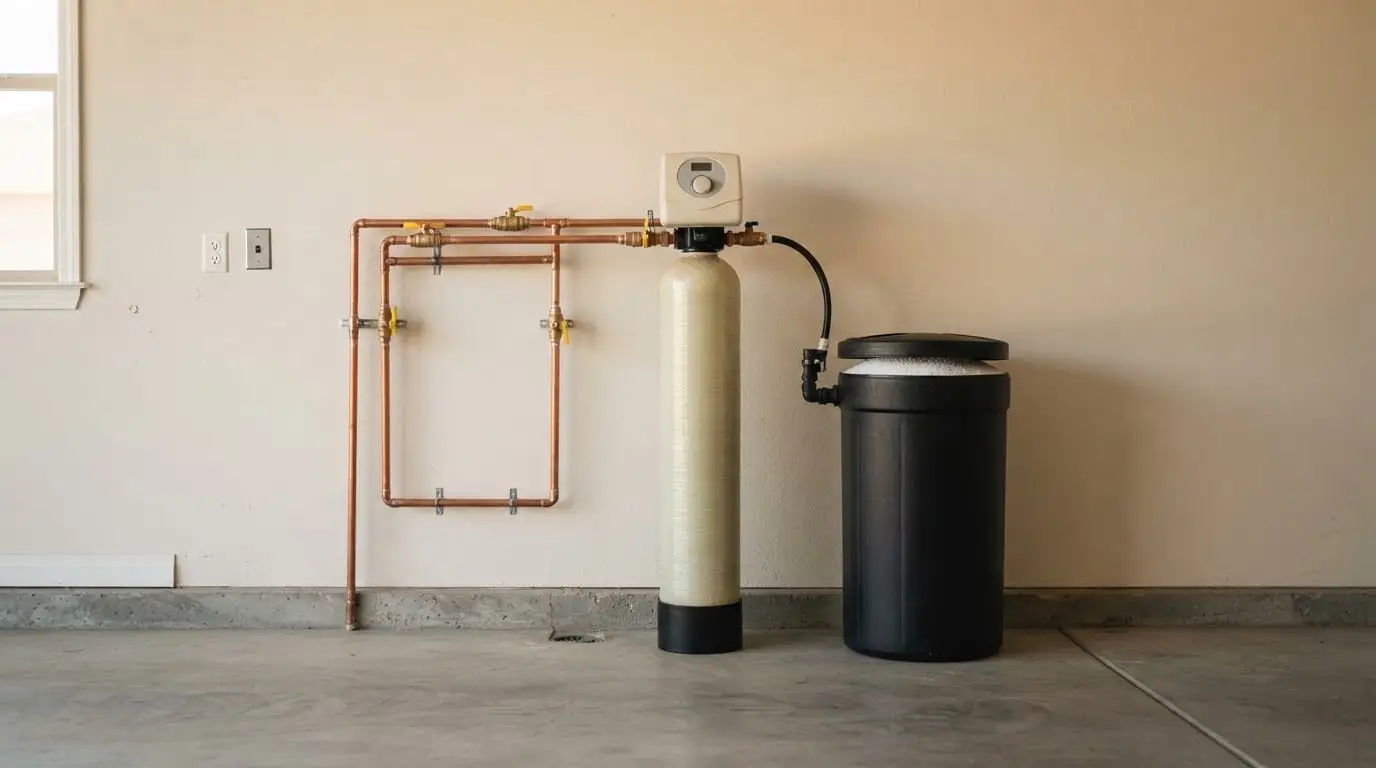
Water softener installation. For the white crust, spotty glass and tanks that wear out early. Covers sizing by household and hardness zone, loops in East Valley homes, and where a reverse osmosis faucet fits in.
Drains and sewer
Drain cleaning and hydro jetting. For slow or stopped drains. One fixture or the whole house, snake or jetter, and what monsoon storms have to do with backups.
Sewer camera inspection and repair. For repeat backups, sewer smells or a house you’re about to buy. What the camera shows, and the spot repairs that fix a single bad section.
Sewer line replacement. For a line that’s collapsed, bellied or full of roots end to end. Trench versus trenchless, and what decides the price.
Gas
Gas line installation and repair. For new appliance lines, a tankless conversion, a backyard grill or fire pit, and leaks on the house side of the meter. Starts with what to do if you smell gas.
Jobs that often go together
A few of these tend to show up as a pair. A slab leak in a 1990s house often starts the repipe conversation. A new tank is the easiest time to add a softener or an expansion tank. Going tankless almost always means gas line work. A drain that keeps backing up usually ends with a camera in the sewer line. If you’re dealing with one of these, ask about the other on the same visit.