Sizing up the conversion
A tankless water heater heats water as it flows through instead of keeping a tank of it hot, and in an East Valley house that changes three things at once: how much gas reaches the heater, how the exhaust leaves the house, and how scale gets handled. Mesa Rooter Works sets up tankless conversions across Mesa, Gilbert, Chandler and Tempe with a licensed, insured plumber who checks all three before pricing the job.
The gas line and the vent route set most of the job.
Checking the gas supply
A tankless burner fires hard for the minutes a shower runs, so it draws far more gas at one moment than a tank burner does. The half-inch line that fed the old tank often can’t carry that much over the distance from the meter. When it can’t, the unit starves on high demand: lukewarm water when two showers run, or an error code.
Sizing the line means adding up every gas appliance in the house (range, dryer, furnace, grill, pool heater) and the length of pipe from the meter. The plumber then picks a pipe size that carries the full load. Sometimes that’s a new line from the meter. Sometimes the meter itself is the limit, and the gas utility has to look at it.
In Mesa that utility can be the City of Mesa, which runs its own natural gas system in parts of the city, or Southwest Gas, which serves the rest of the East Valley. Mesa’s residential construction FAQ says a gas tank-to-tankless swap needs a permit and that the gas utility has to be told before the work happens. The plumber handles the permit, and the gas line page covers what a new line involves.
Running the vent
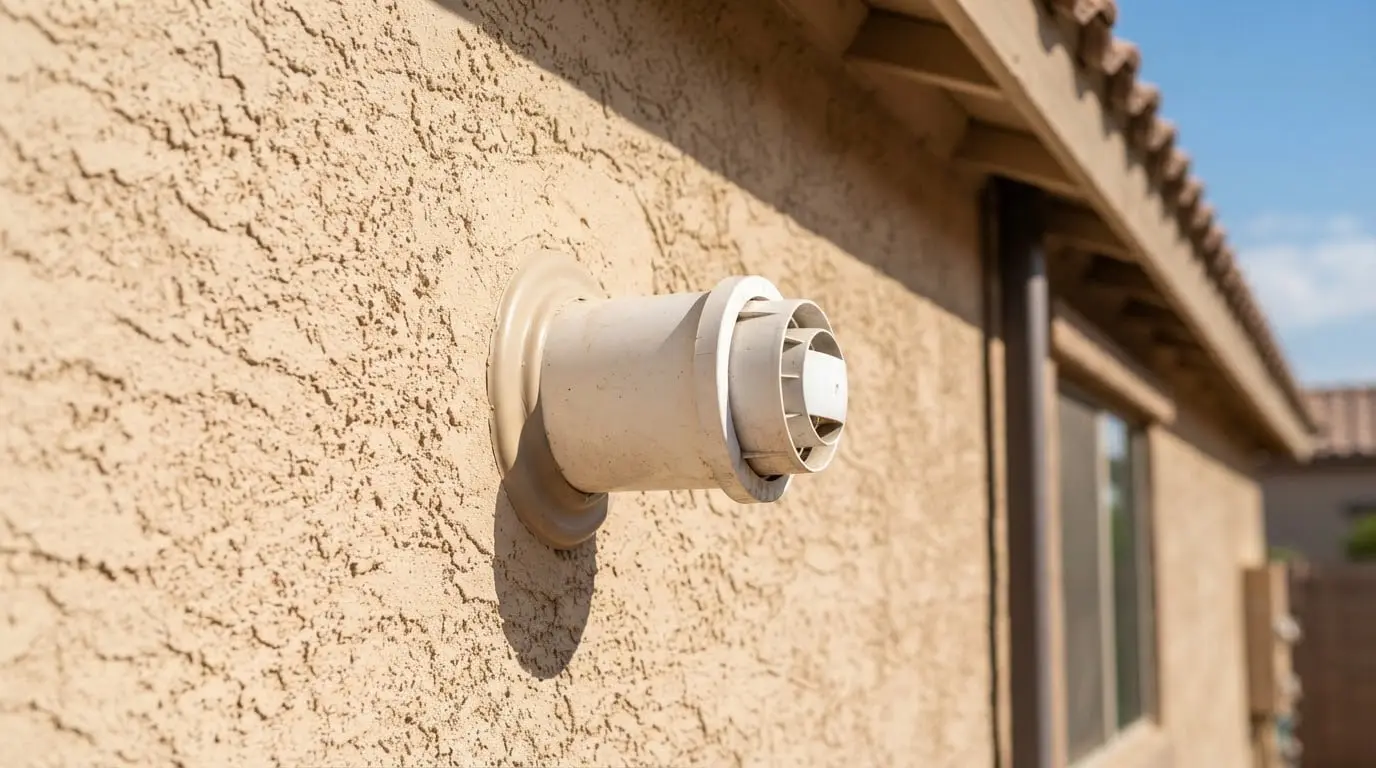
The metal flue that served the old tank usually can’t be reused. A tankless unit vents through its own pipe, and the type depends on the model:
- Condensing units pull so much heat out of the exhaust that it cools enough to vent through plastic pipe. They also make a small, slightly acidic stream of water that needs a drain line, often with a neutralizer.
- Non-condensing units vent hotter exhaust through stainless steel and don’t need a condensate drain, but the vent costs more and has stricter clearances.
Either way, the vent has to reach outside with the right clearances from windows, doors and the property line. An outside wall right behind the heater makes for a short, clean run. A heater in the middle of the house can mean running vent pipe up through the attic and roof, which adds time and changes the price.
A look at the meter, the gas line and where a vent could go answers most of the questions about cost before you pick a model.
Planning for scale from day one
Scale is the upkeep a tankless needs most on East Valley water. The heater moves water through narrow passages in a heat exchanger. On water running about 10 to 17 grains per gallon of hardness, depending on where you live, minerals drop out right where the water gets hottest and slowly choke those passages. Flow drops, the unit works harder, and eventually it throws a scale or overheat code.
Three things keep that in check:
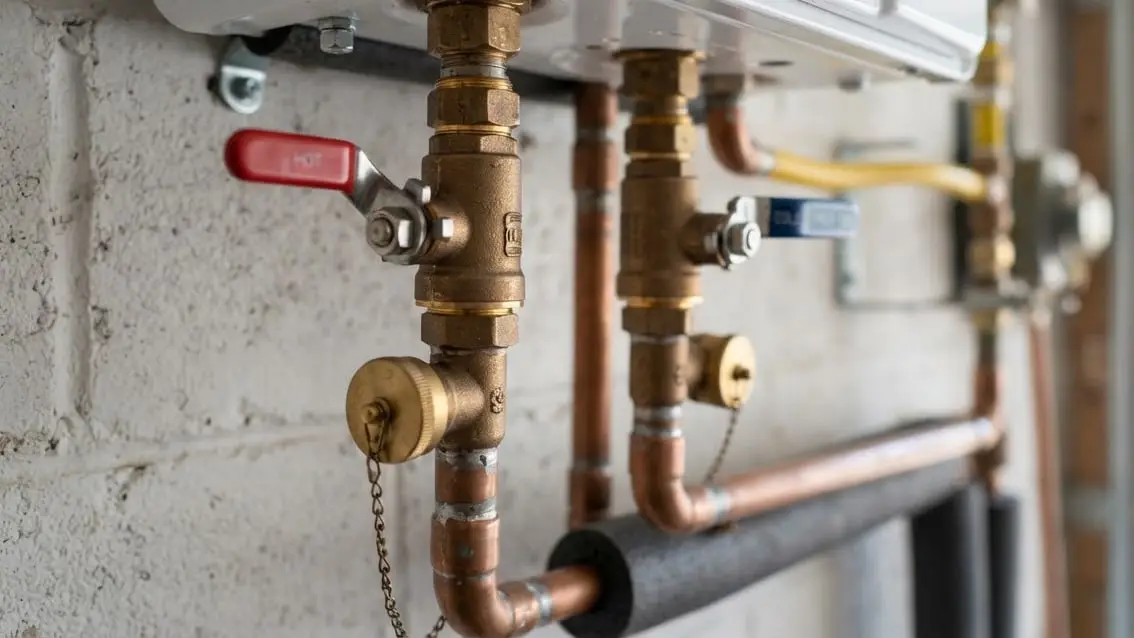
- Isolation valves. A service valve kit on the hot and cold lines lets the plumber shut the heater off from the house and pump a descaling solution through it. Without those valves, descaling turns into a bigger job each time.
- A descaling schedule. The manual for each model sets the interval. Hard water is the reason to stick to it, and an annual visit is easy to remember.
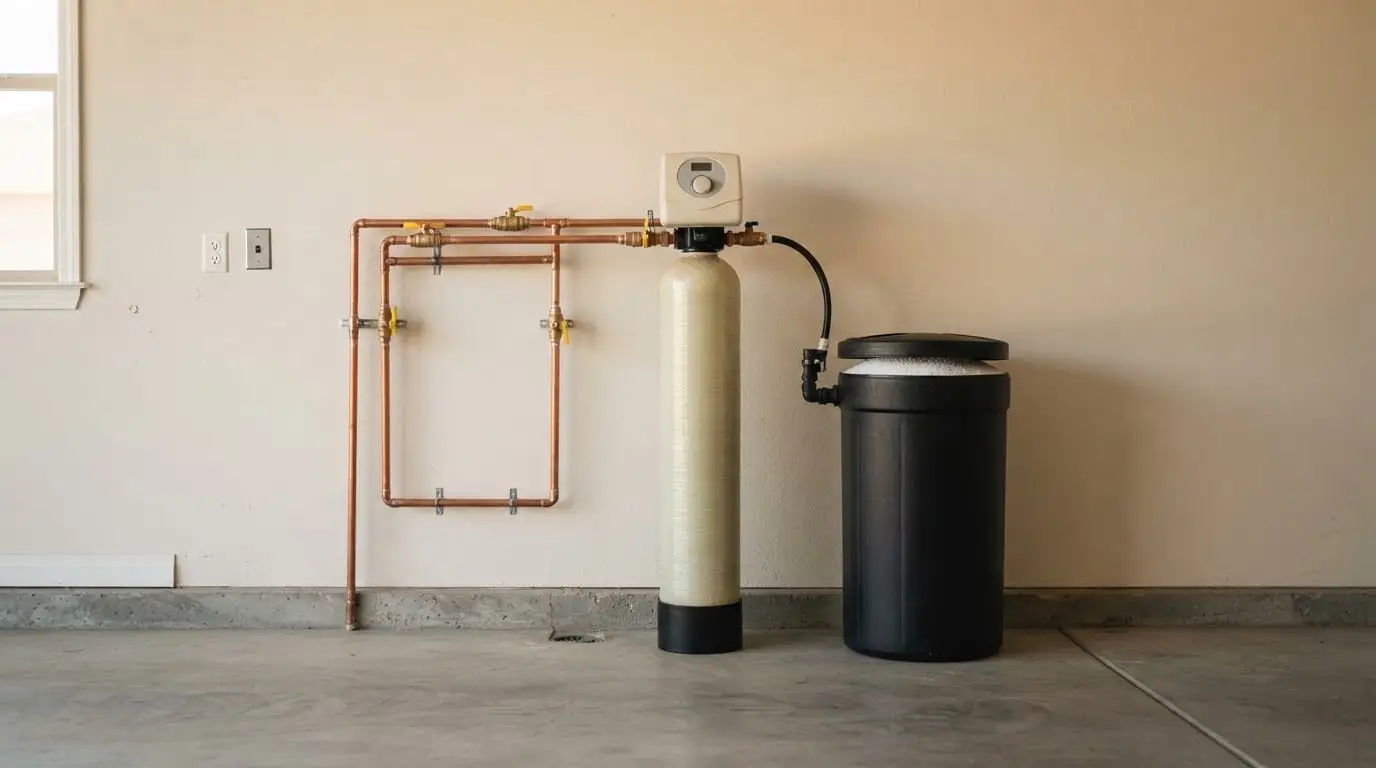
- Treatment ahead of the heater. A water softener protects the tankless and everything after it. A scale-prevention cartridge on the cold line is a lighter option some manufacturers allow.
Sizing the unit to the house
Tankless units are rated in gallons per minute at a given temperature rise. The rise is the gap between the water coming in and the temperature you want at the tap. Count the fixtures that run at the same time on your busiest morning, add their flow, and that’s the number the heater has to meet at the rise for the coldest month of the year. A unit sized only for summer water will come up short in January.
A single unit fits most homes. Large houses or ones with a long run to a far bathroom sometimes get a second small unit or a recirculation loop instead of one oversized heater.
Picking where it mounts
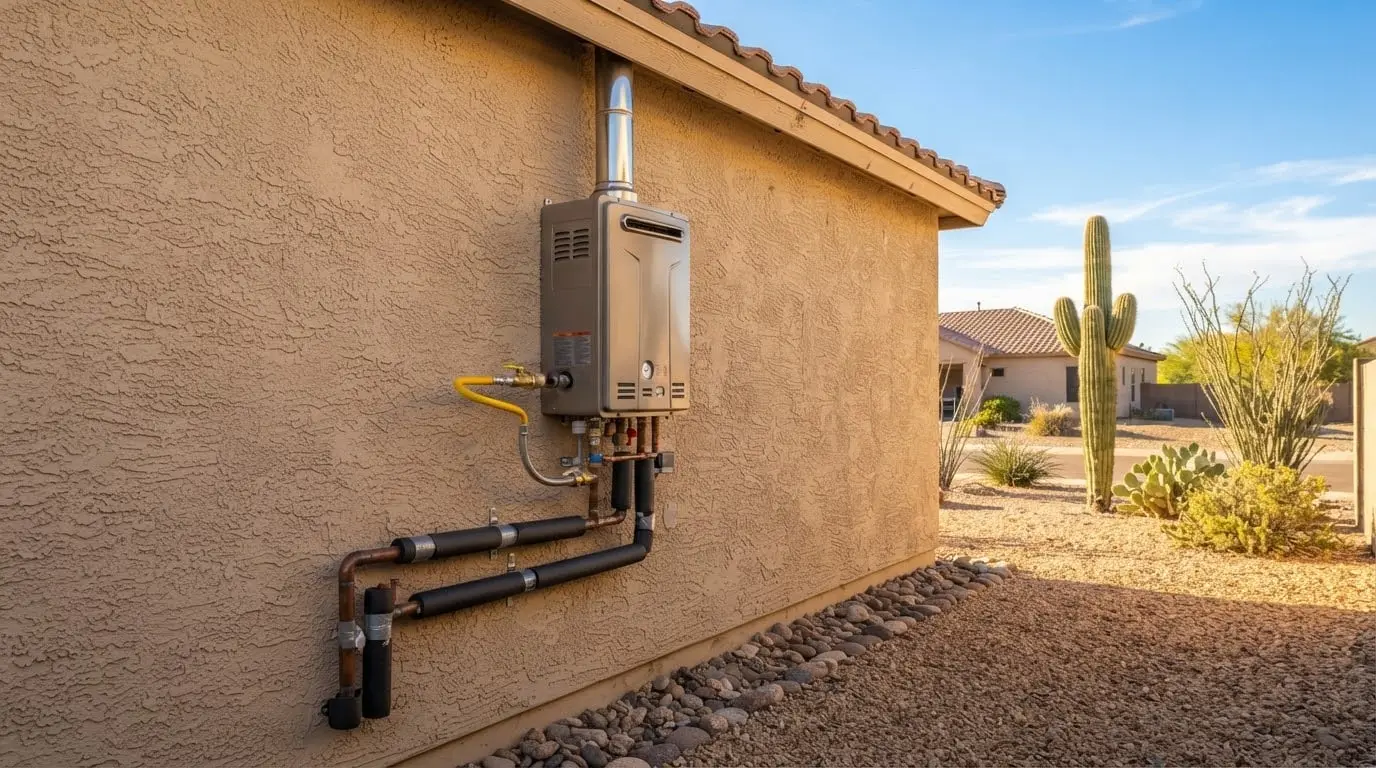
Where the heater hangs decides how long the gas line and vent get, so the spot gets settled early.
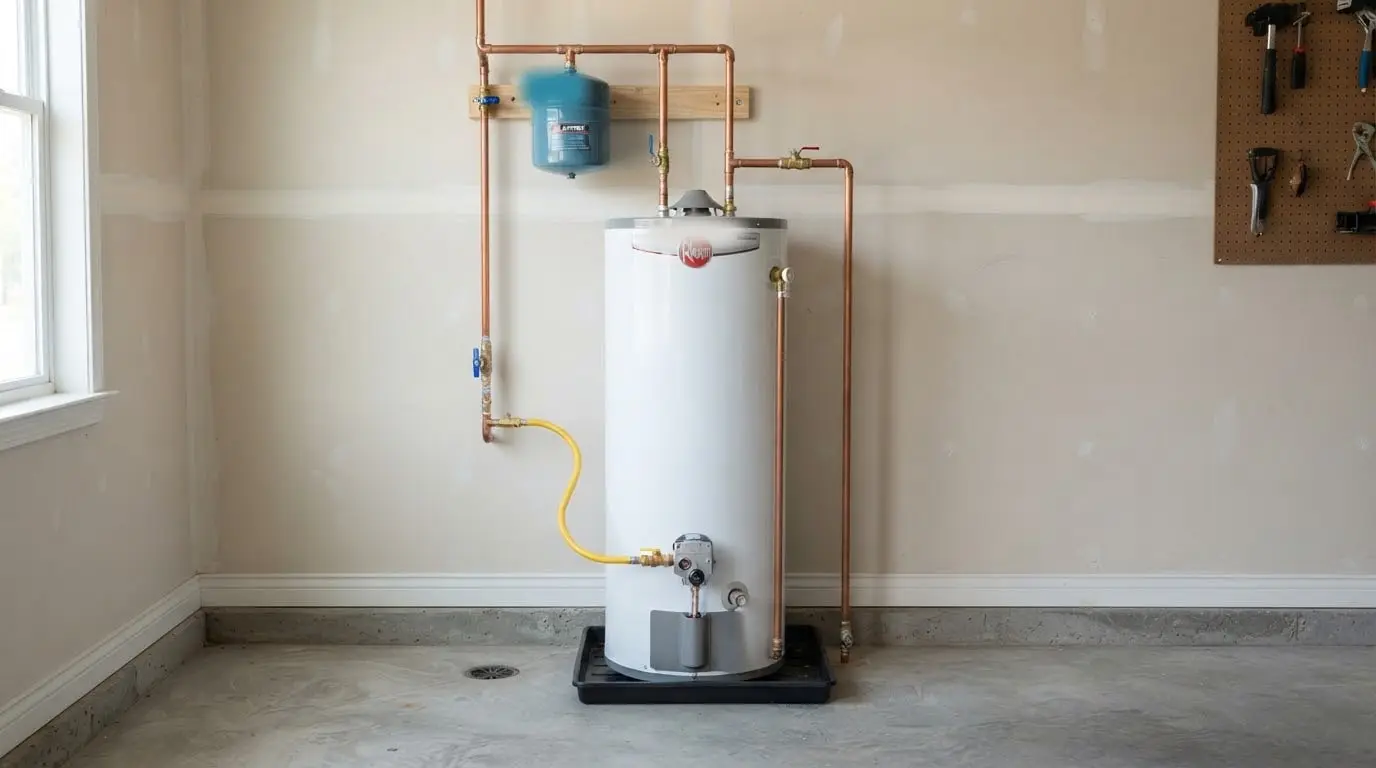
The same garage wall. The gas line and the cold and hot pipes are already close, and if that wall is an outside wall the vent can go straight through it. The floor space where the tank stood comes back.
An outside wall. Some models are built to hang outdoors with no vent pipe at all, since the unit exhausts through its own cover. Those need clearance from windows and doors, a spot where the summer sun and monsoon rain won’t beat on the front panel all day, and power for the freeze protection heaters built into many outdoor units for the few cold nights a year.
Inside the house or the attic. Possible, but it brings a long vent run and a heater that’s harder to reach for descaling. An attic install also puts the unit in one of the hottest spaces in the house through the summer. It’s usually the last choice, used when no wall spot works.
Wherever it goes, the plumber needs room in front of the unit to open it up and reach the service valves. Boxing it in behind shelving makes every descaling visit slower.
Is tankless right for your house?
It suits households that want hot water that doesn’t run out, a garage wall back where the tank used to stand, and a heater with no tank to rust through. It suits them less if the gas line, meter or vent route turns the job into a large project, or if nobody wants to keep up with descaling.
Before deciding, weigh these:
- The installed price is higher than a like-for-like tank, mostly because of gas and vent work.
- Hot water still takes time to reach far faucets.
- Very low flows, like a trickle at a bathroom sink, may not trip the burner on some models.
- A gas tankless needs power to run.
- On hard water, skipping maintenance shortens its life.
If the main goal is lower energy use with less conversion work, a heat pump tank is the other option to ask about. The water heater cost guide compares what drives the price of each.
What the install day looks like
The old tank gets drained, disconnected and carried out. The new unit is mounted, the gas line is run or upsized, and the vent goes through the wall or roof. Isolation valves, a pressure relief valve and, on condensing units, the condensate drain go in next. The plumber then tests the gas line for leaks, fires the heater, checks the flow and temperature at several fixtures, and sets the unit up for the house. The permit inspection follows.
If your current tank is leaking and you need hot water back quickly, a like-for-like tank is the faster fix. The tankless conversion can still happen later on its own schedule.