Reading what the tank is doing
Most water heater calls to Mesa Rooter Works start with one of a handful of signs, and each one points somewhere different on the tank. A licensed, insured plumber who works the East Valley uses the same clues, so it helps to know what yours is doing before the visit. Gas and electric tanks share most of them.
| What you notice | What it usually points to |
|---|---|
| Rumbling, popping or kettling when the burner fires, like gravel rolling in the tank | A layer of scale and loose sediment in the bottom |
| A puddle at the base, coming from the tank body or behind the side panel | The inner tank has rusted through |
| A drip at the drain valve near the bottom | A worn or loose drain valve |
| Water running from the relief valve pipe | High pressure, high temperature or a tired relief valve |
| Wet fittings on top of the tank | A connector, nipple or valve at the supply lines |
| Hot water runs out fast | Scale taking up room, a broken dip tube, or a failed element on an electric tank |
| Rusty or brown hot water only | An anode rod that’s used up, or the tank itself corroding |
| Gas pilot won’t stay lit | The thermocouple or flame sensor, or a draft problem at the vent |
| Electric tank, no hot water at all | A failed element, thermostat or tripped high-limit switch |
Some of these are quick repairs. A thermocouple, an element, a thermostat, a drain valve or a relief valve can be swapped in a single visit on most tanks. The one sign with no repair is water coming out of the tank body.
Close the cold valve on top of the tank and set the gas control to pilot or switch off the breaker. Then call so a plumber can look at it.
Why tanks wear out early on East Valley water
Hard water is the main reason. Mesa’s 2025 water quality report puts the City Zone at about 12 grains per gallon of hardness and the Eastern and Southern zones closer to 16. Chandler lists a citywide average of 16.5. When that water heats up, calcium and magnesium drop out and settle on the bottom of the tank as a crust.
On a gas tank the burner sits under that crust, so it has to heat through a layer of rock before it reaches the water. Rheem says scale can cut a water heater’s heating efficiency by up to 30%. Water trapped under the scale flashes to steam, which is the popping you hear. Over time the bottom of the tank runs hotter than it was built for, and the lining gives out sooner.
Electric tanks scale up too, mostly on the lower element. A crusted element runs hot and burns out, which is why a no-hot-water call on an electric tank often ends with a new element and a tank full of sediment.
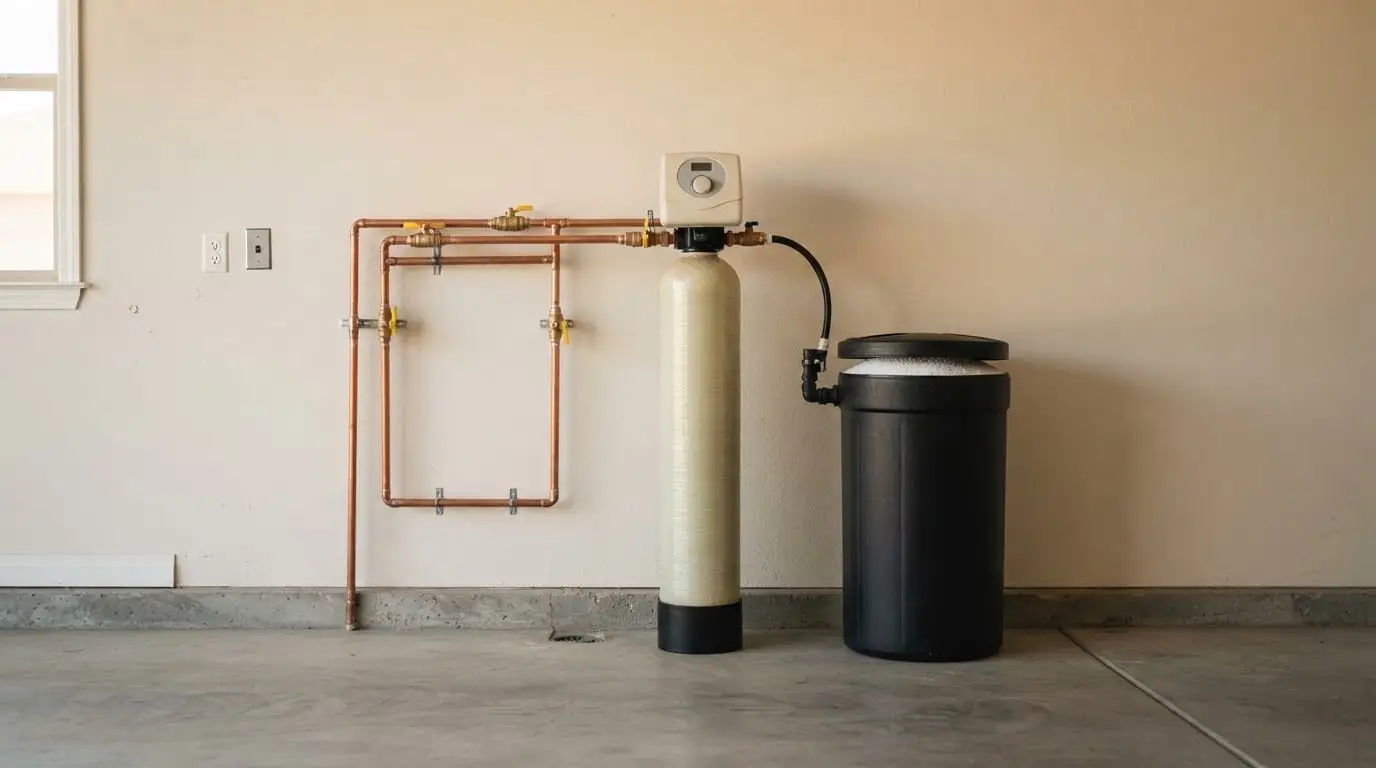
The anode rod is the other part that wears out, and softened water uses it up faster, A.O. Smith notes. It’s a metal rod hung inside the tank that corrodes so the tank doesn’t. A.O. Smith says to replace it once about six inches of its core wire shows. Once the anode is gone, the tank starts rusting from the inside.
How often a tank here needs a flush
Rheem recommends flushing at least once a year and every six months in hard water, with an anode check every year or two. A.O. Smith says to service tanks twice a year in hard-water areas. Chandler’s water FAQ suggests every six months without a softener and once a year with one.
A flush on the visit drains the sediment out through the bottom valve and checks how much comes out. On a tank that’s gone years without one, the plumber may advise against it: heavy sediment can clog an old plastic drain valve so it won’t close again, and loosening years of scale can open up a weak spot.
Working on a tank in a hot garage
Most East Valley water heaters sit in the garage, and Phoenix’s normal high in August is 105 degrees, with a closed garage holding that heat into the evening. It changes a few things about the job.
- A gas tank needs combustion air and a vent that drafts properly. A garage packed with storage boxes around the tank can starve it of air or block the access door to the burner.
- The relief valve discharge pipe has to run to a safe spot, usually down near the floor or outside. In older garages it sometimes ends in the wrong place or was never run at all.
- Replacement work gets scheduled earlier in the day when it can be, since an old tank has to be drained, carried out and a new one set in a hot space.
- A heat pump water heater, which pulls heat from the air around it, has its own limits in a hot garage. The water heater cost guide covers that and the utility rebate for them.
Deciding between a repair and a new tank
The label on the side of the tank tells you its age, often hidden in the serial number. The plumber reads it, then looks at the condition of the tank before recommending anything.
A repair makes sense when the tank itself is sound and the problem is a part: a thermocouple, a gas control valve, an element or thermostat, a dip tube, a drain valve, a relief valve or an anode. Those parts are made to be replaced.
Replacement makes sense when the tank body is leaking, when the outside is rusting through at the bottom seam, when the hot water stays rusty after a new anode, or when an older tank needs a part that costs a good share of a new heater. A tank that’s packed with sediment and popping hard is near the end of its life even if it isn’t leaking yet, and replacing it before it lets go keeps the water off the floor.
What gets checked when a new tank goes in
Before a new tank is set, the plumber looks over everything connected to it, because the old setup may not meet code or may be part of why the old tank failed.
- Venting. On a gas tank, the vent pipe size, slope and connection, and whether it drafts once the new burner fires.
- Gas supply. The shutoff valve, the flexible connector and the sediment trap at the bottom of the gas drop.
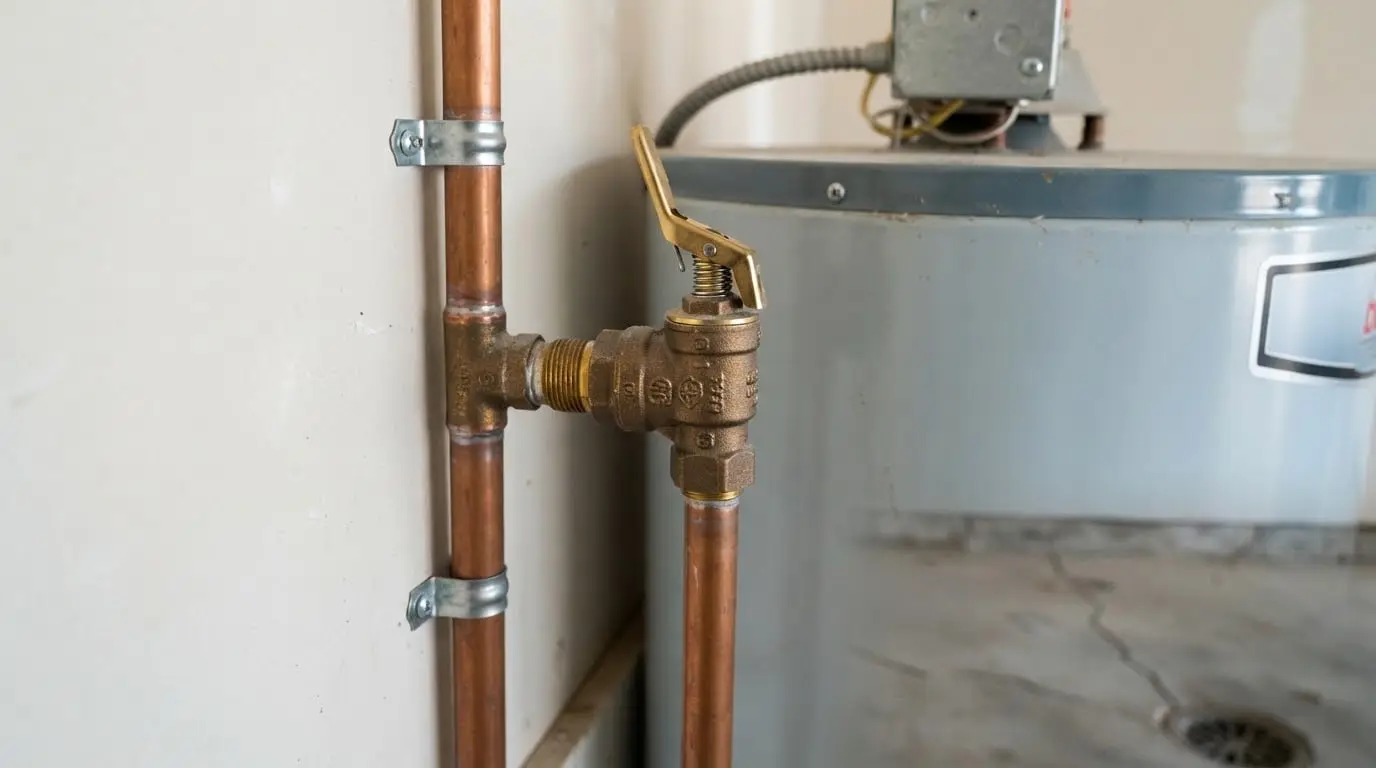
- Relief valve line. A new relief valve comes with the tank, and its discharge pipe gets run to a proper spot.
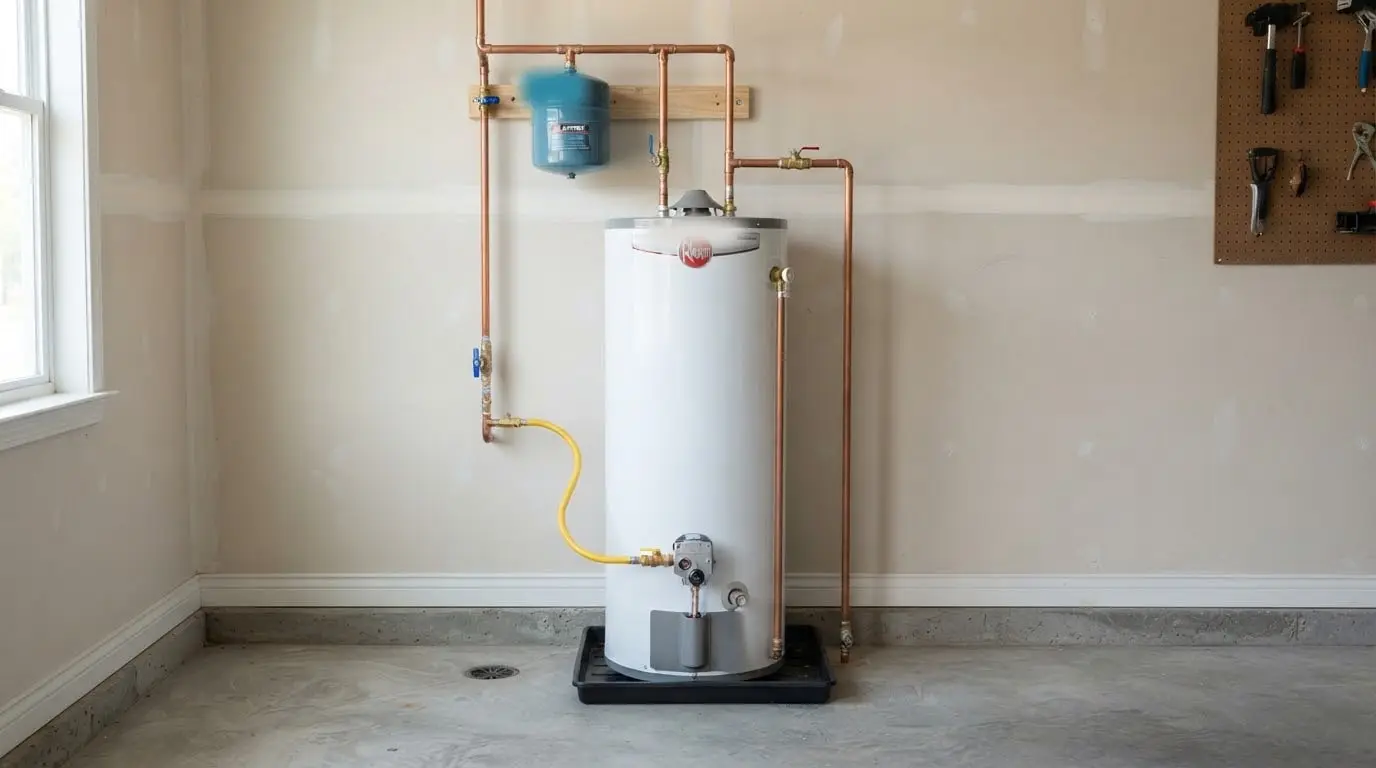
- Expansion tank. Houses with a pressure regulator or a check valve on the main can’t push expanding hot water back out to the street. A small expansion tank on the cold line gives it somewhere to go.
- Water pressure. A gauge on a hose bib shows whether house pressure is high enough to stress the new tank.
- Drain pan. Where a leak would damage the house, such as a closet or attic install, the tank sits in a pan with a drain line.
A like-for-like swap in Mesa skips the permit, and the cost guide explains when a change does need one. Changing fuel, moving the heater or going to a tankless unit is a bigger job with its own rules.
Gas or electric for the next one
Most homes stay with what they have, because the gas line or the 240-volt circuit is already there. Switching from electric to gas means running a new gas line and a vent. Switching from gas to a heat pump unit means a dedicated circuit and enough air space around the heater. Either change is worth talking through on the visit, along with whether a water softener would help the new tank last longer on hard water.
If the old tank already let go and there’s water through the drywall or under the flooring, the emergency plumbing page covers what to do first.