Handling an emergency
Water is spraying from a pipe. What do I do first?
Close the main shutoff. On East Valley houses it’s usually a ball valve on the line coming out of the ground near a front or side wall. Then switch off the water heater (gas to “pilot,” or the breaker for electric) and call. The emergency plumbing page walks through the first few minutes in more detail.
Sewage is coming up in the tub. Is that an emergency?
Yes. It means the main line is blocked and every flush or load of laundry pushes more water back into the house. Stop using water, keep people out of the wet area and call. Drain cleaning covers how a main line gets opened from the outside cleanout.
I smell gas. Should I call a plumber?
Not first. Get everyone out of the house without flipping switches or lighting anything, then call 911 from outside. Once the gas has been made safe, the repair on the house side of the meter is plumbing work, covered on the gas line page.
Tracking down a leak
How can I tell if I have a slab leak?
Turn off every faucet and appliance that uses water and watch the meter. If the dial still moves, water is going somewhere. A warm spot on the floor, the sound of running water in a wall, or a bill that jumped for no reason all point the same way. The slab leak page explains how the leak gets located.
Why is my water bill so high all of a sudden?
The usual suspects are a running toilet, a leaking irrigation line and a slab leak. A toilet flapper that won’t seal can waste a lot of water without making much noise. Mesa’s water FAQ points to the small triangle on the meter: if it moves at all with everything off, a leak may exist.
Is the leak on the city’s side or my side of the meter?
Close the house shutoff and watch the meter. If the dial stops, the leak is inside or under the house. If it keeps moving, the leak is in the yard line between the meter and the house, or at the meter itself. Leave the valve inside the meter box alone and call; the plumber checks which side it’s on. Mesa’s water FAQ says the city doesn’t cover breaks or blockages on your property, so that part is plumbing work.
Will the floor have to be broken up to fix a slab leak?
Not always. Many slab leaks get fixed by abandoning the leaking line and running a new one through the attic and walls. On a post-tension slab that route is usually preferred. The slab leak page compares the options.
Deciding on a repipe
When does a repipe make more sense than another repair?
Usually after a second or third leak in the same house, when the copper is pinholing in more than one spot, or when the house still has polybutylene or Kitec. At that point repairs tend to keep coming. The repiping page covers how the decision gets made.
What do polybutylene and Kitec pipes look like?
Polybutylene is usually gray plastic pipe, common in houses from the 1980s and early 1990s. Kitec is a layered pipe, blue on the cold side and orange on the hot, found in houses built from about 1995 to 2008. Its brass fittings were the subject of a class-action settlement. Either one is a reason to talk about a repipe.
Why is my cold water hot in the summer?
The cold line is sitting somewhere hot. Water that waits in a pipe through a summer attic, or close to the surface of sun-baked ground, warms up until it’s flushed out. It shows up most after a repipe or reroute through the attic. Running the tap for a bit clears it, and insulating attic lines helps.
Looking after tanks, tankless units and softeners
How often should a water heater be flushed here?
More often than the national advice, because East Valley water is hard. Chandler’s water department suggests every six months without a softener and once a year with one. The water heater page covers flushing and anode rods.
Is a tankless water heater a good idea with hard water?
It can be, with a plan for scale. Hard water builds up inside the heat exchanger, so a tankless unit here needs regular descaling and service valves to do it. The tankless page explains what goes into a conversion.
How hard is the water in my town?
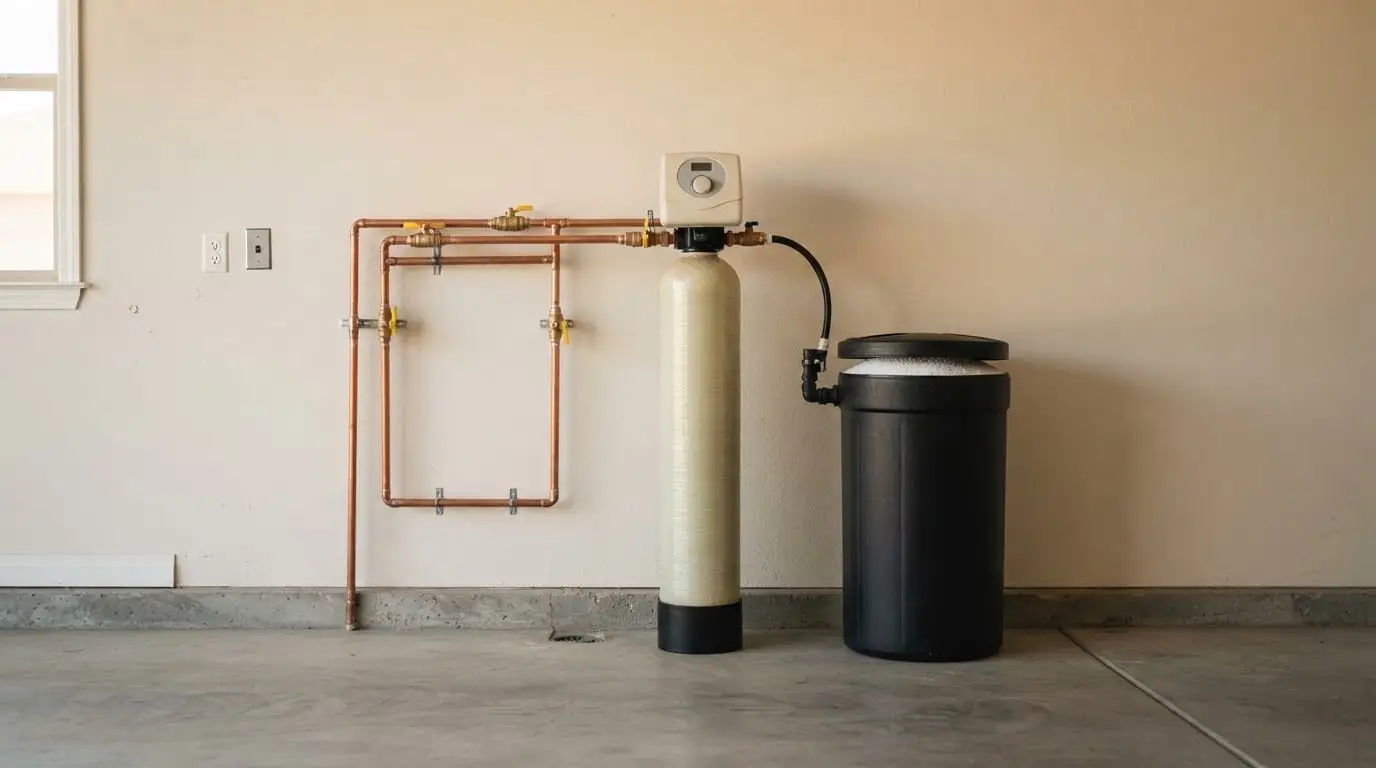
It depends on your water provider. Mesa runs about 12 grains per gallon in its City Zone and about 16 in the Eastern and Southern zones. Chandler’s average is 16.5. Scottsdale ranges from 13 to 17. The softener page uses those numbers to size a unit.
Keeping drains and sewer lines moving
How do I find my sewer cleanout?
Look outside near where the bathrooms are, often in a planter bed close to a front or side wall. It’s a capped pipe a few inches across, sometimes under gravel. Don’t open it if the line is backed up, and don’t force a cap that’s stuck. A plumber can get a seized plug out without cracking the fitting.
The house smells like sewer but nothing is backed up. Why?
Often a dry trap. A shower or floor drain nobody uses can dry out in the heat, and the water seal that blocks sewer gas evaporates. Run water in every unused drain for a minute. If the smell stays, a cracked vent or line needs a look, covered on the drain cleaning page.
Do tree roots cause most sewer clogs?
They’re a common cause of repeat clogs, along with grease and wipes. Roots get in at joints and cracks, and Mesa advises planting trees more than 10 feet from the sewer line. A sewer camera inspection shows whether roots are the problem.
Permits and coverage
Does replacing a water heater need a permit in Mesa?
Not for the same type and size. A like-for-like swap doesn’t need one, according to the city’s residential FAQ. A change to tankless does.
Who is the plumber that comes to my house?
A licensed, insured plumber who works in your part of the East Valley. The disclaimer page explains how this site works.
Do you cover my area?
Mesa, Gilbert, Higley, Chandler, Tempe, Scottsdale, Paradise Valley, Fountain Hills, Rio Verde and Fort McDowell. The areas page has every ZIP code and a box to check yours.